By
By 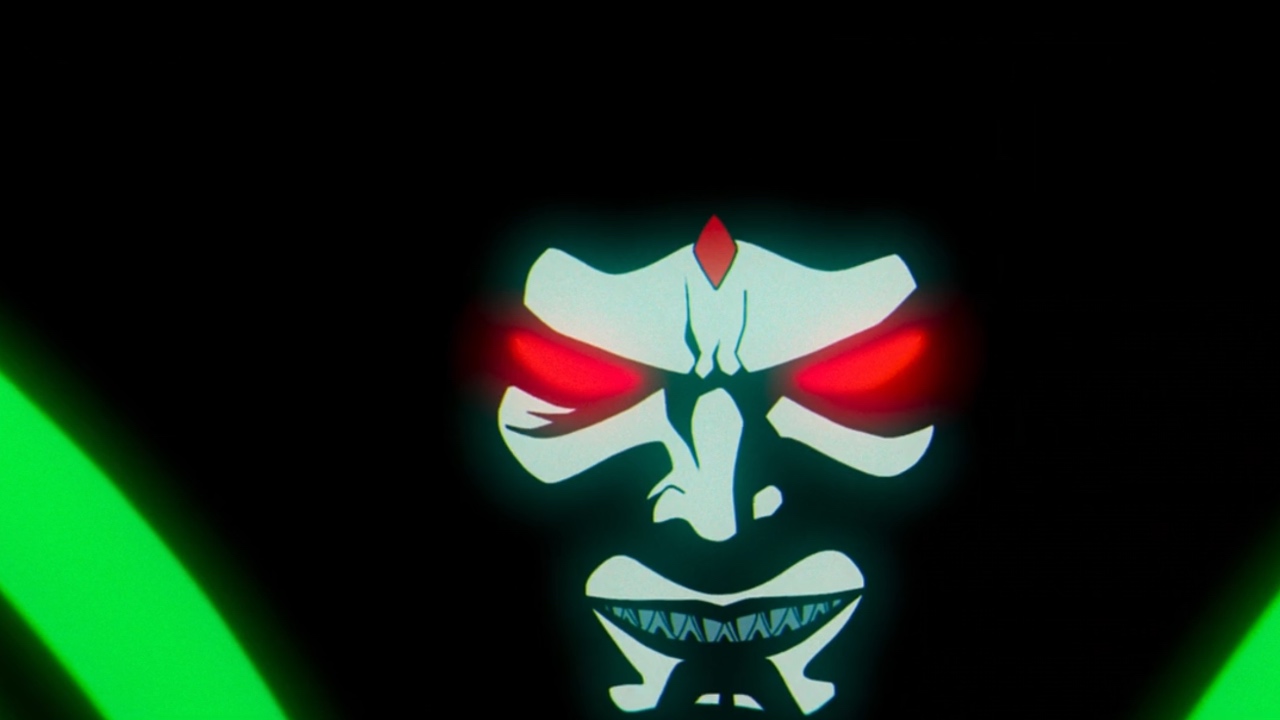
When Adam Driver was announced as the villain of the upcoming X-Men movie, fans felt both relief and confusion. Driver is one of our best working actors, someone who shines in indie films like Marriage Story and Paterson, but who can also bring depth to genre pictures, as his Kylo Ren was one of the best parts of the Star Wars sequel trilogy. Moreover, it was nice to see a villain who wasn’t Magneto announced for the first movie, with Driver stepping into the thigh-high boots of Mister Sinister.
At the same time, fans were confused to hear the name given to Driver’s character. He was announced as “Nathaniel Milbury.” Mister Sinister’s true name is Nathaniel Essex. Who the heck is this Milbury guy? Turns out, the Milbury alias does come straight from the comics. Moreover, it proves that Marvel already understands how to handle a villain as confounding and fun as Mister Sinister.
Mister Sinister made his way slowly into comics, appearing in shadow initially in 1986’s Uncanny X-Men #213 before finally appearing in full—with an extreme close-up on his screaming face, no less—in 1987’s Uncanny X-Men #221, by Chris Claremont and Marc Silvestri. Moreover, over the next several issues, we learn that Sinister has been operating behind the scenes even before we met him, masterminding the horrific events of the Mutant Massacre.
That opening forever set the stage for Sinister, one of the X-Men’s most evil and mercurial villains. Initially, Claremont imagined Sinister as the psychic projection of an 11-year-old mutant, the manifestation of everything a kid would find scary and imposing (Gambit was first designed as that same boy’s heroic manifestation, which is why Remy LeBeau was first a kid’s notion of edgy and cool).
However, over time, Sinister became a perfect genetic manipulator, someone willing to do anything to play around with fascinating mutant genes, particularly those of Scott Summers a.k.a. Cyclops and his family. Sinister famously cloned Jean Grey to make Madelyne Pryor, mother of Cable, and weaseled his way onto the Quiet Council that led the mutant nation of Krakoa. All the while, he did it by cackling and vamping like the perfect baddie.
Sinister wasn’t always sinister, nor was he always a mutant. Originally, he was a 19th century scientist named Nathaniel Essex, who became interested in genetics after learning about mutants. Driven by death of his wife Rebecca, Sinister sought a way to bring her back to life, which he did by cloning her and, eventually, himself. The more he learned about mutants, the more he wanted to share in their power, so he began incorporating their DNA into his own, becoming more mutant with each clone. Upon meeting Apocalypse and learning about En Sabah Nur’s centuries-long battle with Cable, Essex became obsessed with the Summers family.
Which is how Nathanial Milbury came to be. We first meet Milbury in 1993’s X-Men #27, written by Fabian Nicieza and penciled by Richard Bennett. While Beast, Rogue, and Iceman wait by the bedside of the one-time villain Infectia, who has been infected with the Legacy Virus (a clunky AIDS metaphor that was a major part of ’90s X-Men comics), they are greeted by the attending physician, Dr. Milbury. Milbury presents himself as a fierce ally of the mutants, someone who will work tirelessly to save those dying of the Legacy Virus.
Yet, across several X-Men comics published throughout the ’90s and 2000s, we learn that Dr. Milbury is in fact Mister Sinister himself. Furthermore, he used the Milbury alias, which he took from the estate where he and Rebecca lived in England, to form in Project Black Womb, an early genetics think-tank where Charles Xavier was sent as a child. Through Project Black Womb, Milbury learned about the orphanage where Scott Summers was raised and began developing his Mister Sinister identity.
Confusing? Yes, of course. Convoluted storylines are a feature and not a bug when it comes to X-Men stories. But they’re less welcome when brought to screen, which means that we’re unlikely to see generations of various personae adopted by Driver’s character when X-Men hits theaters in 2028.
However, the timeline isn’t really the important thing when it comes to Mister Sinister. Rather, it’s the fact that he has multiple identities at all. Mister Sinister may be the perfect X-Men villain. Yes, Magneto continues to capture the imagination of readers, precisely because has a reasonable worldview and a sympathetic backstory while posing a challenge to the team. But when it comes to pure evil, a guy we cannot like and we want to see punched in the face, it’s hard to do better than Mister Sinister. Sinister sees mutants as little more than living tools for his own ends, the source of genetic material for him to play with, making him both connected to their central origin and irredeemably evil.
Part of the fun with Sinister comes from the fact that he does so much cloning. As demonstrated in the recent Sins of Sinister storyline, in which a bevy of his alternates attacked Krakoa, Sinister has dozens of copies of himself hanging around, and each one of them thinks they’re the “true” Sinister. Moreover, he keeps extra copies of each of the X-Men too, letting him unleash his own versions of Cyclops and Cable whenever he sees fit.
Driver’s character may be called Milbury for more mundane reasons. Perhaps Marvel considers the name Essex tarnished after being teased in the bombs The New Mutants and Dark Phoenix. Perhaps they just think audiences will accept Nathaniel Milbury better than Nathanial Essex. Or, perhaps, Marvel’s showing us now that there will be several different versions of Sinister running around the X-Men universe. And if that’s the case, the movie can call him whatever they want—X-Men has already clearly figured out how to do right by Sinister.
X-Men comes to theaters on May 5, 2028.
The post X-Men Has Already Got Its Mister Sinister Right With Nathaniel Milbury appeared first on Den of Geek.