By
By 
There is something to be said about taking stock and counting your blessings at a year’s midpoint. For most that demarcation moment comes at the end of June, which is, after all, the year’s literal halfway mark. Yet we’ve always preferred taking stock in the dog days of summer, at least when it comes to movies.
While the summer blockbuster season is technically still in its final waning hours, culturally the film calendar is already transitioning between the high heady days of summer box office season and the awards movie season that kicks off in earnest in less than a month with a slew of September festivals in Venice, Toronto, and Telluride. In other words, it’s a great time to catch our breath, reflect, and think about the best movies we’ve seen this year. Below are our favorites listed in alphabetical order.
Black Zombie
In a media landscape where The Walking Dead and The Last of Us still prowl cable networks, and Resident Evil remains as popular as ever in video games, the zombie archetype seems as innocuous as it is ubiquitous. One senses that director and documentarian Maya Annik Bedward shares an affection for what “Z-culture” has become, even as she also reveals a deep understanding for the history of colonization and exploitation that has been reworked over a century of reinvention… and erasure.
Black Zombie explores this paradox in illuminating fashion, right down to a title evoking what was one of the most popular Hollywood horrors of nearly a hundred years ago, White Zombie (1932), a Bela Lugosi feature that was, in turn, based on a William Seabrook novel that offered a deeply exoticized, inaccurate, and racist “glimpse” inside the world of “Haitian Voodoo.” Working with both academics and historians, as well as real-life practitioners of Vodou ritual in modern Haiti, Bedward carefully essays the menace of such cultural appropriation, which to this day affects Haiti. She also observes how time, generations of people, and creativity can transmute something oppressive into radical and subversive works of art. It should not be missed. – David Crow
The Death of Robin Hood
An overlooked gem that deserved a greater share of Sherwood loot, Michael Sarnoski’s The Death of Robin Hood is a challenging film. It’s also deeply rewarding for those with an open mind. Moving beyond mere revisionism or deconstruction, the film stars Hugh Jackman as a grizzled 13th century bandit without an ounce of heroism in him. This is very much a villain who at one point in the film seems to be genuinely weighing the murder of a child.
Nevertheless, Sarnoski’s movie is thoughtful, elegiac, and profoundly beautiful as this rogue who’s built a myth of lies around his exploits finds some penance, if never redemption, when ending his days on an island run by an enigmatic prioress (a sublime Jodie Comer). Theirs is a big-hearted story about mortality, the delusions we tell ourselves, and perhaps more crucially in a modern context, the comforting delusions we create that obscure our sins and raise lasting horrors. It’s a small movie that leaves a big impact. – DC
The Devil Wears Prada 2
Featuring a 20-year-later legacy comedy on a best of list (even at the midyear) might seem a dubious thing. But anyone who works in journalism or publishing will tell you there is a lot more than boozy mimosa laughs to appreciate in Devil Wears Prada 2. It is of course remarkable how effortlessly a cast that includes Meryl Streep, Anne Hathaway, Emily Blunt, and Stanley Tucci can slip back into the rhythms and archetypes they played two decades prior.
What surprises, however, is the way Wendy Finerman’s screenplay snapshots the real-time hollowing out of professional journalism at even once titanic publications like Runway magazine, a fig leaf nom de plume for Vogue. As much love letter, if not wake, for the vanishing media landscape that once made figures like Streep’s Miranda Priestly demonically powerful, but also divinely important in shaping and passing on cultural knowledge, Devil 2 is a rare thing among modern Hollywood blockbusters: an adult-aimed comedy with more on its mind than costumes and stunning locales. But those are fabulous too. – DC
The Drama
If writer-director Kristoffer Borgli’s English language films have a recurrent theme, it is the grueling cosmic horror we inflict on ourselves while seeking the outside world’s validation, plus the deeply amusing gallows mockery such vanity invites. Yet one half the soon-to-be married couple in The Drama does not care an iota about what strangers think. Even when it comes to planning her first dance as a wife, Emma (Zendaya) wants to be honest and have fun. She literally calls the choreographed steps that she and Charlie (Robert Pattinson) are paying to learn “performative.” But for Charlie, all of life is a stage performed for the outside world.
Unfortunately, that includes his own impending marriage when he learns a devastating secret about Emma’s past that she unwisely shares over too many drinks and gossipy stories about “the worst thing you’ve ever done” with Charlie and his friends. The fallout from her confession is catastrophic and certainly invites some deep soul-searching for both Charlie and an audience who lives in the same twisted American culture that makes her mistake possible. Still, it is how both parties, plus the worst friends ever, process this information—with Emma focusing on what it means for their marriage, and Charlie only what others might think or see in him—that turns The Drama into an epic crescendo of cringe comedy dread. Well, that plus a helping dose schadenfreude as we leer at Pattinson’s hopelessly ineffectual bridegroom buffoon. – DC
Gail Daughtry and the Celebrity Sex Pass
Never have the sex lives of celebrities and the Midwestern freaks who stalk them seemed so utterly wholesome and innocent as in Gail Daughtry and the Celebrity Sex Pass. Or read: God bless David Wain. He’s the same writer and director who gave us Wet Hot American Summer and Role Models, and now he teams with co-writer Ken Marino for this maximal absurdist retelling of The Wizard of Oz in the Merry Old Land of Hollywood. For it’s there that Zoey Deutch’s aggressively chipper Gail Daughtry sets off on a quest with her little friend Otto (Miles Guttierrez-Riley) to knock boots with her girlhood crush, Jon Hamm. Yes, that one.
There is a nutty benign nobility to Gail’s quest (her fiancé slept with his “celebrity pass,” so the bride needs comeuppance before they tie the knot), but the real joy is how everyone she meets along the way, from budding talent agents to real-life Jon Hamm co-stars like John Slattery, are immediately endeared and then galvanized by her plight. They all join her mission. Come hell or high-water, they will get Gail’s happy ending, but only after exploring every last magical wonderment in a town that boasts its very own Starbucks, McDonald’s, and back alley sex workers. Eat your heart out, Kansas. – DC
Hope
We’re cheating a bit to include this Cannes premiere that is playing right now in South Korea but doesn’t open in the U.S. until September. Even so, writer-director Na Hong-jin’s Hope is good enough to put on your radar right away. A deliberately paced sci-fi epic that is at its best when it gets eyeball-to-eyeball with white-knuckle creature feature dread—which is luckily most of the first and third acts—the film is initially told from the POV of a small town police chief (Huang Jung-min). He’s the kind of authority figure who might have a photo of Roy Scheider in Jaws on his mood board back home, but when put in life-or-death stakes he turns out to be deliciously incompetent. What overwhelms him is mostly left offscreen in the movie’s extended real-time opener, but this mystery monster is wrecking the community and leaving a trail of carnage in its wake.
Relying on both the Spielbergian lesson of keeping creatures hidden for the first half before pivoting to a Lovecraftian sense of scale and cataclysmic spectacle during a grand finale, Na swings for the fences in a movie where every set piece is exquisitely designed for brutal tension, shaky-cam scares that never disorient, and the queasiest stunt work I’ve seen this year. The monster might not be real, but the knot in your stomach is wholly legit when someone’s caught with one leg inside a car and the other on horseback. – DC
The Invite
Forget Christopher Nolan; Olivia Wilde deserves the title of Best Director so far for the feat she pulled off with The Invite. Based on the Spanish film The People Upstairs, and written by Will McCormack and Rashida Jones, The Invite stars Wilde and Seth Rogen as an embittered married couple who invite their bohemian upstairs neighbors Piña and Hawk (Penélope Cruz and Edward Norton) for dinner. When Rogen’s Joe starts complaining about the noise the couple generates during their lovemaking, Piña and Hawk reveal that they host sex parties—and would like Joe and Angela (Wilde) to join in.
Wilde could have easily let The Invite become a broad, Dinner for Schmucks style comedy or ask the audience to take sides against one of the four. Instead she guides the viewers through a range of tones, by turns giving each of the characters their moments of comedy and humanity. Rogen’s disengaged persona goes from affable to toxic, Cruz lets her exotic sex therapist snap, and Norton feels designed to play a sincere but annoying proponent of ethical non-monogamy. For her part, Wilde reveals new comic chops she’s never had the opportunity to display onscreen, all while taking the movie through its paces to finally land it on a frank but humane note that rarely makes it into American films. Simply breathtaking work. – Joe George
Obsession
One of the greatest success stories in the history of independent cinema, Obsession’s origin as a YouTuber’s second feature that cost less than $1 million is astonishing. But the cruelty with which Curry Barker inflicts cosmic judgment on his characters is even more impressive.
Mutating the famous Monkey’s Paw parable into something truly sinister, Obsession unpacks the “nice guy” archetype via Bear (Michael Johnston), a meek nerd who innocently wishes with a novelty toy that his crush Nikki (Inde Navarrette) love him more than anything in the whole world. Unrequited love might seem harmless enough, yet how Bear chooses to address (or ignore) the realization that his magically-induced girlfriend has become an empty vessel, or worse is a demonic presence that’s actively suppressing and/or torturing Nikki, is giving the movie a Rorschach-like value these days. Bear’s culpability has quickly become a dating scene litmus test. Meanwhile Navarrette’s performance is star-making work, with the hitherto unknown talent offering a fearless embodiment of humiliation and physical paranoia that seeps into the marrow. It’s an instant classic. – DC
The Odyssey
The saga of an Achaean king’s desperate need to get home after the Trojan War is one of the oldest stories in world history. It is counted among the bedrock foundations of Western culture. So for Christopher Nolan to adapt The Odyssey in a way that feels thrillingly urgent to the modern world in general, and the filmmaker’s own personal fears and fixations in particular, is a triumph of monumental scale that demands more than one viewing to get your arms around it all. With due respect to classicist Dr. Emily Wilson, The Odyssey has a lot on its mind, even as it modernizes Odysseus into a 21st century hero who must confront ancient perils both mythical and historical.
Deliberately echoing old Hollywood with its stuffed ensemble of wall-to-wall stars and the kind of grand scale moviemaking rarely seen since the days of David Lean or CinemaScope, The Odyssey is designed to conquer the senses with ceaseless IMAX photography and seemingly infinite resolution. However, it also invites a pensive and mournful meditation on the cycles of institutional rise and collapse in a pattern that spans from the Bronze Age to the decline of empathy today. It’s a morality tale couched in a deeply personal portrait of familial loss and restoration—played beautifully by Damon and Anne Hathaway—and a warning still about Greeks, or any who idolize how certain gifts can be given by their descendants. As Samantha Morton’s Circe might say, now back into your disguises. – DC
Pillion
A film we also counted among our favorites in 2025 because of its UK and festival rollout, Harry Lighton’s Pillion only reached the U.S. this year. So at the risk of bending the rules for another great film, Pillion remains one of the more haunted and unconventional love stories you’ll likely ever see on the big screen. It is also tenderly realized thanks to incredible performances by Alexander Skarsgård and an especially soulful Harry Melling.
Melling is the true lead of the film, essaying a young impressionable lad named Colin. Colin lives with his folks in a sleepy English village, making it hard to meet another gay man he feels a connection with. But he does connect to Ray (Skarsgård), a massive, Viking-shaped biker and BDSM enthusiast who loves leather almost as much as he adores submission. Colin is only too willing to provide the latter in a romance that can be deceptively funny and quietly sweet. There is also a bitter melancholy pulsing throughout because of Skarsgård’s intentionally elusive turn. By design, Ray’s motivations and aloof intentions are shrouded in a contradiction that makes the film’s ending both euphoric and depressingly human. – DC
Power Ballad
Admittedly one of John Carney’s minor musical dramedies, there is still so much warmth and affection to Power Ballad that it is difficult to not find yourself singing along. Featuring the best performance of Paul Rudd’s career, the film burrows happily into the no man’s land that exists in artistic creation, often behind a fog of obfuscating litigation. In this case, that lonely terrain is traversed by Rudd’s Rick, a happy family man and ex-pat Yankee living in Ireland with his wife and child when his cover band gets a gig to play at a swanky wedding. It’s there he meets an actual pop star named Danny (Nick Jonas), who appreciates Rick’s musical stylings enough to jam into the night with the middle-aged rocker. They even collaborate on one of Rick’s old ditties that Danny realizes has the makings of an anthem.
The pain of the film’s laughs take on an almost Homeric connotation of their own in this movie, with Rudd’s Rick being a bit of a Cassandra, aware that the song blowing up on the radio and Spotify is his. Yet no one will believe him; even his family begins to doubt as Rudd grows evermore frantic. Hence the third act soujourn from the Green Isle to the distant shores of LA take on a mania that is understandable to anyone who knows the thrill of creation—or the anxiety of seeing that work go out into the world. – DC
Project Hail Mary
Here is the secret for a great movie: Let Sandra Hüller sing karaoke. Her rendition of Harry Styles’ “Sign of the Times” may remind some of Ines Conradi losing herself to “Greatest Love of All” in 2016’s Toni Erdmann, but the stakes are entirely different in Project Hail Mary. When her scientist character Eva Stratt breaks into song, it’s in the company of those about to die trying to save the world, including high school teacher turned reluctant astronaut, Ryland Grace (Ryan Gosling).
That apocalyptic moment of shared singing is just one of the times that Project Hail Mary can make you cry, which is a shocking thing to say about a warm-hearted and often wacky film about Grace fumbling around space as he makes friends with stony alien dubbed Rocky (voiced by James Ortiz, lead puppeteer of the character). Directors Phil Lord and Christopher Miller, working from a Drew Goddard script that adapts the Andy Weir novel, feel like they’re building the ship as it launches, shifting from set-piece to set-piece despite its dual timeline structure. Not everything holds up when you stand back to think about it, but in the moment—especially moments where Hüller does karaoke—Project Hail Mary soars. – JG
The Samurai and the Prisoner
In the late 16th century, Japanese tea master Sen no Rikyū set down the crucial rules that came to define the nigh mythical chanoyu (tea ceremony). The seventh and final of these kindly commands was to “do things gracefully.” Every action, from whisking the matcha to placing utensils, should be done with care and elegance. Such patient fortitude applies to both the people onscreen and off in The Samurai and the Prisoner, the first period piece from director Kiyoshi Kurosawa—a helmer likely best known in the West for turn-of-the-century horror movies like Pulse.
The Samurai and the Prisoner is about a literal student of Sen no Rikyū, as well as one of the last samurai warlords to resist another daimyo hellbent on reuniting their realm over a throne of bodies during the Sengoku period (the “Age of Warring States”). The tea-smitten Araki Murashige (Masahiro Motoki) yearns to overthrow the hegemony of Oda Nobunaga, even as the Oda clan’s armies slowly take on a siege formation around our hero’s castle. But Araki also seeks to end the violence while preserving as much life as possible, including when he takes hostage Nobunaga’s vassal and most observant strategist, Kuroda Kanbei (Masaki Suda).
Together Murashige and Kanbei make for an unlikely odd couple in a film that at times flirts with being a murder mystery. Each turn of the season brings a new slaying or riddle in Murashige’s increasingly cut off castle. It’s an opportunity to match wits with the trickster in the dungeon, but it is also a greater chance for director Kurosawa’s movie to take a forbearing, painterly, and ever graceful stance on the merits of mercy… and their limits when seeking to be a harmonious aesthete in a starkly inharmonious world. – DC
The Sheep Detectives
The Sheep Detectives looks terrible. I’ll admit it. As a father of four, I’ve long since tired of seeing crass kids movies filled with big name stars who are, it turns out, awful voice actors. The idea of a bunch of sheep banding together to solve the murder of their beloved herder (Hugh Jackman) sounded like a recipe for disaster, sending my kids and I back to the safe and loving arms of Paddington Bear if we want proper children’s entertainment.
Turns out, The Sheep Detectives is the successor to Paddington, the perfect mixture of kind-hearted optimism and frank acknowledgement of the bad parts of the world. Directed by Illumination vet Kyle Balda and written by Craig Mazin of The Last of Us and Chernobyl fame, The Sheep Detectives follows Lily (Julia Louis-Dreyfus) and Mopple (Chris O’Dowd), two sheep who lead the investigation into the shepherd’s death, following the techniques they learned from the mystery novels he’d read to them. What follows is, of course, a charming adventure full of idiosyncratic villagers in a tiny English town. But The Sheep Detectives also tells hard truths about bad people and dying, lessons children need to learn, but in the kindest, most loving way. – JG
Spider-Man: Brand New Day
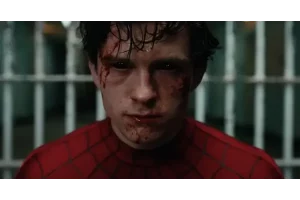
Peter Parker must suffer! And the Peter Parker of the MCU has had it way too good for way too long. Yeah, he went to prom with a supervillain’s daughter and, sure, his beloved Aunt May was killed at the hands of an extradimensional Willem Dafoe. But he lives a charmed life compared to his comic book counterpart. That changes in Spider-Man: Brand New Day, a movie that spends time with the grief that No Way Home glossed over (something Tom Holland himself admits), showing Peter getting sadder and sadder as he lives without contact with MJ (Zendaya) and Ned (Jacob Batalon).
That may sound like a dour gloomfest, but Brand New Day finds the humanity in Peter’s suffering, giving this Spider-Man an everyman quality missing from the franchise since they lost Sam Raimi. Even better, Brand New Day retains this drama without sacrificing the fun of a proper MCU film, complete with appearances by the Punisher, the Hulk, and a few other surprises we won’t spoil here. Spider-Man being Spider-Man, Peter prevails at the end, but not without going through some hard times, and the movie’s all the better for it. As always, bad times for Peter Parker are good times for fans. – JG
Toy Story 5
How, after three decades and a clear peak with the second film does Toy Story keep finding ways of making me cry? A lot of Toy Story 5 doesn’t work as well as one would hope, as the central conflict with Lilypad (voiced by Greta Lee) is hard to take seriously from the franchise that pioneered CGI over traditional animation. Furthermore, the Toy Story cast has grown so deep that fans are bound to be disappointed by the limited screentime of their favorites.
Still, when it comes to pure storytelling pleasures, Toy Story 5 director Andrew Stanton, who co-wrote the script with Kenna Harris, knows how to play the game. This entry finally puts Jesse in the lead as she rounds up Buzz and Woody, as well as some new pals—including a snarky toilet-training device voiced by Conan O’Brien—to help Bonnie navigate the world-wide web and school bullies. The film delivers with plenty of inventive set-pieces and, of course, more than a few reveals that send adult viewers into their latest round of Pixar-induced sobbing. – JG
28 Years Later: The Bone Temple
Be it Ian Malcolm from Jurassic Park or Mater from Cars, a likable supporting character in one movie rarely makes for a compelling lead in the sequel. So writer Alex Garland’s decision to make Dr. Ian Kelson the lead of 28 Years Later: The Bone Temple seemed doomed. Surely, Ralph Fiennes’ gentle physician would no longer be the light in the darkness he was in 28 Years Later, right? His character would flatten out, especially when pit against the absurdly cruel villains led by the Jimmy Savile-inspired, devil-worshipping Sir Lord Jimmy Crystal (Jack O’Connell).
Not so with Nia DaCosta behind the camera. Finally freed of the studio expectations that hobbled Candyman and The Marvels, DaCosta reminds why her debut Little Woods excited everyone, showing off her skills in The Bone Temple and in last year’s Hedda. Not only does DaCosta prove herself an expert director of actors, giving space for Fiennes and O’Connell to find complexities in what could have been one-note characters, but she knows when to lean into extremes. The Bone Temple contains some of the kindest moments you’ll see on screen as well as some of the cruelest via the “charity” that Sir Jimmy and his fingers inflict. Still, none of that prepares viewers for the showstopping “Number of the Beast” sequence, a scene that makes us wish there were 10 more movies about Dr. Kelson. – JG
The post The Best Movies of 2026 (So Far) appeared first on Den of Geek.