By
By 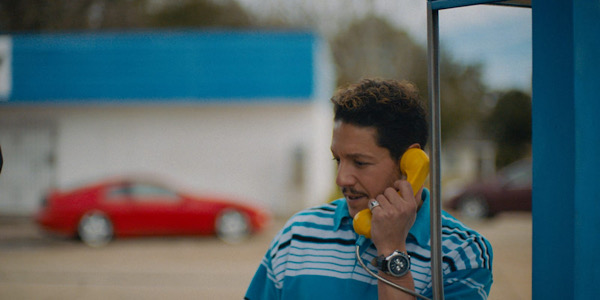
Director Vincent Grashaw’s biographical drama Bruton refuses to play it safe. By leaning directly into the raw, complicated emotional messiness of a real-life tragedy, Grashaw delivers a bold piece of storytelling that trades standard cinematic sentimentality for deep, human resilience.
It manages a rare feat: balancing an emotionally tactful narrative with flashes of clever, darkly witty entertainment. Crucially, it avoids being too dark. It strikes a balance with humor and devastation, warmth with despair. There were moments that truly had me laughing out loud. And then, add to it our leading role: Theo Rossi, who takes this script and completely conquers the screen. Widely loved for playing one of the most heartbreaking (but don’t we love him) characters on Sons of Anarchy, Rossi radiates definitive leading-man energy here. His playful, heart-rending performance anchors the movie entirely, making it impossible not to root for him.
source: Mind’s Eye
The film follows Bryan Bruton (Rossi) as his life is permanently upended by a fatal, accidental hit-and-run in Jacksonville. Sentenced to ten years for manslaughter, Bryan is forced to navigate the volatile, gritty inner workings of the Florida correctional system across different facilities. Rather than relying on familiar, tired prison tropes, Grashaw handles the cold reality behind bars with impressive directorial finesse. The film deftly charts how Bruton transforms incarceration into a survivalist economy using his natural, magnetic hustler charisma, ultimately leading to a brief but incredible prison escape.
Grashaw forces the viewer to sit in the cold discomfort of institutional life, but deliberately breaks the tension with sharp, surprising wit. At its core, though, the true soul of the film lies in Bryan’s love for his daughter. The narrative never tries to create an illusion that the time didn’t fit the crime; instead, it focuses on the unique intimacy of his personal perspective. It feels distinct, vital, and incredibly crucial to hear.
Visually, the film utilizes high-contrast, desaturated cinematography to emphasize the grim reality of life behind bars. This creates a brilliant, intentional juxtaposition with the warmer, nostalgic camera work used for memories of the outside world.
Rossi’s powerhouse performance serves as the definitive emotional backbone of the film; marking what is easily some of his best work to date. Utilizing sharp voiceover narration to guide the audience through complex cellblock politics, he masterfully balances the dualities of Bryan’s persona, steering seamlessly between fast-talking comedic hustles and devastating emotional lows. He elevates the material by grounding it entirely in real-world stakes and raw human vulnerability.
source: Mind’s Eye
The supporting cast is equally stellar. Aya Cash and Tony Hale (who helps bring the levity) turn in great performances, but Tammy Blanchard is fantastic as the female guard who aids Bryan on the inside. She is brilliantly cast, and her scenes with Rossi add a profound, layered emotional dimension to the story.
Perhaps the film’s standout element is how it highlights the exhausting emotional toll inflicted on the family left behind. By shifting its focus to the maternal and domestic struggles outside the prison walls, the narrative grounds the overarching tragedy in a vital, realistic lens. This delicate balance ensures that the witty, caper-like escape sequences never minimize the grueling weight of survival.
Bruton succeeds because it refuses to be pinned down to just one thing. Driven by Rossi‘s magnetic lead, it is a uniquely personal, unforgettable rumination on redemption. A must-see.
Does content like this matter to you?
Become a Member and support film journalism. Unlock access to all of Film Inquiry`s great articles. Join a community of like-minded readers who are passionate about cinema – get access to our private members Network, give back to independent filmmakers, and more.