By
By 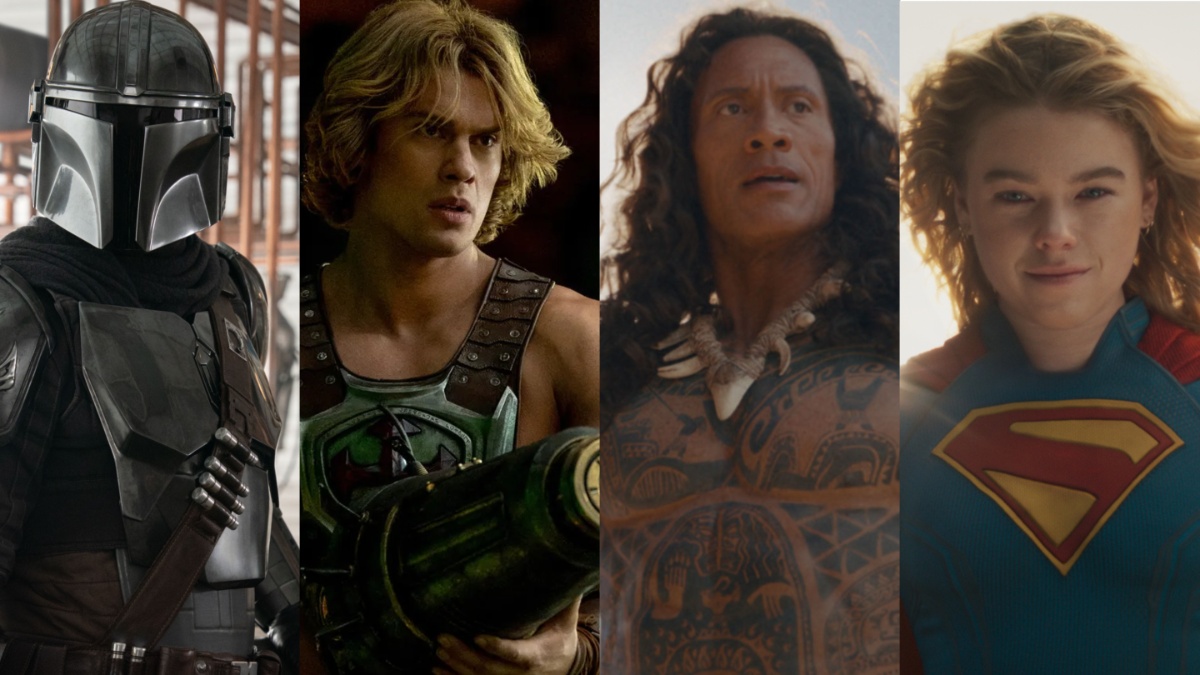
In 2015, Steven Spielberg received a lot of flack in the press—and even more on social media—when he suggested the type of modern mega blockbuster he helped pioneer, and which superhero movies specifically came to embody in the 2010s, was headed for a crash. At the time, sections of Film Twitter bristled at the assertion that “there’s eventually going to be an implosion—or a big meltdown. There’s going to be an implosion where three or four or maybe even a half-dozen mega-budget movies are going to go crashing into the ground, and that’s going to change the paradigm.”
There is a degree of irony in this—including that Spielberg’s own Disclosure Day is underperforming, if far from crashing, this summer—with the king of blockbusters projecting the demise of its current iteration. But for anyone with a sense of film history, observed or lived-through the case of Spielberg, it made a lot of sense. After all, the Jaws director and many of his friends in the 1970s were only able to breakthrough after the final death rattles of the Golden Age studio system in the 1960s. It’s a twist of history that increasingly seeming prescient in the summer box office season of 2026…
Technically, it’s been a rosy summer and year for theater owners and moviegoers. Supply, and therefore the variety of movies that get made, is up, as is attendance and box office receipts. Last spring saw box office revenue grow by 23 percent over 2025, which is the best since the pandemic. Yet as is becoming glaringly apparent, a lot of that revenue is being generated from surprise corners like the new wave of Gen-Z filmmakers who are making their bones on YouTube before pivoting to original horror movies like Obsession, Backrooms, and Iron Lung, or films at least in genres that have largely been neglected by the studios in the last 10 years, a la adult-skewing, dialogue-heavy sci-fi films ike Project Hail Mary and the female-led workplace comedy represented by the ascendant Devil Wears Prada 2.
Meanwhile this past weekend saw what on paper was another four-quadrant, franchise-mandated “sure thing” crash and burn on its opening weekend. That makes at least four in little more than a month.
While many (including ourselves) might have rolled their eyes at the logic behind remaking Moana just nine and a half years after the new animated classic, no one thought it was a commercially risky proposition. Disney’s live-action remake formula has run into snags when it’s turned to Boomer-nostalgia for pre-1980s animated films like Snow White and Dumbo, but when the Mouse House has targeted the warm and fuzzy memories of millennials and zillennials, they have seen billion-dollar success via remakes like The Lion King, Aladdin, and Beauty and the Beast. And last year’s Lilo & Stitch retread was aimed squarely at Gen Z and still cleared that magical 10-figure range.
Nevertheless, the Moana remake, complete with Dwayne Johnson reprising his beloved role as Maui from the 2016 animated movie, failed to draw out families or young adult moviegoers with fond memories of just how far Moana can go. As of press time, the movie is estimated to have grossed a mere $43 million, a figure only marginally better than the much snarked about Supergirl and it’s $37 million debut, albeit Moana has an even dizzier price tag of a reported $250 million(!) attached.
There will no doubt be plenty of reasons to speculate on this individual failure, although it is not the “brand” this time. Moana 2 just grossed $1 billion less than two years ago. More crucially, however, is the realization that Moana’s flopping is not happening in a vacuum. It’s part of an ongoing trend that’s rocked the summer blockbuster season to its core following dismal performances of WB’s Supergirl, Amazon MGM’s Masters of the Universe, and Lucasfilm’s Star Wars: The Mandalorian and Grogu. That last one I even wrote was not catastrophic when it opened to “only” $98 million over Memorial Day weekend. Granted, even from the jump it was the worst opening for any Star Wars movie, but if the core audience liked it, it could’ve represented a rebuilding moment. Yet the picture then dropped an eye-watering 70 percent in its second weekend, showing that core word-of-mouth was actually dire. Worse, it dropped to third place at the box office, falling behind the $750,000-budgeted Obsession in its third weekend.
That movie’s misfortunes turned out to be the beginning of a trend. And at least the Star Wars spinoff still crossed $340 million worldwide. That is a number Amazon MGM’s attempt to return to the ‘80s nostalgia well with Masters of the Universe will never see, nor Supergirl which suffered a bleaker 77 percent drop in its second weekend. Meanwhile Universal Pictures and Illumination’s Minions & Monsters (a movie a lot of critics, including myself, consider to be the best film in the Minions franchise) also underperformed when it grossed only $62 million in its long five-day holiday weekend. The last Minions movie opened to $123 million across the same Fourth of July corridor in 2022.
Each underperformer has its own variables and reasons for stalling—and I even quite enjoyed two out of the four biggest disappointments—but collectively they paint a picture that sounds a lot like Spielberg’s once-derided prediction. To be clear, even then Spielberg did not state it with scorn, or with an expectation that superhero movies are some enemy of cinema. He was just comparing the decline of one generational form of entertainment to another.
In a follow-up 2015 interview, he put a finer point on it when he said, “We were around when the Western died, and there will be a time when the superhero movie goes the way of the Western. It doesn’t mean there won’t be another occasion where the Western comes back, and the superhero movie someday returns… I’m only saying that these cycles have a finite time in popular culture.”
He might have pointed specifically to superheroes and Westerns, but the larger scale of this reminds me just as much of the collapse of musicals alongside the Western and historical/biblical epic in the 1960s. All three were the meat and potatoes of Hollywood during the 1950s if not earlier. The Arthur Freed Unit at MGM, a bit like Marvel Studios in the 2010s, was turning out hit after hit throughout the ‘40s and ‘50s: Meet Me in St. Louis, Easter Parade, Gigi, the 1951 remake of Show Boat, and of course Singin’ in the Rain. It laid the groundwork for the even bigger mega-musicals of the 1960s that, for a time, were the biggest hits on the block via My Fair Lady, Mary Poppins, and The Sound of Music. But come 1969—a year that saw Spielberg’s Boomer contemporaries like Dennis Hopper and Peter Fonda making Easy Rider and the X-rated Midnight Cowboy win Best Picture—the musicals Hello, Dolly! and Paint Your Wagon absolutely crashed at the box office.
That last one, Wagon, was furthermore a musical-Western hybrid, complete with Clint Eastwood in a dubiously tuneful role. But like the musical’s rapid decline in the late ‘60s, the Western and other increasingly creaky “epics” were suddenly strangling their studios. Joseph Mankiewicz and Elizabeth Taylor’s enormous Cleopatra nearly bankrupted 20th Century Fox in 1963, and then left the door for the moribund musical Doctor Dolittle to finish the job, at least by the old economic standards. And while Spaghetti Westerns and deconstructionist Oaters made on a budget flourished in the ‘60s, many of the big studio epics like The Alamo (1960) and 1967’s The Way West fizzled. The latter came out in the same year as box office juggernauts The Graduate and Bonnie & Clyde, and one year before horror movie Rosemary’s Baby and the sci-fi 2001: A Space Odyssey were rewriting the commercial and artistic limits of “genre” moviemaking.
None of which is to say franchise movies are going away. Disney/Pixar’s Toy Story 5 is one of the best movies of the year and its biggest hit. The historical epic also had a major resurgence in the early 21st century thanks to movies like Gladiator, Braveheart, and Troy, and the musical came back in a big way during the same period thanks to Moulin Rouge! and Chicago, and never left. The “historical” epic might also resurface again after this coming weekend’s The Odyssey.
But that is the point: things move in cycles, and what seems to still be working at the moment is prestige “event” cinema—as well as things studios have largely eschewed or neglected. While the horror movie has remained one of the few genres to thrive with original titles over the last decade, it’s also among the few that studios continually invest in. But a new crop of filmmakers breaking through those testing grounds via YouTube? That’s new.
Conversely, The Devil Wears Prada 2 is absolutely another legacy sequel to a popular movie, but its over-performance this summer suggests audiences of all ages are starved for adult-aimed comedies. The same might be applied to high-concept sci-fi movies not part of a franchise, like Project Hail Mary. And like Christopher Nolan with The Odyssey, Phil Lord and Chris Miller are directors with strong followings among Gen-Z and millennial audiences.
What we might be seeing is the collapse of a system that relies purely on name and brand-recognition for a built-in audience. For the last 20-some years that has been a winning formula in Hollywood. But so was the Western and musical once upon a time.
The post Summer Box Office Blues Are Starting to Feel Like 1969 appeared first on Den of Geek.