By
By 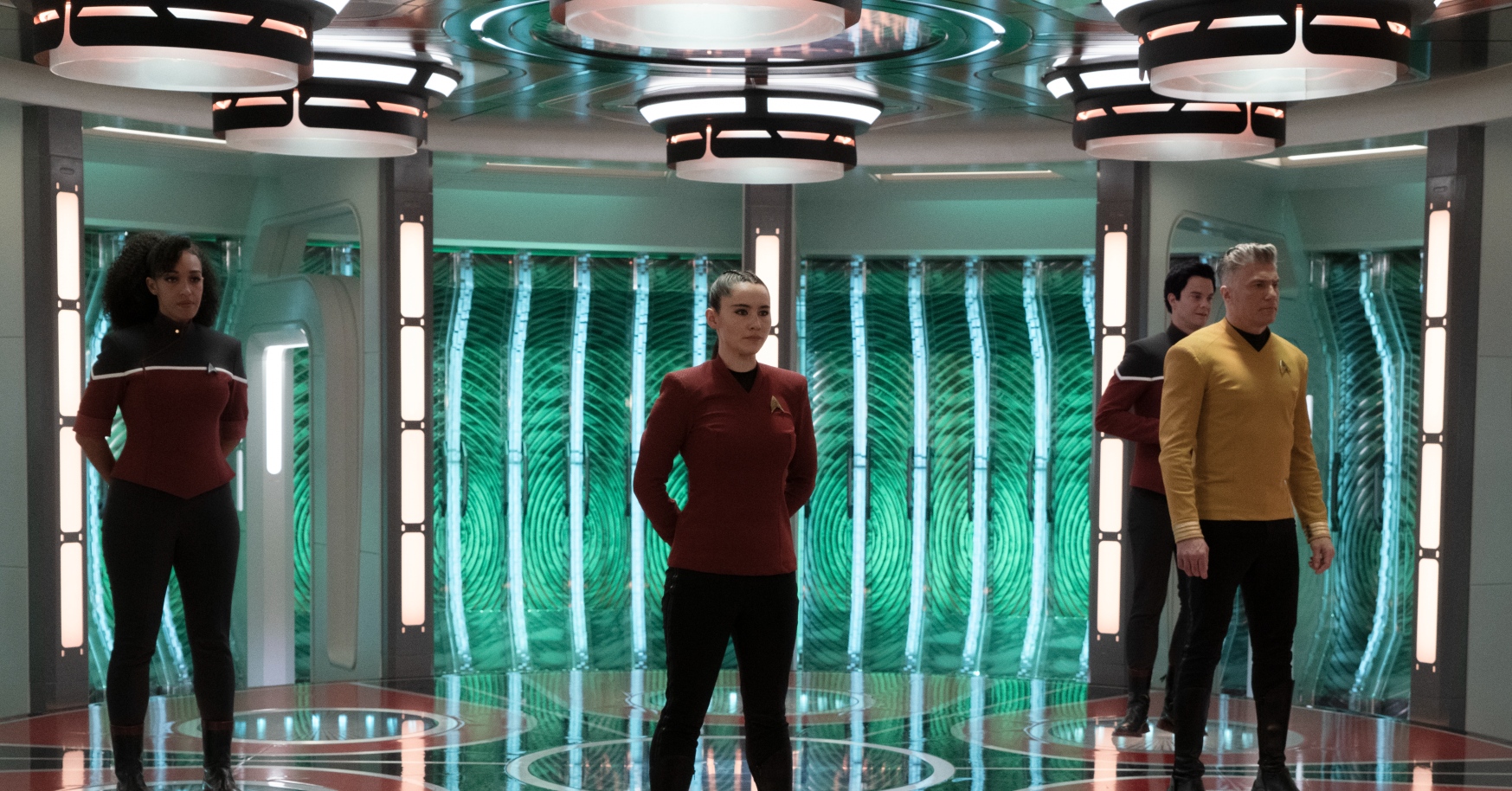
The Star Trek franchise’s fingerprints are all over basically every piece of contemporary science fiction. From an idea as large as an intergalactic government system to a design as commonplace as a spaceship that doesn’t just look like a saucer, Star Trek’s innovation is the foundation for tropes and machinery across the genre.
But the standout piece of technological advancement, the “Transporter,” has spread across works in the genre. The Transporter, a method of transportation that dematerializes its users and sends their molecules across the galaxy to another location, is easily Star Trek’s most recognizable invention. It utilizes quantum teleportation to send living beings across great distances.
A diverse set of films, books, and TV series have made quantum teleportation a significant part of their plots. From Spaceballs to Doctor Who to even Phineas and Ferb: Across the Second Dimension, teleportation tech owes much of its creative and scientific foundations to Star Trek and the Transporter.
However, the mechanics behind the show’s most recognizable piece of applied science don’t quite hold up under scrutiny.
The Transporter dilemma is a topic examined by the first episode of the science-meets-pop culture podcast Does It Fly?, a collaboration between Den of Geek, the Nacelle Company, and Roddenberry Entertainment. In the episode, hosts Tamara Krinsky and Dr. Hakeem Oluseyi dive into the possibility of the Transporter becoming part of society. Unfortunately, it’s not looking good for anyone who ever wanted to travel across light and space in just a few seconds.
One of the main issues with bringing the Transporter into reality, according to Oluseyi, is surprisingly practical.
“Here is the problem: doing a Transporter is many things altogether, and the first thing is a measurement and a storage data storage problem,” Oluseyi says.
“What information do I want to store? All right, so every particle has a mass charge and spin, it has a location, it’s moving in a particular way. Another one, suppose I want to say it’s molecules, so you all have like different configurations that you’ll have to account for for that molecule. Every particle that makes you up is in a particular state,” Oluseyi explains further. “So, suppose the scanning of you takes like 10 seconds. One part of you is going to be 10 seconds older than the other part of you, and then the other thing I think about it is you can never remember actually transporting, because you need to get the data before you initiate the transportation, so whatever state you are in, that is also the state of your memory.”
The technology was invented in the 22nd century of the Star Trek universe, but Oluseyi and Krinsky believe we are much further away from quantum teleportation. Although quantum teleportation is a physics principle that has exciting potential for the future of human technology, as of right now it is not capable of putting astronauts on Mars without a rocket.
Despite this, the Transporter and adjacent technology in film and television is still making appearances. The wonder that comes from such a revolutionary creation will certainly continue to inspire viewers just as it did in the first episodes of the Star Trek original series.
Episodes of Does It Fly? can be found on YouTube, podcast distribution platforms, and The Nacelle Company social feeds. Founded by producer and director Brian Volk-Weiss, The Nacelle Company is a pop culture imprint behind shows such as The Toys That Made Us and Down to Earth with Zac Efron on Netflix.
The post Why Star Trek’s Most Iconic Piece of Technology Isn’t Getting Invented Any Time Soon appeared first on Den of Geek.