By
By 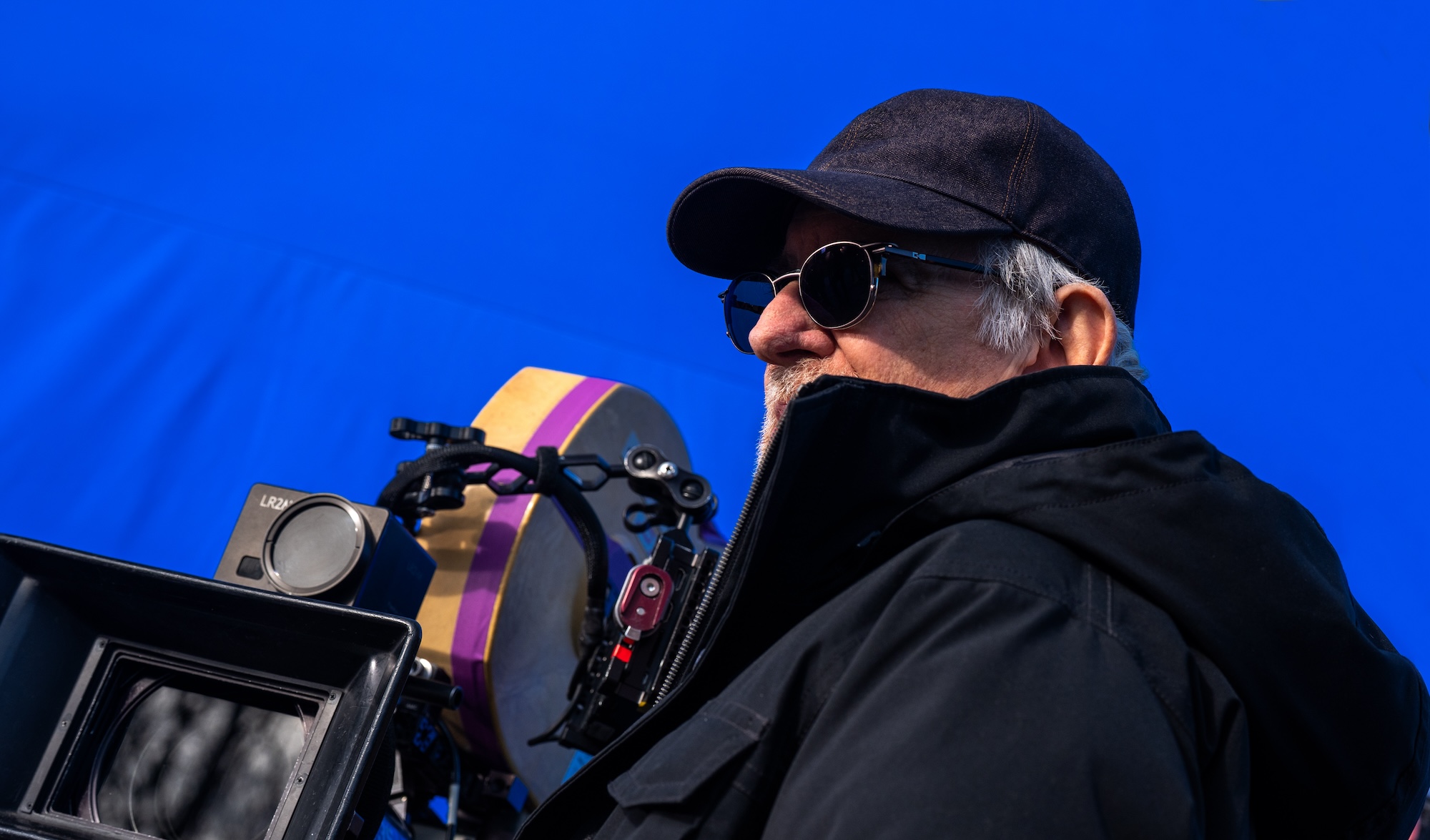
Steven Spielberg believes in UFOs, UAPs, and whatever else you might want to call the strange lights in the sky. The so-called “alien movie” is almost as old as accounts of unidentified flying objects, with The Flying Saucer coming out just three years after Kenneth Arnold coined the term based on what he claimed to see outside his plane’s window. Yet unlike many of the filmmakers of his parents’ generation, Spielberg has sincerely believed the truth is out there ever since he first took up the cause and a camera.
And he’s spent his career using the little space guys as a muse to discuss his vision of the world, and himself, as much as any sort of boogeyman or stuffed animal. In the same way that a Carl Foreman Western could be about more than just the bad men coming on the 12 o’clock train, a Spielberg alien flick is often better concerned with the humans.
His first (and I’d argue best) UFO feature is of course 1977’s Close Encounters of the Third Kind. Taking its title from the research of real-life Project Blue Book scientist J. Allen Hynek, the movie was rife in the real accounts and theories of the day about unidentified objects allegedly flying over the heartland. Yet as spectacular as the film’s vision of alien encounters were, the picture was still very much rooted in the 1970s New Hollywood movement Spielberg came up in. Like Jaws before it, there’s a naturalist’s concern with characters in the film, as well as anger, resentment of authority, and a maniacal belief in one’s talent and vision being secondary to nothing.
Famously, Richard Dreyfuss’ Roy Neary abandons his wife and children to go on a starship cruise into the unknown with little gray men after he ignores the naysayers, the skeptics, and his own wife. Just as many Americans became disillusioned in the shadow of Watergate, Nixon, and Vietnam, Roy stopped buying the “official story” and valued the truth—and perhaps his own individual satisfaction—over everything else.
It’s no secret Spielberg had a complicated relationship with his own father. He even made a movie about it late in life via The Fablemans. That (apparently misplaced) apprehension colors Roy Neary, just as it shades the entirely absent father figure in the director’s next alien flick, E.T.: The Extra-Terrestrial (1982). If Close Encounters reflected a young man’s indifference to parenthood and marriage after his own unhappy childhood, E.T. was that same man reluctantly remembering the joy of childhood. Spielberg’s said more than once that making E.T. with a young Henry Thomas and Drew Barrymore prepared him to be a father.
It also reconfigured an entire pop culture that in the 1980s shifted and moved in response to Spielberg’s own inclinations. For a time, he was the maestro of the American zeitgeist: Walt Disney, L. Frank Baum, and Willy Wonka all rolled into one. And whereas in the ‘70s this reflected a sense of disillusionment, in the ‘80s it became wholesome, family-friendly, and incredibly merchandisable. While there was never a sequel made to E.T., much of pop culture in that decade could be considered the film’s progeny.
In the years and decades since ’82, Spielberg has been more aware of that influence—and perhaps eager to hold onto it or renew it as time passed. If 1998’s Saving Private Ryan was a successful command to honor and even lionize what became known in the same year as “the Greatest Generation,” then his return to alien iconography in War of the Worlds (2005) was an attempt to use familiar sci-fi trappings like H.G. Wells’ novel (and the 1953 movie that is a personal Spielberg favorite) to express a profound sense of mourning and grief after 9/11.
Not so subtly, War of the Worlds taps into 9/11 imagery to express despair and fear for America enduring the same kind of existential, refugee nightmare that so many of Spielberg’s ancestors knew on another continent and in another century. The film is also one of the filmmaker’s darkest and angriest, making for grim bedfellows with Munich in the same year, which was a thinly veiled reaction to War on Terror overreach.
Spielberg has spent much of the last 20 years continuing to use his films to try to speak with his audiences about what’s on his mind, be it a belief in our Better Angels during the Obama Years via Lincoln, or a clarion call to protect the press during the late 2010s as pressure on the First Amendment from a different White House intensified. The cinematic bard has used his movies to speak with us, and increasingly ever on matters of greater collective, civic importance than one man’s mad need to be proven right on the top of Devils Tower. The trick is do the audiences still listen? Do the younger ones even know who Spielberg is?
We’re about to find out this weekend with the release of Disclosure Day, a film that continues a filmmaker’s dialogue through the greatest metaphor he knows: aliens. The film is his fifth about UFOs (or sixth if you count Firelight, which he made as a teenager). And it’s as much or more about how humans react to each other learning we aren’t alone in the universe as it is the actual disclosure that aliens exist.
If War of the Worlds was full of dread of the unknown, Disclosure Day literally begs us to treat the stranger with wonder and curiosity, as opposed to suspicion and hatred.
“It’s a bookend to Close Encounters in that that movie came out in ’77,” Disclosure Day screenwriter, and longtime Spielberg collaborator, David Koepp told me. “The ‘70s were the era where we started to say, ‘Gee, I don’t know, do you think the government might be lying to us?’ Cut to 2026 where we know the government is lying to us. Of course they’re lying to us! They lie about everything.”
Nonetheless, the screenwriter, like his director, is asking for a moment of comity and trust to return to the audience.
“It feels so terribly precarious right now and divisions are so sharp, wouldn’t thinking about things from the other person’s point of view help?” says Koepp. That includes the little gray men and the folks who chase them.
The post Steven Spielberg’s Alien Movies Are Really a Lifetime of Telling Us His Dreams and Fears appeared first on Den of Geek.