By
By 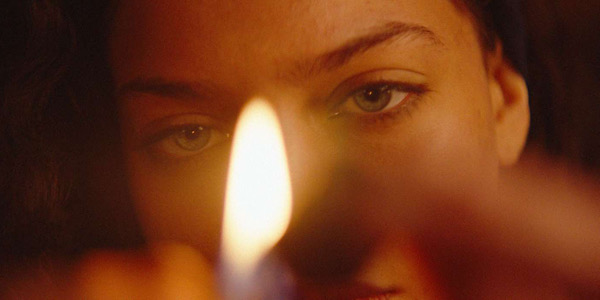
There is a quiet defiance at the heart of Sophie Power’s beautiful documentary short: Whatever a Sun Will Always Sing: a refusal to let deeply personal moments remain unspoken. Instead, Power crafts a film that gently insists on visibility, transforming private memories into something collective, and profoundly empowering.
Whatever A Sun Will Always Sing
From its opening moments, this film establishes itself not as a conventional documentary, but as something more fluid; an emotional tapestry shaped by lived experience; what Power describes as “fragmented memories… tapping into this little nugget” of feeling that has been carried over time.
That intention was always there. “I think for as long as I can remember, I’ve wanted to tell women’s stories,” Power explains. “It was something inside of me that I really, really wanted to let out. I just didn’t know exactly how I wanted to do it.”
The answer came through anonymity, an approach that would allow women to speak freely, without fear or hesitation. “Something like a confessional piece could be quite good,” she says. “Under the veil of anonymity, people could release what was inside them… without any fear of judgment.”
The Question
From this, Power developed a single, powerful prompt: What was the pivotal moment you grew up?
With that question, she took to the streets, interviewing 50 women across a wide range of ages and backgrounds. “I basically interviewed women from every background, every age… really trying to get a cross-section of society,” she recalls. What emerged, however, was something both expansive and deeply connected—shared emotional truths rooted in the experience of womanhood.
“There were patterns forming,” Power says. “Even though there were 50 stories, I could start to almost categorize them into different emotions: grief, being under observation, awakening.” Despite their differences, these moments revealed a kind of universality. “There are experiences that resonate with us again and again,” she adds. “But we don’t really talk about them openly.”
This impulse (to create a space for openness) is at the core of Power’s work. Her film is not just about storytelling; it’s about empowerment through expression. “I really wanted to create an atmosphere where, after watching it, people could talk about their own moment… and share their experiences,” she explains.
In distilling these interviews into four stories, Power resisted traditional narrative structure. Rather than building a beginning-to-end arc, she focused on emotional impact. “I always knew it wasn’t going to be longer than a short,” she says. “I really wanted to focus on the emotion rather than a story from start to finish… I wanted it to pack a punch.”
The result is a film that exists somewhere between documentary and experimental cinema; a hybrid approach that feels both intimate and expansive. This sensibility is influenced in part by Power’s Irish heritage, where silence around personal and intimate topics has long been culturally embedded. “Ireland is quite a Catholic, suppressed country.” As Power notes, “it’s something that is quite… taboo, I feel, to speak about in Ireland.”
That same intention carries through in the film’s aesthetic. Working closely with her cinematographer, Power sought to capture not just events, but emotional states. “I wanted to work with a cinematographer who could capture the essence of each of these women’s stories,” she says. “It wasn’t about being too realistic, it was about tapping into memory in a kind of dreamy way.”
Each visual choice reflects this philosophy. Warm, glowing imagery accompanies moments of identity and self-realization, while darker, more claustrophobic spaces evoke anxiety and scrutiny. “We were asking, ‘How can we make this feel as immersive as possible?’” Power explains. “So that even for a moment, you can put yourself 100% into what they were feeling.”
Importantly, the words themselves remain untouched. “The stories are all 100% the words of the authors,” she emphasizes. “I have them written down in their own handwriting, and I used their words to visualize it.” This fidelity to the original voices underscores the film’s commitment to authenticity, even within its dreamlike form.
That sense of responsibility shaped every stage of production. “I feel so honored that they trusted me to tell their stories,” Power reflects. “Especially when they’re often traumatic or deeply personal.”
Even in anonymity, she sought ways to honor each contributor. Subtle casting choices were made to reflect aspects of the original storytellers; small but meaningful connections that bridge lived experience and representation. “I was always trying to do little nods back to the original contributor,” she says. In one case, a woman who immigrated from Japan to New York was mirrored through an actress of the same background, one of several subtle choices that preserve emotional authenticity.
We All Have Stories to Tell
It wasn’t until later in the process that Power recognized the need to include her own story. “I was like, ‘Why am I trying to make a film about women’s stories and I’m not putting myself in it?’” she recalls. The decision became a turning point; both creatively and personally. “It was cathartic for me as well.”
That feeling extends beyond the filmmaker. Audiences have responded with a similar sense of openness, often sharing their own defining moments after screenings. “People were able to come up to me afterwards and talk about their own experiences,” Power says, an outcome that reflects the film’s deeper purpose.
source: Sophie Power
Notably, the film has also resonated with male viewers, who have expressed a newfound awareness of the emotional milestones women experience. “It was creating empathy,” Power notes. “That people maybe hadn’t thought about before.”
The film’s poetic sensibility is reflected even in its title, drawn from E.E. Cummings’ I Carry Your Heart With Me. “I was thinking along the lines of something quite poetic,” Power says. “Something with hidden meaning, rather than a traditional narrative. This is a line from that poem.”
For now, though, the film stands as a deeply affecting meditation on memory, identity, and voice. It invites viewers not only to witness, but to reflect, and perhaps to speak. This is an important part of why she did this.
“I would love to encourage people to reflect on their own moment,” Power says. “To speak to their friends, to their family… and break down the walls around what we carry with so much shame.”
In amplifying voices that so often go unheard, Sophie Power does more than tell women’s stories; she creates space for them to exist, to be felt, and ultimately, to empower.
What’s Next?
That commitment to deeply personal storytelling continues to shape Power’s future work. “I also have a documentary that’s specific to Ireland that I’d love to tell,” she says. “It’s a very, very deeply cultural story about Ireland’s heritage and history pre-colonization… I love exploring things that are personal.”
A trajectory worth tracking, and we look forward to it.
Film Inquiry would like to thank Sophie Power for speaking with us.
Does content like this matter to you?
Become a Member and support film journalism. Unlock access to all of Film Inquiry`s great articles. Join a community of like-minded readers who are passionate about cinema – get access to our private members Network, give back to independent filmmakers, and more.