By
By 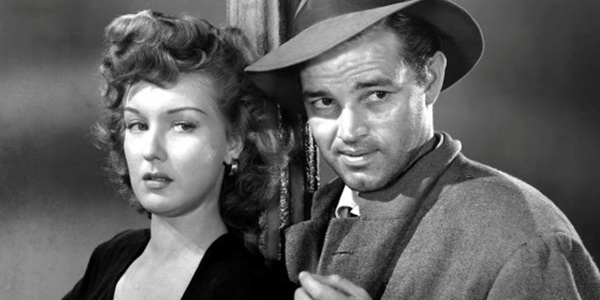
The days may be getting longer, but on TCM, the programming is getting darker. This summer, the network is bringing back a new iteration of its Summer of Darkness series. Almost every Friday in June and July will be devoted to a block of noir films chosen by Noir Alley host and “Czar of Noir” Eddie Muller as some of his favorites of all time. These are the movies that form the blueprint for classic noir: chock full of protagonists making morally questionable choices, often while lit dramatically with a cigarette or glass of whiskey (or both) in hand. And usually, not too far away, you can find a glamorous femme fatale luring our antihero to their doom.
I sat down (virtually) with Muller to discuss what makes a film noir different from your standard cops-and-robbers flick, how neo-noirs evolved from classic noir, and why you should never underestimate brunette Joan Bennett.
Your name is synonymous with noir, from your books Dark City and Dark City Dames, to the founding of the Film Noir Foundation with its Noir City Film Festival, to hosting Noir Alley on TCM. So what I want to know is: where did your fascination with noir begin? Was there a specific film or book that ignited your interest, or was it a more gradual realization that this was something you really cared about?
EM: I’m going to level with you: I’ve had to come up with a film because I’ve been asked this a few times. It’s a movie called Thieves’ Highway, from 1949, which will be part of the Summer of Darkness on TCM. And I’ll say in that introduction, “This is the one that put the hook in me,” but truth be told, it was probably not an instantaneous thing when I saw the film. It’s just that when I look back at that period in my life, that’s the movie that stands out the most as the one that appealed to all of my various interests—not just in the genre, but in my appreciation for movies themselves. It was set in my hometown, and I loved seeing things that no longer existed, and trying to figure out, like in a detective story, where did they actually shoot this? I don’t recognize this place.
This summer you’re presenting a series called Summer of Darkness on TCM, featuring your personal selections of the greatest noirs ever made. How hard was it to narrow down your list to a top 25?
EM: So, that list was something I came up with years ago, because as I put my website together, it was like, well, what do I put on my website? And as you said, I’ve become so synonymous with film noir that it felt like I needed a list of the top noir movies. But I was very cautious and circumspect when I did that, because I didn’t want to get into this thing that is so prevalent now on the Internet, where everybody is making a list of the top 50 or top 20 of something. So I said, these are the top 25 films that I think will stand the test of time. They’re truly movies I can watch repeatedly, and every time I watch them, I find something else. Does that mean they’re the best? I don’t know.
But it’s funny, because when Charlie Tabesh, who is the head of programming at TCM, said “We’re going to bring back the Summer of Darkness,” we were all trying to figure out, what’s the hook? And then Charlie went to my website and said, “That’s the hook, we’re going to say it’s your 25.” And I said, “Don’t say it’s the 25 best, just say it’s my 25 favorite,” because there’s a personal aspect to it. This isn’t me saying something is the best noir movie ever made, because my brain doesn’t work that way.
Ann Savage and Tom Neal in Detour. source: TCM
The primetime portions of Summer of Darkness are packed with a lot of real classics that a lot of people know. The opening night (June 5) lineup is basically three of my all-time favorites that I watch repeatedly: The Maltese Falcon, Double Indemnity, and Detour.
EM: Yeah, that’s pretty hardcore right off the bat.
However, the late-night portions of Summer of Darkness highlight great neo-noirs. What do you think makes a great neo-noir? How have they evolved from what classic noir used to be?
EM: Well, I have to confess, I didn’t pick the neo-noir films in this series, but I approved them. I didn’t know that was a thing they were going to do initially, but I’m happy they did it. But to answer your question: sometimes the films feel as though they’re closer to the classic films than they are neo-noir, right? If you watch Body Heat now, it feels closer to the 1940s than it does to today. And I find that absolutely fascinating: the way we age, and the movies don’t, but our reactions to the movies change as we change and mature.
The difference between them is obviously stuff that the Production Code didn’t allow back in the day. With a film like Body Heat, it’s the language, it’s the nudity, it’s the violence. Those are the three things that are different. Otherwise, when Lawrence Kasdan wrote that movie, he was writing a classic Hollywood noir, albeit a little bit revisionist, because the femme fatale gets away with it. And I think that’s largely what the neo-noir movies represent. It’s cinephiles, largely, who make these films, and they just want to tweak it a little bit to say, “Oh, if only they could have done this back then.”
One of the things that made me a film noir fan was the femme fatales: tough, gorgeous women who have agency and edge, and maybe they weren’t good women, but they were fun to watch. Barbara Stanwyck in Double Indemnity is the epitome of that for me. Who would you say is the ultimate femme fatale?
EM: Oh my goodness. It’s hard. I mean, I have a total devotion to Barbara Stanwyck. I love her. There’s Mary Astor in The Maltese Falcon—
I love that performance because I think she’s a very unlikely femme fatale. Some people try to say it’s miscasting, but I think it works very well.
EM: I totally disagree [regarding miscasting]. I think Mary Astor is terrific in that role, for that very reason. She is so deceitful, so dishonest—few actresses have been as good at lying in close-up as Mary Astor is in that movie.
But there are a lot of femme fatales in this program: Ann Savage in Detour, Joan Bennett in Scarlet Street, Ava Gardner in The Killers, Jane Greer in Out of the Past, Yvonne De Carlo in Criss Cross, Peggy Cummins in Gun Crazy…Norma Desmond [played by Gloria Swanson] in Sunset Boulevard is definitely a femme fatale, but then again, Hollywood is the femme fatale in that one.
I think Joan Bennett is kind of underestimated in that group. She definitely played that role [of femme fatale] to perfection in the mid-forties. She had such an interesting career: she went from being a marcelled 1930s girl to a 1940s femme fatale and then graduated quickly into mom roles in the 1950s. She had a pretty amazing career.
Edward G. Robinson and Joan Bennett in Scarlet Street. source: TCM
I love Joan Bennett, especially because apart from noir, I really love Pre-Code movies. It’s fun to see her in the early 30s, very young and blonde, and then she goes dark-haired and noir—
EM: Yeah, everything changed when she dyed her hair.
And then, one of my favorite later films is Suspiria, which she’s in as well.
EM: A Suspiria fan! That’s great.
Who are some other femme fatales who don’t get talked about enough? I really like Cleo Moore in her films with Hugo Haas. And I’ve enjoyed seeing a few starring Barbara Payton on Noir Alley recently—I like her a lot.
EM: Yeah, well, she [Payton] was troubled. I don’t think Cleo Moore was troubled. She was pretty much on top of everything. But yeah, those Hugo Haas movies are amazing. I toy with the idea of doing a whole Hugo Haas series, but I wonder how much people could stand, as it’s kind of the same story over and over again—
I would love that! I think more people would than you would guess. When you go on Letterboxd, you can see there’s a growing interest in those movies.
EM: Well, the one that I haven’t shown of his—I really like Pickup very much, and The Girl on the Bridge—but The Other Woman is the one of his that I really love. It’s like a cut-rate Sunset Boulevard—it’s about the movie business—and it’s a really amusing film. I like Hugo Haas very much. I can’t really say he’s underrated, but he’s underappreciated for all he accomplished in his career.
One thing I’ve been enjoying on Noir Alley lately is being able to see more international noirs in addition to Hollywood titles. I’ve particularly enjoyed the Argentine films; I thought The Bitter Stems and The Black Vampire were fantastic. Can we expect any international titles as part of Summer of Darkness, or is this more of a Hollywood-focused series?
EM: No, there are no international films as part of Summer of Darkness. We took a very traditional approach to this series. But on Noir Alley, I really appreciate that TCM has given me so much latitude within the parameters of the genre to really explore and maybe at times punch holes in people’s preconceived ideas of what noir is. So I very much enjoy showing the foreign films. Next year, I have a book coming out called Noir Around the World that I’ve written with Imogen Sara Smith, and it is like a world tour contemporaneous with what we’re talking about in this era in Hollywood; it’s about noir films that were being made everywhere else in the world.
But, for the Summer of Darkness, because I sometimes color outside the lines when showing—how do I put this—films that people don’t agree are of an equal quality all the time. Like Bad Blonde [starring Barbara Payton] is nobody’s idea of a great film, but I don’t really care, because it’s only 90 minutes, and if you’re really into this stuff, don’t you want to explore a different 90 minutes? Here’s what this is all about, here’s why this film got made, here’s what happened to these people and why their careers didn’t take off…I enjoy all that on Noir Alley. But for the Summer of Darkness, we said, okay, we’re going to play this straight: here’s 25 Hollywood noirs from that classic era. And they do go in chronological order; it starts with The Maltese Falcon [in 1941], and it ends with Odds Against Tomorrow [in 1959], which is very much what people consider to be the classic stretch, from the early 1940s to the end of the 1950s. So I played it very much by the book for this assortment.
Mary Astor and Humphrey Bogart in The Maltese Falcon. source: TCM
It’s funny that you mention sometimes picking films that aren’t necessarily of the highest quality, because honestly? Those are some of my favorite Noir Alley movies. They tend to be ones I haven’t seen, and they feature actors and directors and cinematographers who are new to me, so that’s exciting. And sometimes there’s a silly script, or weird plot twists, or some really heavy-handed narration, but I find it very entertaining. So I was wondering, how do you pick those? How do you decide that a movie like that is something you want to show to people on Noir Alley?
EM: Well, I feel the same way about this that you do. I don’t want to just show the same things over and over again. And TCM fans are devoted; they will say, “Oh, they’re showing this one again? Didn’t they just show this last month?” But when I come across a title that has not been shown, then my antenna goes off, and it’s like, ooh, I’ve got to show this. And I’ll be honest: if there’s a great backstory to the movie that I want to share, it weighs heavily in my decision to show the movie. So there are a lot of factors. Sometimes I realize I’m the only one who knows what the movie is, with something like This Side of the Law or The Second Woman. That’s not really going to show up on anybody’s radar. But for me, it’s all noir—it’s all variations of noir. So I love picking those oddball titles. If you’re a movie fan, there’s a lot to learn from less-than-great movies.
Every other week, I get correspondence from David Mamet. And David Mamet writes to critique the movies that I’ve shown. And it’s funny, because he’s such a structuralist; he’s such a purist in his approach to storytelling. He’ll watch a movie, and he’ll write me a one-page note explaining where the screenwriter went wrong. He’ll say, “Well, if only this had happened, and if they ever remake this, this should happen.” And it’s kind of amazing, because he’s just doing this for fun. But it’s like, boy, if I ever shared this correspondence with people in Hollywood, they’d be jumping all over it: “Mamet’s rewriting this classic noir film!”
That itself could be a book—all of his notes about how he would change these classic noirs.
EM: Exactly.
Going back to the international noirs, because you mentioned writing this book, I would love to know if there is a particular country that you think is underrated as far as noir goes, and has put out a lot of great movies that people should know more about.
EM: It depends on who you’re talking to. Obviously, France is the main one, but everyone kind of gets that because they call it film noir to begin with. I don’t know how many people are familiar with Japanese noir from the 50s and 60s, but there’s great stuff there. And Mexico had tremendous films in the 40s and 50s, as did Argentina—you’ve seen some of those.
We really tried to be all over the place [in the book], so there are movies from Italy, from Germany, from behind the Iron Curtain. There’s a film from Iran, made in the early 60s; pre-revolution Iran was very Westernized, and the West had a big influence on the film culture there. And Scandinavia, and England, of course, as well. There’s a lot, and there’s still plenty more for a second, third, fourth, fifth edition as well.
You mentioned Mexico—I really like those films from the 40s and 50s, and the way they mix noir and melodrama. They also have so many strong female characters that are maybe kind of femme fatales, but also not really.
EM: You’ve hit the nail on the head. They call them rumberas, and basically, they’re like noir musicals. The protagonist is generally a woman, an entertainer in one of these nightclubs or something, and instead of the thing you always see in a Hollywood noir, where the man is stuck between a good woman and a femme fatale, it’s the woman who’s confronted with the gangster and the good guy. She is the one having to make the moral choices. Those pictures are tremendous.
When I was looking at the lineup for Summer of Darkness, one of the titles that caught my eye was Raw Deal, because that’s one I haven’t seen. I was wondering if there was any film among the 25 that you think is particularly underseen that you want people to check out?
EM: Moonrise is a film that I don’t think a lot of people know, and it’s a personal favorite of mine. It’s showing the same night as Raw Deal. That one is pretty great. I have to say, a while back, people didn’t know about Act of Violence, but I think I’ve taken care of that because I’ve shown it about five times.
I saw that one on Noir Alley!
EM: Now people say that’s close to being a perfect film, which I agree with. But Moonrise is the one that I would say is a bit of an outlier there. And it’s by Frank Borzage, who no one really associates with film noir. There are directors on this list where I’m showing their one venture into noir. Like Fred Zinnemann and Act of Violence, Borzage and Moonrise, Edmund Goulding and Nightmare Alley…that was it. Those three pictures are definitely one-offs for those filmmakers.
Dane Clark and Gail Russell in Moonrise. source: TCM
Because noir clearly still influences filmmakers, what are some more recent films you’ve seen that you think really show that influence or capture the spirit of classic noir?
EM: That’s an interesting question. I don’t really see it so much in this country. I see it in other countries, I see it on television in other countries. Shows like Babylon Berlin, which is extraordinary. A lot of television from Eastern Europe is very traditional noir storytelling. I think in this country, a lot of the films that might be noir—they kind of jazz them up, and they put in a little too much violence, and they sensationalize it to the point that they’re not really focusing on the psychological drama at the core of these things. I watch a lot of foreign television now because I’m just fascinated by how another culture approaches this stuff.
You mentioned the psychological core of noir. This is a very generalized question that kind of goes back to the beginning, but what, in your opinion, makes a film noir? What are the characteristics that you would say are most synonymous with the genre?
EM: Well, in the 40s and 50s, they were crime stories, but they were often told from the point of view of the person who was committing the crime. That was a change; that was a whole different thing. And to me, that has always been one of the essential things about film noir: that the protagonist could be the quote-unquote bad guy.
To me, that is what distinguishes hardcore noir. The rest is kind of window dressing, right? Then it has to do with the look of these films. That’s where the artistic movement comes into play, where the cinematography looks a certain way, and the language has a certain flair. But it could just be a cops and robbers movie dressed up to look like a noir.
But a film like Double Indemnity is definitive noir. It’s about a guy who does the wrong thing and tries to get away with it, and it takes the audience along on this ride. You get to walk in the shoes of this person who’s doing the wrong thing and is going to face the consequences. And for me, that has always been what noir is all about.
I was watching the recent Noir Alley presentation of Strangers on a Train that featured Rosie Perez, who was a very fun guest to have—
EM: She’s fantastic. I love how she talks about movies. She talks about them just like a movie fan.
Right, she’s so enthusiastic and energetic, it’s great. But I loved what she said about noir, that you find yourself asking, what would I do in that position? Would I do that? Would I cross the line?
EM: Exactly. And I think that’s the purpose of it. That’s the purpose of art. It engrosses you and makes you question these things from the safety of your chair.
Barbara Stanwyck and Fred MacMurray in Double Indemnity. source: TCM
It’s one reason I like noir so much, as someone who also likes Pre-Code, because I feel like that is where you get to see the edge that was sanded off in the Hays Code era.
EM: Precisely. You can see that noir would have happened 10 to 12 years earlier than it did if not for the enforcement of the Production Code. You can see in ‘32 and ‘33, there are a lot of movies that I now call proto-noir.
What would you say some of those are?
EM: Beast of the City, Okay, America…there’s a picture called Afraid to Talk that is very much like that. Safe in Hell is very much like that. Two Seconds is a very noir kind of story with Edward G. Robinson. There are plenty more. There are even silent movies! I keep telling Jacqueline [Stewart, host of TCM’s Silent Sunday Nights] we have to do a crossover where we show something like A Cottage on Dartmoor. That’s a very noir film—I’d love to show that.
The Film Noir Foundation is responsible for some of the very cool restorations that we’ve seen on Noir Alley lately, such as the Argentine films I mentioned. Is there anything the Foundation is working on right now that we can look forward to seeing on Noir Alley in the near future?
EM: Oh yeah, absolutely. I’m not going to tell you, though! But there are several new restorations and more in the pipeline. I would expect we’ll see at least one of those on Noir Alley in the second half of the year, which will be a real surprise for people. Well, it won’t be a total surprise, because I’ve already shown it at one of my festivals, and I will continue to show it at my film festivals this year, but it probably won’t get on air until later this year.
Cool. I’ll have to keep an eye out for whatever the mystery title might be.
EM: It stars Pat Boone and Barbara Eden. Who would’ve thought that they were in a film noir? I don’t know why I’m being coy. The movie is called The Yellow Canary, and it has a screenplay by Rod Serling.
Oh wow!
EM: I’m afraid it goes to show that even Rod Serling can write a pretty mediocre script. But the movie—since we were talking about this earlier, with what I choose to show—to me it was just fascinating because it is Pat Boone playing the antithesis of Pat Boone. He plays a nasty pop star who smokes cigars and is mean to everybody, and it’s like, “Oh my God, this is great!” It’s a curiosity more than it is a great film, but it is amusing.
Summer of Darkness airs most Fridays in June and July on TCM, beginning June 5.
Does content like this matter to you?
Become a Member and support film journalism. Unlock access to all of Film Inquiry`s great articles. Join a community of like-minded readers who are passionate about cinema – get access to our private members Network, give back to independent filmmakers, and more.