By
By 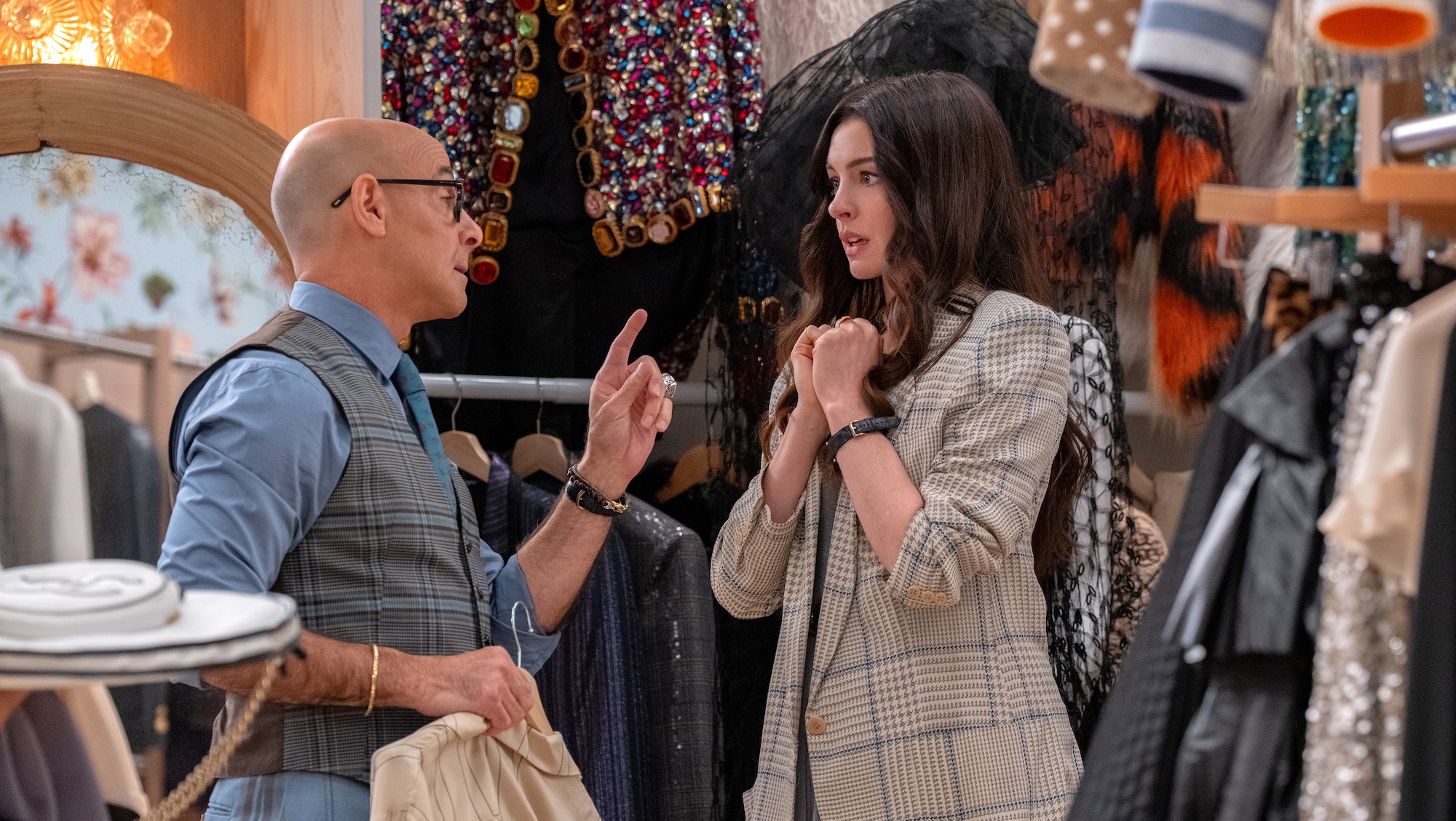
It was a different world The Devil Wears Prada opened in 20 years ago, as indicated by the fact that you could open a summer hit like The Devil Wears Prada without it being a sequel, remake, or reimagining. To be sure, the 2006 original—which also netted Meryl Streep an Oscar nod—was still based on a hit bestselling book. But even that trend of adapting popular, gossipy novels aimed at a slightly more sophisticated audience was the rule in Tinseltown, not the exception.
It was a time when comedies were blockbusters, summer crowd-pleasers didn’t regularly cost a cool quarter-billion dollars and up, fashion magazines dictated the trends of entire fall clothing lines, and 20th Century Fox existed.
So by virtue of The Devil Wears Prada 2 opening with the familiar “Fox Fanfare,” but now in front of a 20th Century Studios logo, it should be clear we’re in a drastically altered landscape where even Streep’s iconic Miranda Priestly is pitifully hanging on by her blood-red fingertips. Forget about sympathy for the Devil; this is a full-throated salute and eulogy for anyone still trying to do anything in the media landscape besides squeeze pennies and dimes from a wasteland’s husks.
Already critics have rightly picked up and even felt appreciated by The Devil Wears Prada 2’s tribute to print journalism. While the marketing before the film’s release wisely basked in the joy of seeing Streep back in her singularly crisp silver bob, not to mention Anne Hathaway and Emily Blunt returned as well—and even the Stanley Tucci!—the real surprising heart of the film is how sweetly it romanticizes journalism. And by extension filmmakers who also miss the art of telling a story instead of curating content.
The thrust of the film is that for complicated reasons, the fictional fashion magazine Runway—a thin layer of frosting above the film’s setting in Vogue and Anna Wintour’s infamous office space—is in crisis, and Miranda Priestly’s dithering CEO has forced her to take on Andy Sachs (Hathaway) as her new senior features editor. This isn’t due to a strong belief in Andy, just awareness she gave an impassioned, expletive-laden defense of written journalism that went viral on TikTok (she had just been laid off moments before accepting an award for reporting).
Yet this amusing scenario is more than just a contrivance for explaining how Miranda and Andy would ever work together again after the end of the last movie; it is also the first step into a film bathed in the uncertainty and gallows humor cynicism that’s infecting newsrooms from New York to D.C., and LA to London. (Never mind the smaller markets where local newspapers and magazines are virtually extinct.)
As Tucci’s long-suffering fashion director at Runway scoffs, “Runway isn’t a magazine anymore.” There’s a book still, if barely read, but they’re now a content portfolio where his work is designed to be passively scrolled by while people are on the toilet. “I used to do four-week shoots in Africa every year,” he laments, “now I’m lucky if I can rent a studio for the day in Hoboken.”
Like anyone who still makes their living, if only just, by the printed word, I could feel that line and so many others. Even in as quirky and whimsical an offshoot of media as entertainment journalism, I’ve been around enough in the past 13 years to see the noose tighten. Another marquee publication gone; another outlet absorbed and its newsroom eviscerated; those brands consolidated, and half the staff at each deemed redundant by C-suites and boards that never seem to run out of chairs.
At times it can feel like arriving late to an epic party that lasted roughly the whole of the 20th century. But now the tables are being folded up, the food put away, and the music has awkwardly stopped.
So, yes, it is easy to see why some critics are smitten with The Devil Wears Prada 2, but then it is perhaps easy to see why even the filmmakers of something as most assuredly unstoppable as a sequel to one of the defining films of the 2000s and Millennial youth can feel like their backs are up against the wall. Because, starting with the lack of Fox beneath that “Fox Fanfare,” The Devil Wears Prada 2 is releasing in a world where the far glitzier and swankier Hollywood open bar is also seemingly near last call.
There is something so satisfying about watching Streep, Hathaway, and Blunt all back onscreen and trading mean-girl put downs and calls for fashion-shaming. It’s also nice because it’s getting increasingly rare to see any of them on the big screen. While Hathaway is having a genuinely nice moment this spring and summer, leading sure-thing Devil between the more opaque Mother Mary, and having a pivotal role in The Odyssey come July, one of those was a tiny-budgeted A24 indie mood piece masquerading in horror couture, and the other is a supporting role with longtime champion Christopher Nolan.
Yet in recent years, she’s often been relegated to streaming movies like the very good The Idea of You and the very meh The Witches. And as with virtually every other household name these days, she also got a well-reviewed and little-watched Apple prestige series in WeCrashed. Meanwhile Emily Blunt also does prestige work, often though as “the wife or girlfriend,” a la The Smashing Machine and Oppenheimer. And even the Meryl Streep, while always appearing to be fine-dining on anything she appears in, is also more often being pushed to the small screen—Big Little Lies, Only Murders in the Building—or in films that live there, such as Netflix’s The Prom and Don’t Look Up.
It should be stressed though that each is still doing a lot better than some of the top talent of their respective generations who don’t have touchstones like The Devil Wears Prada to revisit; or a studio still thriving enough to make it.
Consider that when The Devil Wears Prada’s original patron at Fox was subsumed by Disney in 2019, it was like a sequoia tree toppled over with reverberations that rippled from the Hollywood Hills to Venice Beach. In the last 12 months, the Ellison family has essentially swallowed the legacies of both Paramount Pictures and Warner Bros. whole, and all the while Wall Street prognosticators clapped, saying, “It is the only way to succeed.”
That small-ball, infinite growth, logic is what got the man who gave the world Dr. Pimple Popper and Naked and Afraid on reality TV the chance to run the studio of Bogie and Bacall into near-extinction. But David Zaslav is getting a golden parachute for his troubles—and after nearly firing the creative executives who greenlit Sinners and One Battle After Another for him before either of those films opened.
The bottom line is fewer studios means fewer movies with the apparatuses to succeed in theatrical distribution, which means fewer opportunities for everyone whose value comes from making movies, as opposed to exploiting them. Among those that are getting made are products increasingly retrofitted for the algorithm and “second screen” viewing habits, which can be summed up as streaming services asking filmmakers to make their movies dumber and duller, so folks can follow along while scrolling on IG reels. It’s the same logic that saw print journalism get co-opted by SEO optimization practices (clickbait). But as theatrical attendance continues to decline in a post-COVID world and studios make fewer theatrical films—or Google turns off the spigot of their search engine firehose that so many outlets once catered to—everyone’s fingertips strain evermore to hang on.
One of the running gags in The Devil Wears Prada 2 is everyone, including the imperious Miranda Priestly, is forced to flatter and secondguess at the whims of their patrons. While the movie begins with Miranda and Andy brought together by the same old guard billionaire who owned Runway in the 2006 film, in the sequel his son and heir is waiting in the wings with a line of consultants (or “undertakers,” as Andy accurately surmises). A major question in the film becomes if there are better alternatives for Runway, for Miranda, for Andy, and just anyone who wants to do good work.
Some potential investors say the right things, others are deliciously drawn tech bros who mindlessly yap about the greatness of AI while obliviously sitting beneath Da Vinci’s The Last Supper in Milan. In the end, though, they’re all just presented as thin lifelines in a raging, tumultuous sea. At one point, Miranda even tells Andy they’re not friends, exactly, they’re just looking for a piece of driftwood big enough to hold both of them. For right now.
Even a film—or IP—as apologetic for bad bosses and materialistic excess as the Devil Wears Prada has relatively few illusions about the capitalistic race to the bottom. It’s a tumble that leaves creatives and visionaries whose work people enjoy finding their greatest success to be…. clinging to wrecked driftwood. For right now.
The Devil Wears Prada 2 is in theaters now.
The post The Devil Wears Prada 2 Eulogizes Journalism, Movie Stardom and Last Gasps of Creativity appeared first on Den of Geek.