By
By 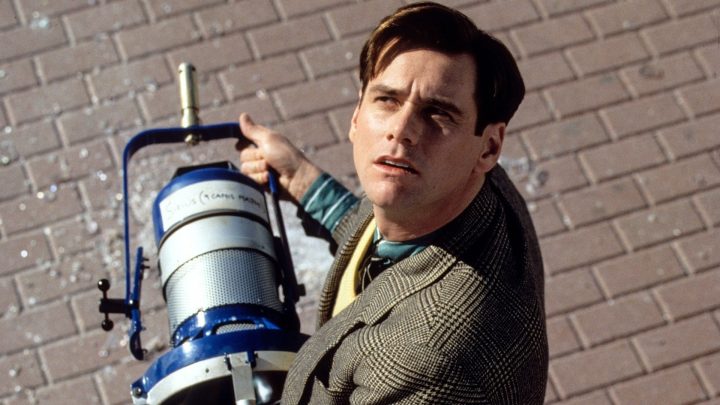
“Is this all there is? Is there nothing more?”
The self-aware robotic probe V’Ger in Star Trek: The Motion Picture has evolved to the point where it is can ask what may be the quintessential human question. The question is rhetorical, addressed to no one, but even so, it may be the fundamental question of art.
So it makes sense that filmmakers would put the question in the mouths of their heroes. Art is, after all, (according to Ionesco) the process of an artist trying to show us what it is like to be them. And all artists, by definition, ask this question.
The question is so powerful that it can spark the beginning of a hero’s journey. In this article, we examine films which in some way explicitly ask the question “Is there nothing more?”. It is not the framing of the question per se we’re interested in; what is interesting are the answers we get.
The question is, technically, a yes or no question. So we can sort such films into two basic classes: those that answer “Yes, there is more to life than what you see”, and those that answer “No, actually, this is it”.
Neither answer is wholly correct, of course, and neither is wholly positive or negative. It is the aim of each film to make some sort of case for whether the hero finds their destiny “out there”, or whether their ultimate path leads much closer to home.
I would like to book a flight to Fiji
“Biggs is right. I’m never gonna get out of here.”
Thus speaks Luke Skywalker in act one of Star Wars. He has just learned that his best friend intends to join the Rebel Alliance, an almost unimaginable leap beyond the horizon of adventure for a young, orphaned farm worker. Every day Luke thrusts against his traces, firm in the belief that there is more to the galaxy than his uncle’s moisture farm.
So too with Rabbit from 8 Mile, Lloyd Christmas from Dumb and Dumber, the young Flynn in TRON: Legacy, and poor, poor Truman Burbank.
Remy in Ratatouille, Ariel in her underwater cave with trophies of the promised world beyond, Belle bashing the ordinary world of the hard-working villagers right to their faces. In fact, most modern Disney films start off like this, with our hero proclaiming how small their world seems to be, and how much bigger it ought to be.
This whole article is about characters which incite us in the first act towards a sense of cosmic antsyness, the feeling that the confines of their world are too small for their sense of their own potential. We touched on this obliquely a few years ago in our article about characters who find their own adventure – what distinguishes our discussion today is how the film itself chooses to address these plot-inciting frustrations. Does it sympathize and validate? Or does it ultimately deny the character a world any larger than their present one?
For the characters just mentioned (Luke, Rabbit, Remy, etc), the story of the film winds up supporting their claim. It justifies these feelings by unlocking the characters’ cages and showing them that, yes, you’re right, there is so much more to the world than you know, and your destiny is to live “out there” not “in here”.
The personification of this trope is surely Truman Burbank, the orphan who at birth was unknowingly co-opted into a grand project of corporate-media gaslighting, a sentient soul destroyed through archonic manipulation of his free will, all for the purpose of ratings.
Truman’s fable does not, crucially, end in a Men In Black-style reaffirmation of cosmic limits, but rather in their destruction. Truman’s lifelong sense of wanderlust and unbelief in the apparent limits of his world is triumphantly, catastrophically ratified by having him literally find a door in the sky.
The “Truman” class of films takes an “affirmative” stance on the main character’s existential unease. The filmmaker agrees with the hero and, by implication, wants us to as well: The narrow circumstances of one’s current context and cultural situation are not “real” permanent limits but are, at worst, temporary and permeable. At best, they are illusory.
And furthermore, it is laudable (say these filmmakers) for each of us, the main characters in our own films, to question these limits constantly, and to search unceasingly for that door in the sky.
I’ll Never Look Farther Than My Own Backyard
On the flipside from Luke Skywalker, we have another orphan with kind but unimaginative guardians, trying to find joy in a dust bowl. Dorothy Gale is beset with a multitude of persistent, banal problems, but none as persistent as the nagging sensation that there is some other place which embodies her image of how good and beautiful the world could be.
From the same era we must also consider George Bailey from It’s a Wonderful Life – a lifelong dreamer and inner-adventurer for whom circumstances seem to keep him stapled to his sleepy little American town. And there is also Josh Baskin from Big, a child chafing against the gates of an adult’s world.
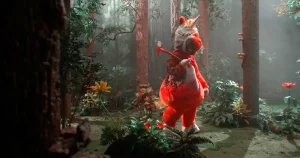
And perhaps most painfully, Jack Skellington, who having reached the top of Halloweentown’s cultural hierarchy, realizes there are no more pumpkins left to conquer, and he plummets to the deepest, darkest depths of despair ever captured in a children’s film.
Heroes in this class of films start off the same as Luke and Ariel and Belle: they are convinced that their misery is due to the limitations of their current world, or at the very least its failure to be some other greater world that they can imagine. They are given the opportunity to actually genchi genbutsu, to stop imagining and “go and see”, to actually go try and find the adventure that they’re so sure is waiting for them.
But something different happens for them by the third act.
In the “Dorothy” class of films, the denouement is characterized by the hero realizing that their misery was not the result of their world by itself but rather their perception of it. Sometimes the heroes actually regret the journey they felt compelled to make, the time and effort spent representing a kind of rock bottom to their essential spiritual error.
For Jack Skellington, his attempt to break new creative ground by co-opting Christmas was an unmitigated disaster. Within the course of three acts he has gone from crying “empty tears” because of the “empty place in my bones that calls out for something unknown”, to realizing that he now feels like his “old bony self again”.
Jack reclaims his crown as Pumpkin King and returns to where he started in Act 1, now educated and invigorated by his full-circle journey. On the outside nothing has changed, certainly not the world that caused his breakdown. But on the inside Jack has returned to Halloweentown a different person….somehow.
Josh Baskin’s main conclusion from being forced into adulthood is that the grass is not greener – adulting is way harder and way more full of bullshit than being a kid. (Oh and also his mom is still at home grieving the fact that her son has been “kidnapped” for several months and maybe yeah feel a little bad about that.)
George Bailey keeps his dreams of travelling the world alive his whole life. Just like Truman Burbank, his dreams of Fiji and other exotic locales are symbolic of a life filled with the adventure, pleasure, and sublimity that are painfully absent from his current life as a half-deaf townie banker.
It is only through the efforts of an agent of the Christian god that George Baily becomes convinced that all that he thought he was lacking in his life can in fact be found in the gripping adventure of husbandhood, fatherhood, and municipal fiduciary activism. It is his current life that is wonderful, not some other imaginary life out there waiting for him.
And as for Dorothy Gale, her brush with traumatic brain injury taught her that a wonderous world of fantasy and adventure can in fact be quite terrifying. She had never realized how much her peace of mind depended on living in a world she understands.
Dorothy discovers that a world in which the “dreams you dare to dream really do come true”, is a world which is alien to anything resembling real life. It is devoid of the simple, comfortable pleasures of family and familiarity. Such a world, it turns out, is not the world that Dorothy prefers to live in.
The dichotomy between these two types of stories have existed since the birth of storytelling. Both of them fit cleanly into Campbell’s Hero’s Journey framework (each interprets the “Return” stage differently but all the phases are there).
In both cases the hero spends the first act in some sort of torment about their present situation. By the last act they have arrived at a new level of alignment and peace with their situation and thus is “victory” defined for them.
For Truman (and his brethren), the first-act torment is what sews the seeds of their eventual liberation.
But what about for Dorothy, and Josh Baskin, and George Bailey, et al, who all wind up, at least physically, back where they started? What purpose did all that fretting serve? Was it “just” character development?
This is a question we must ask of own lives. Is the value of thinking about some aspect of the world you want to change, measured solely by whether it leads you closer to the world that you desire? When we sit around and dream about things that never come true, and worry about things that we cannot change, are we just wasting time?
What these movies teach us is that the answer is almost certainly no. The hero must start from a place of dissatisfaction, because it is their journey from there, in the first act, to the realization of the third act that allows them to undergo their requisite change. This is simply not possible without them exhibiting some form of frustration or conflict or sense of incompleteness at the start of their story.
And so it is with us: Frequently those chapters of life so characterized by growth and change started with us feeling dissatisfied, some grit in the oyster shell, the sense that something wasn’t right about how we fit into the world.
Maybe we complained to those around us; maybe we started to push back against walls that seemed to others to be immovable. The net result may or may not have been some outwardly visible change our world, but our story did nevertheless move forward.
There is one other point to be made about “Dorothy”-class films, and it’s a hypothesis that is actually made by The Truman Show:
TV: And there’ll be another episode of I Love Lucy same time tomorrow, but right now, it’s time for Film Classics. Tonight we present the endearing, much-loved classic, Show Me the Way to Go Home. A hymn of praise to small town life where we learn that you don’t have to leave home to discover what the world’s all about. And that no one’s poor who has friends. Full of laughter and love, pain and sadness, but ultimately redemption.
In the film, the director of the involuntary-reality-show The Truman Show is engaged in a long-term psy-op against its star. Using the educational system, the media, and carefully choreographed traumas, Christof spends his day psychologically undermining Truman’s urge to explore beyond the bounds of his prison. This is the price of maintaining a televisable status quo.
Even stripped of its gnostic-conspiracy-theory vibes, we must still consider the implication that the screenwriter is making here: Are “Dorothy”-class films (of which the fictional Show Me the Way to Go Home is clearly a stand-in) “bad” in some way? Do stories that punish (or at least argue against) those who choose to peek through their bars serve as a braking force against the human soul?
Is it “spiritually harmful” to consider there may be no place like home? Is it “regressive” to applaud George Bailey’s acceptance of the missionary-position American Dream rather than to insist on embracing his lifelong dreams of a transformative, adventurous life?
What is a child to think when they see that the end result of Jack Skellington’s brave new creative experiment is him crying in a graveyard, and then returning to the safety of his original lane?
A conspiracy-minded, 80s-punk-adjacent viewer would see the sinister hand of conformity propaganda in these films. Seen through that narrow lens, they are “obviously” a concerted effort to subliminally inculcate and reinforce obedience to a Western middle-class cultural norm.
But (as always) the truth is much more subtle and much more kind. Let us reframe the actual difference here in a more judgement-neutral form:
“Truman”-class films nourish the side of ourselves which can see the unseen potential of the world. “Dorothy”-class films help us see the world and live in it.
Neither is correct; both are essential. This hidden dialectic lies beneath some of the most important films ever made. Realizing its existence allows the viewer to pull these films off the screen and into our lives.
Because we live this dialectic every day. Life seems designed to be full of obstacles, but one cannot live in a state of perpetual revolution, constantly at war and never at peace. Nor can one abdicate the responsibility to exert one’s will upon the world. In each moment we must make a choice.
Fortunately, we have been training for this. All these films are “game tape”, thousands of simulations of this choice, both realistically and in metaphor. We can use the examples of these heroes to find our own path, sometimes like Dorothy, sometimes like Truman, sometimes in some third way which strikes a balance between acceptance and escape.