By
By 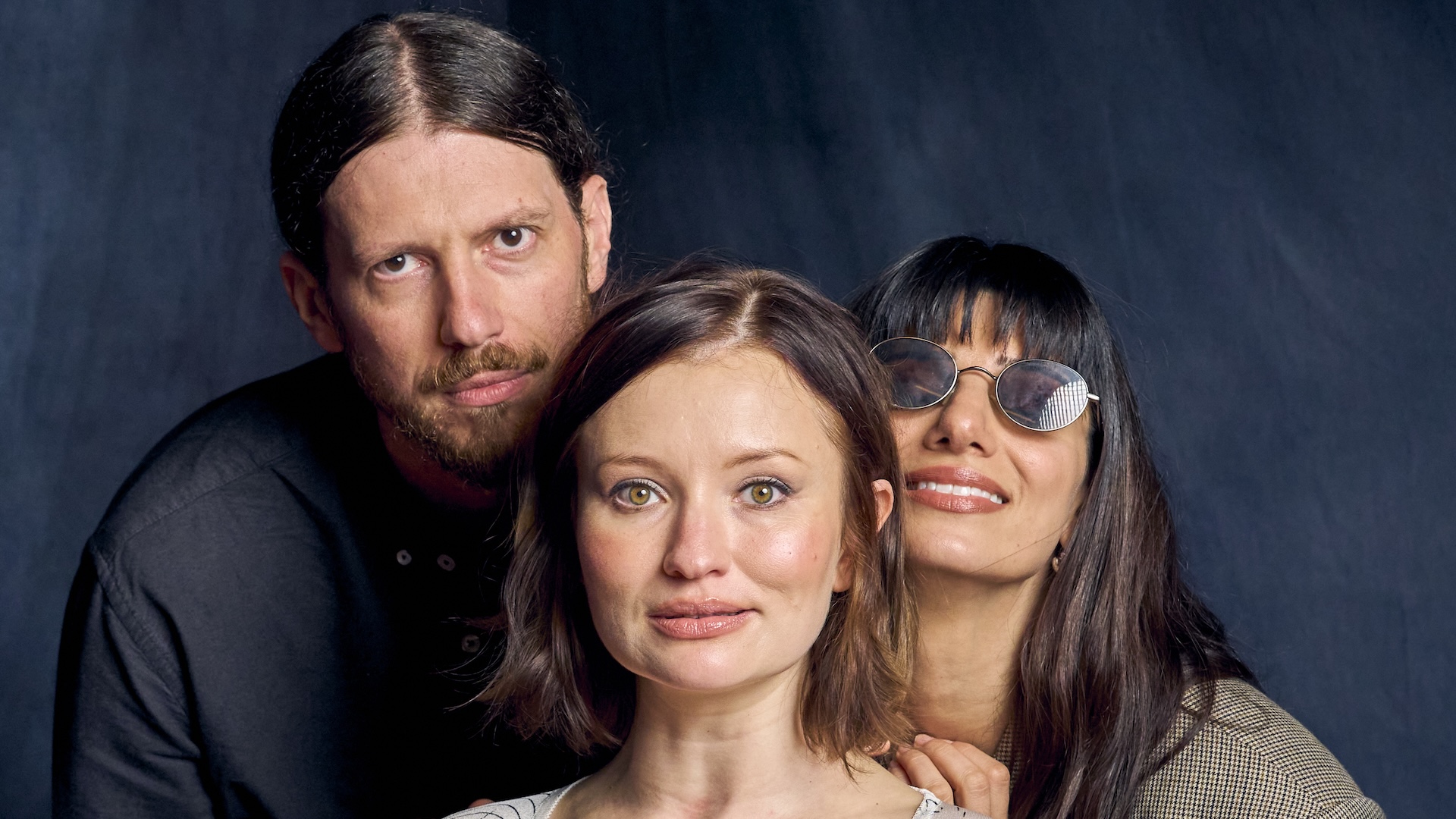
Dario Russo takes talking animals very seriously. That’s why in The Fox, Russo’s first feature film, the woodland creatures’ ability to speak is treated as the most ordinary part of the movie. Russo’s particular vision for the magical realism comedy that had its world premiere at South by Southwest 2026 was to present a cautionary tale about what happens when you think you can change someone instead of working on yourself.
Russo previously worked in television, directing the popular internet series Italian Spiderman as well as an action series for SBS One Danger 5. He describes The Fox as autobiographical and personal in a sense, taking on nearly every role in its creation, writing, directing, editing, and scoring the film himself. He jokes that the story is one Australians are all too familiar with.
“I’ve encountered talking foxes in my life, and unfortunately, I’ve listened to them,” Russo says. “My life has gone off the rails as a result. So, it’s a cautionary tale for people in Australia who get into this sort of predicament quite a bit, and I think it’s about time we talk about it publicly.”
The Fox follows Nick (Jai Courtney) as he proposes to his girlfriend, Kori (Emily Browning), later finding out she’s having an affair with her boss, Derek (Damon Herriman). While hunting, Nick meets a talking fox (Olivia Colman), who promises to transform his cheating fiancée into the perfect woman; one that is ready for marriage. That same fox manipulates Derek’s wife, Diana (Claudia Doumit), promising to make her cheating husband in love with her once again.
At SXSW, Russo, Browning, and Doumit stopped by the Den of Geek studio to talk about the behind-the-scenes of the film, their animal instincts, and the Olivia-Colman-of-it-all.
Russo shares that the fox animatronics used in the film were modeled after a real native British Red Fox named Flo at the British Wildlife Centre. For each animatronic, two puppeteers controlled the fox’s eyes, one moved its head, and one governed the movement of the animal’s body with a “rod up the bum,” as the Australian director says.
“I wanted them to feel like taxidermy come to life in the sense that they’re just based as closely on the real animals as possible,” Russo says.
The puppeteers’ movements were modeled after Colman’s distinct voiceover. Russo didn’t want to include a stand-in-voice for the purpose of production and knew the importance of having the actors and puppeteers play off of Colman’s authentic performance.
“I had that early recording, and I would listen to it on my walks like a podcast,” Browning says. “Listening to Olivia Colman, and it was like she wasn’t even trying. It was perfect.”
Doumit’s character, Diana, who she says “needs therapy, but will never listen,” uses extreme measures to fix her marriage. Doumit likes to model her character’s erratic behavior after a distinct animal.
“I tried to work in animal attributes,” Claudia says. “I like to think of my character, Diana, as a magpie… She’s in your business, she’s very gossipy, and territorial. Don’t mess with her things.”
Similarly, Russo says he likes to direct under the guise of a ferret. “Scuttling around, looking for snacks, constantly being found in places you don’t expect on set,” he says.
Having previously worked on surrealist comedy projects, Russo was mindful of how he wanted humor to be used in the film. In his view, allowing characters to react ridiculously to problems with the utmost sincerity is what makes a good dark comedy.
“The comedy should be coming from the character’s actual behavior because this character is doing absolutely ridiculous things that you find amusing,” Russo says. “It’s the fact that Diana believes so firmly in these ridiculous solutions that she’s come up with throughout the story that makes her funny.”
The cast members and director also agree that filming in Adelaide, Australia, with a mostly Australian cast made the dry humor shine through even more.
“We are ridiculous people,” Russo says. “I think in general, when the Australian accent tries to be serious, it can get really bad.”
Browning adds, “I feel like I’m able to be funnier when I can be Australian.”
Humor aside, the film’s heavier themes of infidelity, denial, and fear are still presented with the same darkness and weight they carry in real life. The central conflict emerges when Colman’s ill-intentioned fox influences characters into pushing others down a mystical hole in the woods. It’s a symbol Russo himself admits he doesn’t fully understand, even now.
“I haven’t had enough therapy to truly understand what it means for myself, to be honest,” Russo says. “But there’s something about this sort of chasm, the point of no return, and pushing somebody into the unknown of the earth and having something else come out that’s kind of terrifying.”
The Fox premiered October 19, 2025 at the Adelaide Film Festival and screened again at the 2026 SXSW Film & TV Festival. It does not yet have a wide theatrical release date.
The post Dario Russo’s The Fox Turns Talking Animals Into a Dark Relationship Fable appeared first on Den of Geek.