By
By 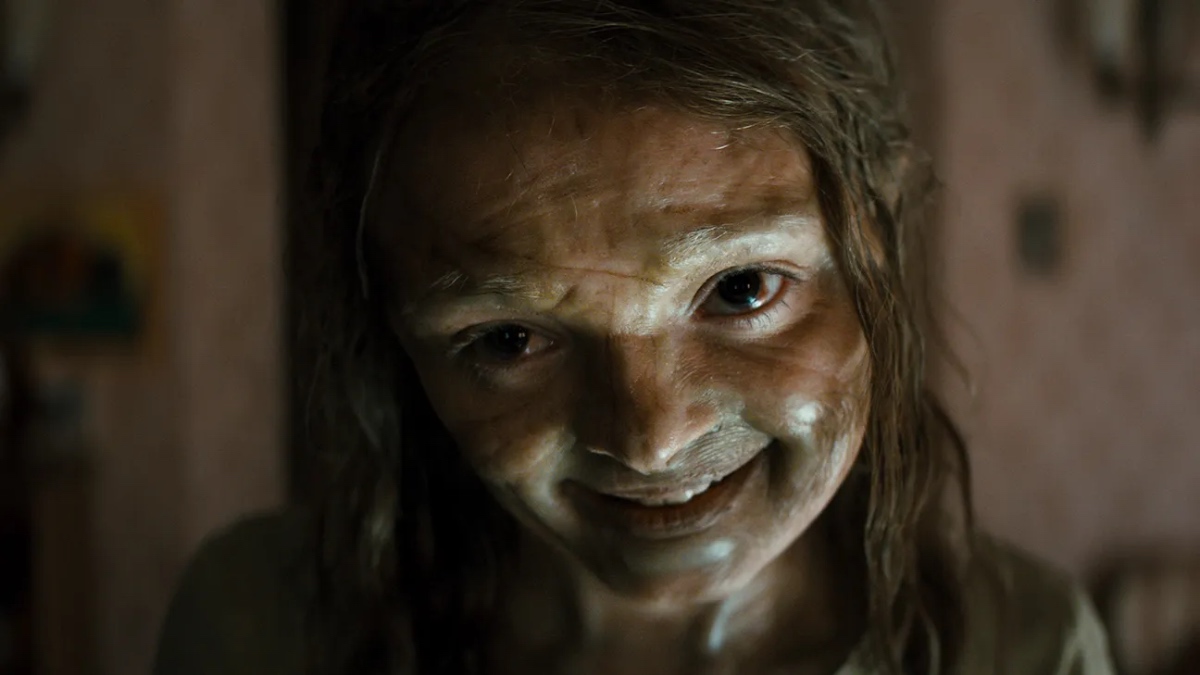
This article contains spoilers for Lee Cronin’s The Mummy.
What happened to Katie? Even more than the promise of supernatural horror, that question drove the marketing for Lee Cronin’s The Mummy, the latest take on the classic monster. The Mummy does indeed answer the question, leaving no filmgoer mystified when they leave the theater. However, that answer comes around the two-hour mark of a 133-minute film, most of which is filled with nasty imagery.
However, that may be for the best. Because while Cronin’s film delivers all the same gleeful gore that he provided in 2023’s Evil Dead Rise, the mystery—and in fact, everything involving Egypt, Katie’s disappearance, and even the Mummy in general—feels superfluous.
The Mummy, Unwrapped
Most of Lee Cronin’s The Mummy focuses on the Cannon family: father Charlie (Jack Reynor), mother Larissa (Laia Costa), and their three children. Eight years after their oldest daughter Katie (played by Emily Mitchell as a child and Natalie Grace as a teen) went missing in Egypt, the couple learns that she has been found, trapped in a sarcophagus but still alive. The family brings Katie back to their New Mexico home to reintegrate her with their other children, Sebastián (Shylo Molina) and Maud (Billie Roy), as well as Larissa’s mother Carmen (Verónica Falcón). But not only does Katie get worse instead of better, but rot also spreads throughout the home, infecting the other children and leading to all manner of grotesque chaos.
A television reporter, Charlie copes by investigating the sarcophagus that held his daughter and the markings on the bandages that covered her body. That search sends him to Professor Bixler (Mark Mitchinson), who explains that the markings speak of the Nasmaranian, an ancient Egyptian demon known as the destroyer of families.
Charlie’s research also brings him back to Detective Dalia Zaki (Moon Knight‘s May Calamawy), who initially investigated Katie’s disappearance in Cairo eight years ago. Thanks to a hint from Katie, who manages to break from the Nasmaranian’s control long enough to tap out a Morse code message to her father, Detective Zaki discovers Layla Khalil (May Elghety), who has connections to a cult led by a woman known only as the Magician (Hayat Kamille).
Layla provides Zaki with a VHS tape documenting a horrific ritual, in which the Magician directs a group of masked individuals to lower a screaming Katie atop a bandaged figure, who spits some concoction into her mouth. According to the Magician, this ritual is necessary to bind the Nasmaranian, and an innocent, young body makes for a better living prison than the body of an older host.
Evil Dead in Disguise
As the above description indicates, there is a lot of lore going on in Lee Cronin’s The Mummy. And yet, one gets the sense that Lee Cronin, the director, has little to no interest in any of it. Despite a compelling performance by Calamawy and some neat visuals, most of the stuff in Egypt drags. It almost feels like Cronin devised the Nasmaranian plot (based on completely made-up mythology) simply to justify calling the movie The Mummy, which in turn, justified the production as the next part of Blumhouse‘s new Universal horror films, alongside Leigh Whannell’s The Invisible Man and Wolf Man.
Sure, Cronin shoots the Egyptian mystery scenes with the same flair he brings to the other parts of the movie: lots of split diopters, Dutch angles, and a color palette that resembles used flypaper. But none of those scenes have the same energy as the best moments of the film, which makes the whole thing feel like Cronin’s just paying lip service to the Mummy trappings while actually making a very different film than anything Boris Karloff, Brendan Fraser, or even Tom Cruise did.
And what is that movie? Frankly, it’s Evil Dead. As much as his Mummy movie feels uninspired when Professor Bixler is babbling about the Nasmaranian, it turns electric when Cronin dials the meanness up to wacky degrees. The sequence in which young Maud, infected by the Nasmaranian’s control of Katie, pulls out her teeth and then climbs into the casket of her dead grandmother best illustrates Cronin’s real interests. The shot of Maud flashing a bloody smile, her grandmother’s false teeth in place of her own, has more power than anything that happens in Egypt.
The Curse of Compromise
That moment feels right out of a Sam Raimi picture, as do all the best parts of Lee Cronin’s The Mummy. The only thing that doesn’t feel inspired by the horror legend is the run time, which goes way past the hour and a half that Raimi prefers and falls between Oz, The Great and Powerful‘s 130 minutes and Spider-Man 3‘s 139 minutes.
Which is, perhaps, fitting. With the exception of Doctor Strange in the Multiverse of Madness, those two entries in the Raimi filmography show the clearest signs of studio interference. All of the actual Mummy stuff in Lee Cronin’s The Mummy—including a tacked-on “happy” ending, in which Larissa and Zaki bring a Nasmaranian-infected Charlie to exact revenge on the Magician—feels like studio concessions. It’s just too bad that including them bloats the film, diminishing the power of the nasty good stuff.
What happened to Katie? The answers provided by The Mummy don’t really matter. What happens when Katie gets free? Now that’s the only question that Lee Cronin’s The Mummy really wants to answer.
Lee Cronin’s The Mummy is now playing in theaters.
The post The Problem With the Mystery of Lee Cronin’s The Mummy appeared first on Den of Geek.