By
By 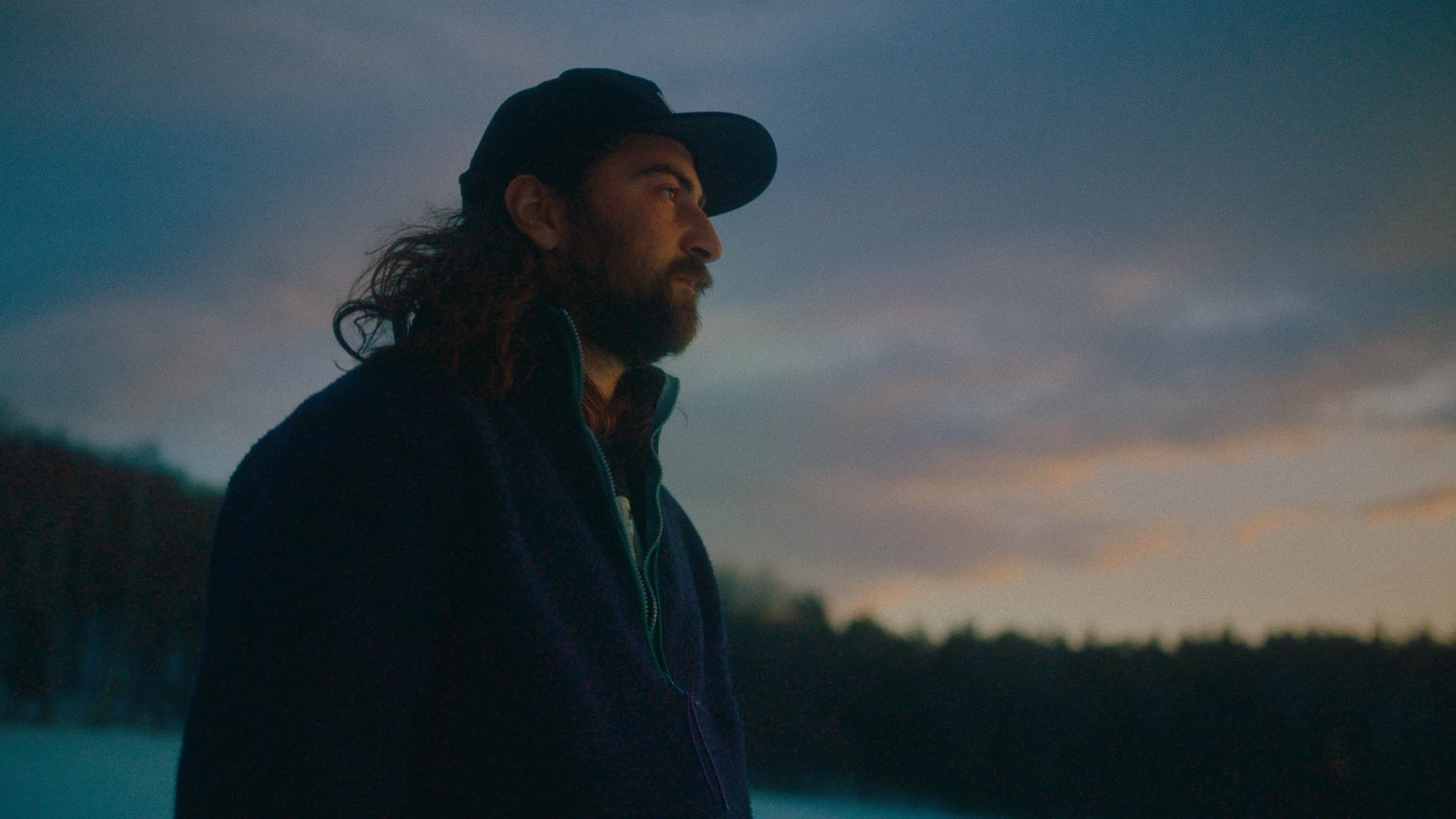
When Noah Kahan took the stage at Venue 6 during the 2026 South by Southwest Music Festival, it was quite the full-circle moment. He once was unable to sell enough tickets in Austin, Texas, prompting shows to get canceled last minute. But in March, the singer-songwriter returned for a secret acoustic set following the premiere of his Netflix documentary Noah Kahan: Out of Body, which earned the festival’s Audience Award.
The director of the documentary, Nick Sweeney, says when he heard Kahan was interested in making a documentary, he immediately wanted to get involved. He describes Kahan’s lyrics as “cinematic.”
“It’s almost like the way that he writes is the musical equivalent of an establishing shot,” Sweeney says.
Noah Kahan: Out of Body director Nick Sweeney
The documentary arrives at a time of mounting pressure for Kahan. Though he signed with Republic Records in 2017, he didn’t really break through to a wider audience until five years later, when he began promoting his music on TikTok. During quarantine, Kahan started posting songs he had written in isolation, and by the fall of 2020, he was teasing a track titled “Stick Season.” That song would soon become his most popular single.
Two years later, his studio album propelled his career to new heights, but in the years since, Kahan has yet to release another studio album. The pressure to follow the success of that project with his next album, The Great Divide, which comes out April 26, is a major point of contention in the film.
More than the pressure to stay on top, Kahan grapples with feeling almost completely disconnected from his own success. Despite earning a Grammy nomination, selling out world tours, and collaborating with major artists, Kahan said, at the time of filming, he was in one of the lowest places of his life mentally.
That disconnect between fame and self-perception inspired the documentary title, Out of Body, which Sweeney says has a few different meanings.
The film opens with Kahan performing at Fenway Park. After two sold-out shows, he’s seen on the way home, overtaken by excitement, banging on the windows, as if he’s stepped outside of himself in the moment. But even within that high, Kahan reflects on his tendency to dissociate and, at times, completely shut down.
Out of Body also pushes into territory Kahan has rarely explored in his songwriting, including his history of disordered eating and body dysmorphia.
“I wanted to put a lot of it into the film,” Sweeney says. “Noah was saying that when he was young, he used to google artists with depression to see if there were artists that had depression and were successful. I thought that was so sweet and sad… I think a lot of the reason why he wanted to make this film and touch on some of the things that he’s dealing with around his body, his family, and his mental health was so that the equivalent of him today, who’s googling that would be able to see that there is somebody that’s going through that.”
Being from a small town has long been a source of inspiration for Kahan’s songwriting. For Sweeney, one of the most meaningful parts of filming was traveling to Strafford, Vermont with Kahan and his brother, Simon. Together, they explored rural Orange County, Vermont and met the people in the community that shaped Kahan’s perspective and complicated feelings about leaving his hometown.
“I think the people are really honest,” Sweeney says. “They don’t bullshit, and it was really fun to include.”
One of his fondest memories filming came from a cold winter day in Strafford, when Sweeney was greeted by two girls sitting in an igloo. Born and raised in Melbourne, the filmmaker had never seen an igloo in person. “I didn’t even know they were real,” he says.
Involving Kahan’s family in the documentary was also important for Sweeney. The singer writes about his family dynamics, particularly with his parents, in many of his songs. Sweeney got to showcase what fans may not think about, which is his family’s reaction to hearing details of their trauma go viral on TikTok.
“There’s this one scene where Noah and his brother are talking in a donut shop, and his brother’s like, ‘It was so weird seeing everybody in the audience singing along to the lyrics about mom and dad’s divorce,” Sweeney says.
Kahan’s songs “Growing Sideways,” “Stick Season,” and “Call Your Mom” explore his relationship with his parents, as well as their relationship with each other. Rather than continuing to process those emotions solely through songwriting, Sweeney says the film created space for Kahan to confront them more directly.
In doing so, it also gave the artist an opportunity to, in a sense, apologize for working through deeply personal aspects of his upbringing and his parents’ divorce in such a public way.
“I really related to that,” Sweeney says. “I think a lot of us do. That feeling of wanting to be a better son or daughter… Noah finally comes to terms with these issues and has these conversations that I think he’d been needing to have for a long time… He’s also moved away from home, so he doesn’t even know where home is at this point that we’re filming him.”
Noah Kahan: Out of Body shows an artist revered for his vulnerability at his most vulnerable, and it’s a project Sweeney says he’s proud to have been part of. It also marks his first documentary centered on a musician, which is a space he’s eager to return to.
“I would love to do more music documentaries,” Sweeney says. “I have my eye on a couple of specific artists, but I could never say who because they don’t even know that I have my eye on them.”
Noah Kahan: Out of Body premiered at the SXSW Film & TV Festival on March and is available to stream on Netflix now.
The post Noah Kahan: Out of Body Turns The Artist’s Success Story Inside Out appeared first on Den of Geek.