By
By 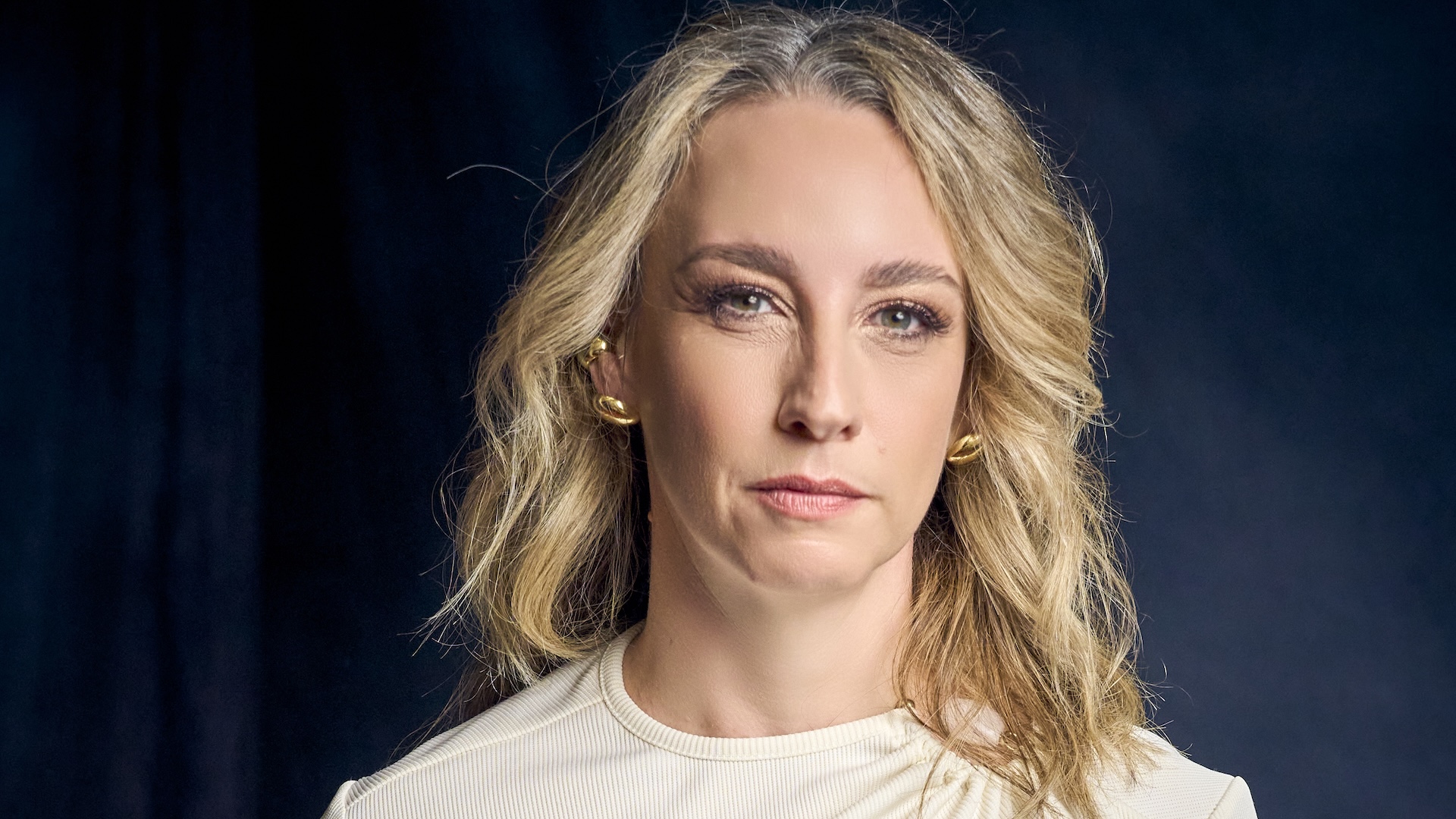
Few creatives have a more intimate understanding of the challenges and joys of producing television in the streaming era than Kit Steinkellner.
The playwright, screenwriter, and comic book author burst onto the TV scene in 2018 when she created Sorry For Your Loss, a critically acclaimed meditation on grief starring Elizabeth Olsen, Kelly Marie Tran, and Jovan Adepo. Despite its creative success and the caliber of talent involved both in front of and behind the camera, the series was canceled after two seasons and 20 episodes.
Much of the show’s struggle to capture an audience stemmed from its platform’s inability to do the same. That’s because Sorry For Your Loss premiered on the now-defunct Meta VOD service Facebook Watch. The House That Zuck built dipped its toe into episodic storytelling in 2018 and then promptly yanked that toe back out once it realized how hard this whole entertainment thing was.
To Facebook’s credit, Sorry For Your Loss avoided the fate of some other streaming shows that have back locked away in vaults never to be seen again, as it is currently available to stream on Tubi and Prime Video. Still, the experience of producing an ambitious project amid streaming’s unprecedented (and ultimately unsustainable) content boom, was profoundly educational for Steinkellner.
“One of my Woody the cowboy pull string catchphrases is ‘I’m always grateful and I’m always annoyed.’ And that’s the truth,” she tells Den of Geek. “But I am, in a lot of ways, a poster child of that moment. I was a poster child of that bubble, that boom. A lot of the things that we struck for in 2023 with the WGA are things that I experienced – the high highs the low lows. But ultimately I think I am a lot more grateful than I am annoyed.”
Now Steinkellner is going fully independent with her next project. Are We Still Married?, which premiered at the 2026 SXSW Film & TV Festival, is a compelling work of short speculative fiction. The title is just one of many questions that Steinkellner and the story’s characters have about the central conceit of a husband Jack (played by Dustin Milligan) who has been turned into a vampire and needs to convince his still-human wife Laura (Taylor Misiak) to let the right one in.
Are Jack and Laura still married or did death do them part? Can Laura safely let Jack in the house or will he drain her arteries for sustenance? Does he operate by the traditional vampire rules or will he sparkle in the sun? Through its scant 11-minute running time, Are We Still Married? doesn’t offer up any easy answers (except for the sparkle in the sun thing, that’s a definitive “no), but it does leave plenty of room for exploration and storytelling growth. In fact, Steinkellner is so interested in pursuing that growth that she both filmed a TV pilot and wrote a feature-length script of the concept.
“I’ve actually not done this with other ideas before but I’ve pretty thoroughly explored both options,” she says. “Ultimately I just want to keep telling this story. It’s an interesting moment for us where both feel viable. I think the next step will reveal itself.”
Before the premiere of Are We Still Married? at SXSW, we caught up with Steinkellner to discuss processing trauma, her vampiric inspirations, and the ephemeral nature of art. What follows is that conversation, lightly edited for clarity.
Den of Geek: This story is about a newly-vampirized husband outside his home asking for his wife to let him in and offering up reasons why she should. Where’d you get that idea?
Look, I was hellbent on directing something. I gotta direct something, it’s going to be independent, it’s going to be small, in one location like a house. So the question for me became “how do you make a house feel as cinematic as possible?” Then I remembered something that happened about 11 years ago. My husband did get bit by a bat. It was crazy. That doesn’t happen. Except when it does. He got a rabies shot and he was OK. I don’t know how you process trauma in your marriage but comedic bits is usually our go-to move. We just started cracking vampire jokes.
At a certain point he was just very lightly like “but if I became a vampire, you would let me back in the house, right?” I paused and he didn’t like that pause. We had a very spirited debate about what it would mean to have something happen that’s nobody’s fault but at the same time was something we never agreed to. It sets both of you on a wildly different path from what you were on. As I started thinking about what could happen in this house, this thing in the back of my brain rolled to the front. And the more I thought about it, the more I thought about writing this night in their lives, figuring out what that would look like, and figuring out what would happen next.
Some vampire properties that are mentioned in passing in this pilot are Twilight, Interview with the Vampire, and Buffy the Vampire Slayer. What are some of your vampire inspirations?
Those are touchstones. I also love Only Lovers Left Alive. It’s Tilda Swinton and Tom Hiddleston playing glam rock Bowie vampires. I interpret it as a genre metaphor about climate catastrophe because they can’t drink contemporary human blood because of microplastics. They keep having to go to blood banks to find blood from before a certain date. I just love that one. I love the original Let the Right One In. I rewatched it recently. I think I always love a vampire story where there’s genre as metaphor front and center. That one is very much about coming of age and being an isolated kid who finds another isolated kid – the things that are deeply positive about that, the things that are deeply challenging about that. There’s a lot you can do in terms of genre as metaphor.
I’m glad you mentioned Let the Right One In because I feel that that aspect of vampirism – the needing to be let in – is the one that people forget about most frequently. Thankfully every decade or so, a major vampire story comes around to remind people of it. Are you grateful that Are We Still Married? is premiering on the heels of Sinners, which makes that a major plot point?
It’s so interesting. Yeah, I am. I just love art being in conversation with each other. I love this giant metaphorical party where we all have our wine glasses and are meeting and talking with each other. They’re so wildly different. With Sinners; it’s Coogler, it’s From Dusk Till Dawn, it’s institutional racism. He’s tackling very, very different things on a very different budget. We do have the same supernatural trope at our core but I would argue over on my side we’re doing ‘70s Cassavettes, Gena Rowlands’ dramas, Marriage Story, tonally a little bit more like Nora Ephron or Linklater’s “Before” trilogy. They couldn’t be more different and we’re starting at the opposite end of the spectrum but the fact that we have the same origin point, I just find it thrilling.
Vampires come in all different shapes, sizes, and rules. A lot of the back and forth between husband and wife in this pilot is trying to figure out those rules. Did you have any questions about vampirism that didn’t make it into the final product?
A crucial plot point is that the bat that bites Jack does not stick around to explain vampirism to him. So basically he has about as much information about this thing as we do. He has his pop culture references but he doesn’t actually know what being a real life vampire entails. I think it’s a really interesting dilemma to put a character in. What if you have no mentor or guide post? Which part of this stuff is real? I think we are playing by most of the vampire rules though. We didn’t have any mirror shots but if we did I would have VFX’ed his reflection out. We’re not doing Stephanie Meyers, he’s not gonna sparkle in the sunlight. We’re playing with those traditional Dracula-established vampire rules.
How did you go about casting Taylor Misiak and Dustin Milligan in this?
It was thrilling. To the point of this thing being really scrappy, my producer and I just reached out to their reps and asked if they were avail (or tech avail). I loved Dustin in both Schitt’s Creek and Rutherford Falls, which is a Peacock show that less people have seen. But I’m crazy about him. And Taylor is my favorite part of Dave. It is tremendous but for me she is the emotional heartbeat of that show.
They’re so wildly gifted in so many regards. They’re just consummate actors who are known for hard comedy. But my goal in casting or any hiring decision is to ask myself “how would this thing be a wonderful next paragraph in your career?” To give them a piece where pull out everything in their bag and leave it on the screen, that just felt like a thrilling opportunity. It felt that that’s what they both saw. This was three night shoots! Night shoots kind of make people crazy. At a certain point, you kind of feel like your’e in The Thing or The Shining. And they were just wild joys to hang out with at 3 a.m.
This is submitted to SXSW as a TV pilot. Did you always see if that way and would you like to continue in this world?
You’re asking the right question. I originally knew what the night looked like. I knew it was chapter one and I wanted to figure out what subsequent chapters looked like. Transparently, we have explored both routes. I did write a feature inspired by this that was on this past year’s Black List, which was a wild honor. At the same time, in having a conversation with South by, part of the independent TV requirement is to submit a series bible. I’ve actually not done this with other ideas before but I’ve pretty thoroughly explored both options. Ultimately I just want to keep telling this story. It’s an interesting moment for us where both feel viable. I think the next step will reveal itself.
I think this is a big question so we’ll probably end on it. I want to pick your brain about television itself as someone who probably had an interesting experience in modern television: writing Sorry For Your Loss, which was considered to be a very good TV show with a very big movie star in it that nevertheless premiered on a streaming service with like six other shows and no longer exists. Broadly, what is that experience like and where do you see TV going in the modern era?
One of my Woody the cowboy pull string catchphrases is “I’m always grateful and I’m always annoyed.” And that’s the truth. When I think back about making Sorry For Your Loss, we had a murderer’s row of actors, we had the best writers, all of our directors were like Sundance stars, and we made 20 episodes of something that is one of my proudest accomplishments. I love it. We were on a platform [Facebook Watch] that didn’t stick around long enough to find its footing. You really do have to, as a platform, be invested in spending five-to-10 years building like an Amazon, like an Apple.
At the same time there are shows on major platforms that have been pulled. The thing is you can still find our show online. It’s very gratifying to have people slip into my DMs and continually find it. I think I have a lot more gratitude than I have annoyance. But I am, in a lot of ways, a poster child of that moment. I was a poster child of that bubble, that boom. A lot of the things that we struck for in 2023 with the WGA are things that I experienced – the high highs the low lows. But ultimately I think I am a lot more grateful than I am annoyed. I’m so proud of how we made it and I’m excited to make more content in both a smaller way and a larger way that reaches eyeballs. Look, we live in a chaotic universe. We don’t get to control variables and we don’t get to weird science the way our art is received or create the perfect environment. Honestly, I’m just so glad we got to make it.
Well said, it was indeed a big question and I’m glad you tackled it!
Can I say one more thing about it? [Laughs] Do I have like 30 seconds?
[Laughs] Sure!
I read this thing several years ago. There are these Buddhist monks – in the steps of the Himalayas, I believe. They live in these monasteries of giant plazas. They will make these elaborate sand paintings, mandalas, outside. It takes them weeks and weeks. In making those mandalas they’ve signed up for the fact that the wind is gonna blow the art they’re creating away. It might blow them away in a day, or in a couple weeks. They don’t really have control over how long the art lasts. But that’s not why they’re making it. They’re making the art for the sake of making it. I believe it’s to teach these monks patience and perseverance. I think about it all the time and try to be a creature of the moment and just do the best I can in that moment. The truth is that no one can control the outcome, how it’s received, or how long it lasts. What you can control is how you show up for the moment.
The post Kit Steinkellner Has Some Questions About Television… and Vampires appeared first on Den of Geek.