By
By 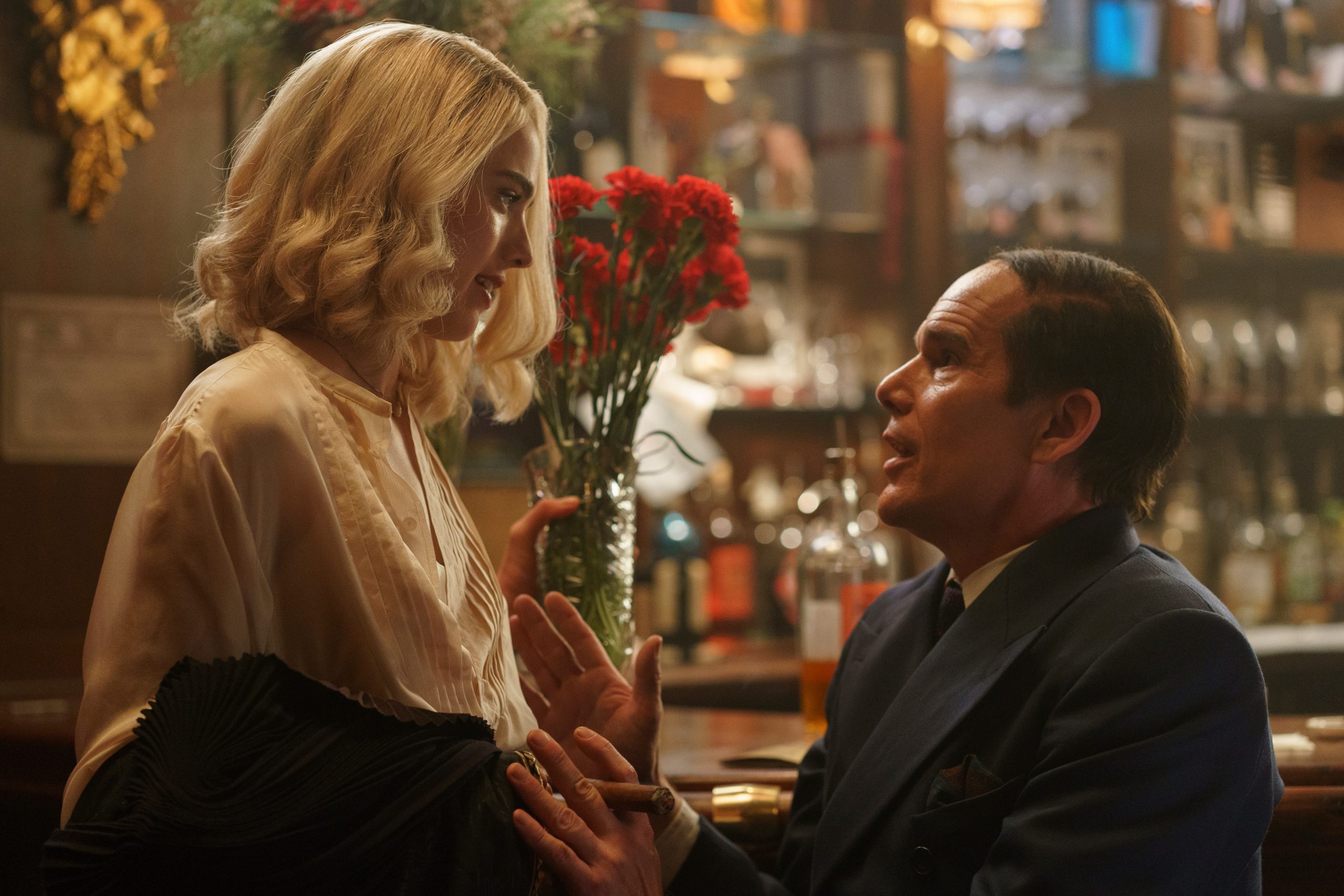
Blue Moon (2025)
Forgotten, but not gone.
There’s something oddly comforting about a film that knows exactly what it’s trying to be. No gimmicks, no overblown spectacle, no desperate need to impress — just a room, a character, and a slow, painful unraveling. Blue Moon is that kind of movie. And honestly, it works in its favor. Directed by Richard Linklater — a filmmaker who’s spent decades perfecting the art of conversation-driven storytelling — Blue Moon turns its focus to a defining moment in the life of legendary Broadway lyricist Lorenz Hart. If the name rings a bell, it’s because Hart, alongside his longtime collaborator Richard Rodgers, helped shape American musical theatre with classics like “Blue Moon,” “My Funny Valentine,” and “The Lady Is a Tramp.” This isn’t a story about success. It’s about what comes after — and what happens when the world moves on without you.
Set almost entirely over one night in 1943, Blue Moon drops us straight into Sardi’s — that iconic New York theatre haunt — and basically refuses to leave. Sitting at the bar is Lorenz Hart (Ethan Hawke), drink in hand, watching from the sidelines as his former partner Richard Rodgers celebrates the opening night of Oklahoma!… a show Hart had absolutely nothing to do with. That’s the entire setup. No sweeping biopic structure. No flashbacks cutting between past and present. No “rise, fall, redemption” formula. Just one room, one night, and one very talented man slowly realizing he might’ve already had his moment.
Confidence is high. Reality… less so.
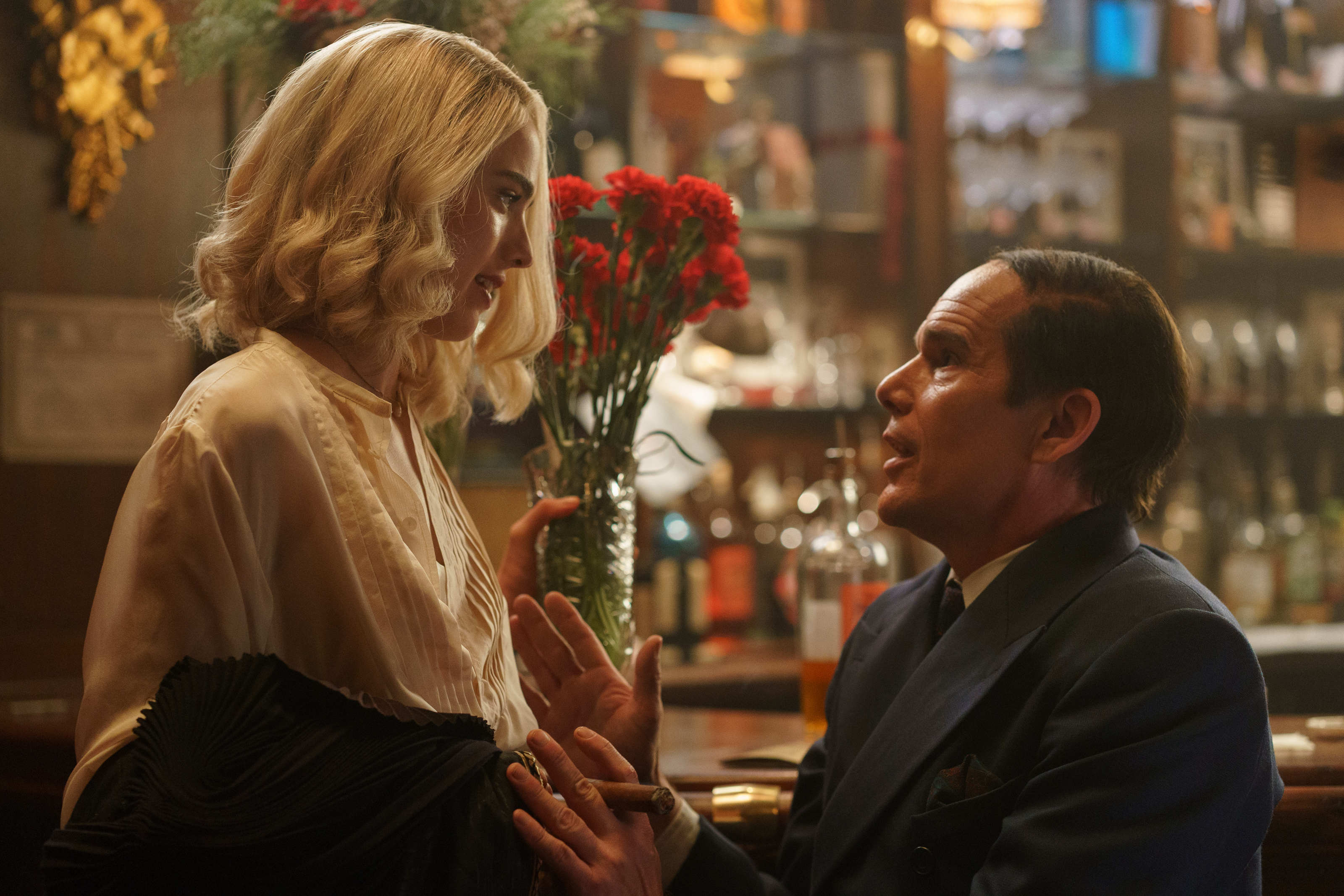
Sure, it sounds minimal — and it is. What keeps things alive is the steady rotation of characters drifting in and out of Hart’s orbit. There’s Margaret Qualley as Elizabeth Weiland, a younger woman he’s completely taken with — charming, slightly distant, and just enough out of reach to make it hurt. Andrew Scott shows up as Rodgers, now thriving without him, which adds a quiet sting to every interaction. And Bobby Cannavale plays Eddie, the bartender/confidant, the kind of guy who’s heard it all before but still sticks around. It’s simple on paper, and it only works if everything lands.
If you’ve seen Richard Linklater’s work before (Before Trilogy, Boyhood), the approach here will feel familiar: a dialogue-heavy, character-first film that lives and dies on its writing and performances. And here, it mostly succeeds. The film leans into a deliberate, almost theatrical style. It’s essentially staged like a play — one location, long conversations, minimal action. That kind of setup can easily feel static or dull, but Blue Moon sidesteps that trap thanks to a script by Robert Kaplow that’s sharp, funny, and quietly devastating. There’s a distinct rhythm to the dialogue — fast, witty, and tinged with bitterness — that mirrors Hart’s personality. He comes across as charming, self-destructive, hilarious, and deeply sad — sometimes in the span of a few lines. Linklater also shows control behind the camera. There’s no need for stylistic flourishes or over-direction; the film trusts its words and performances to hold it together, and for the most part, that trust pays off.
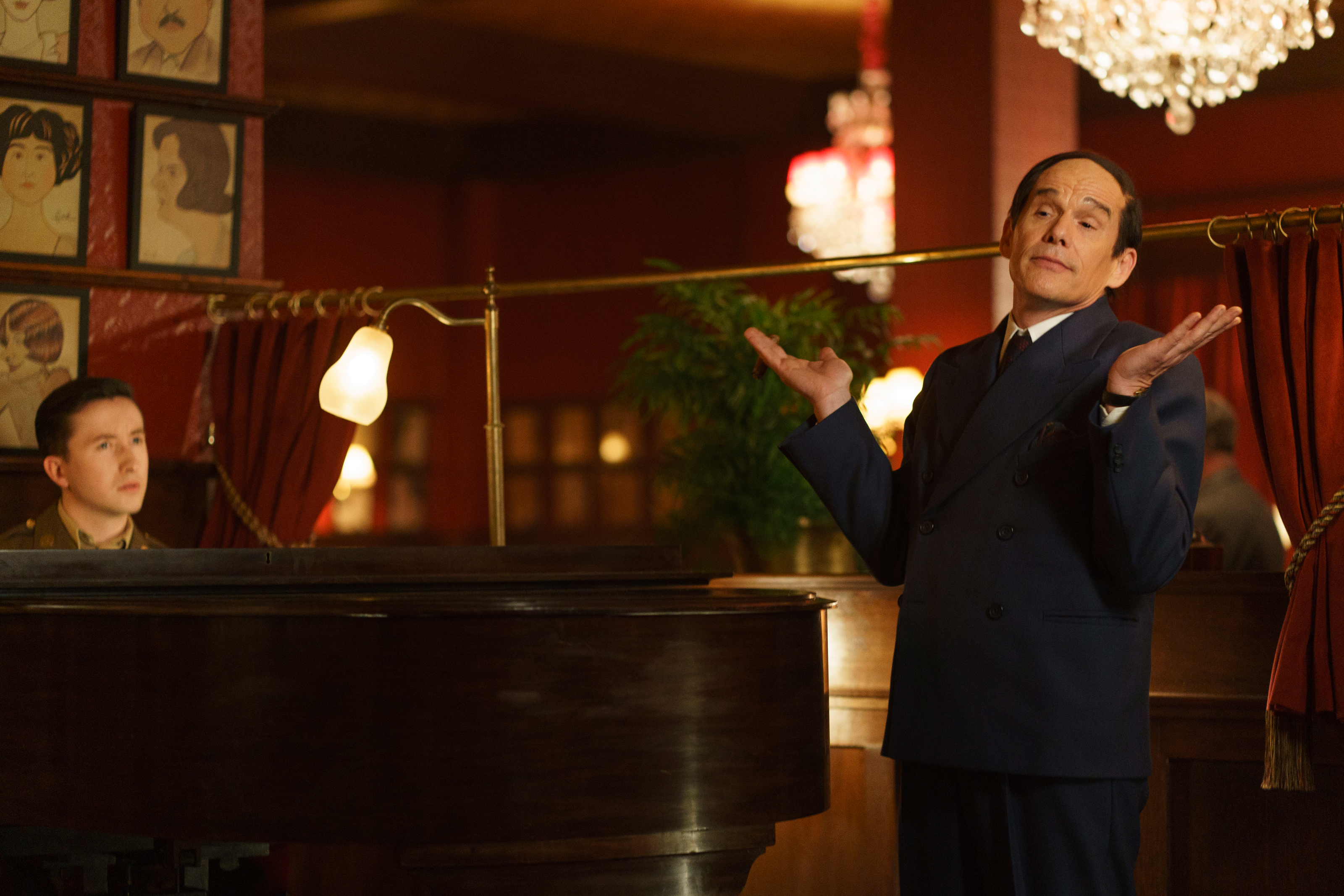
Playing the room like it’s still his show.
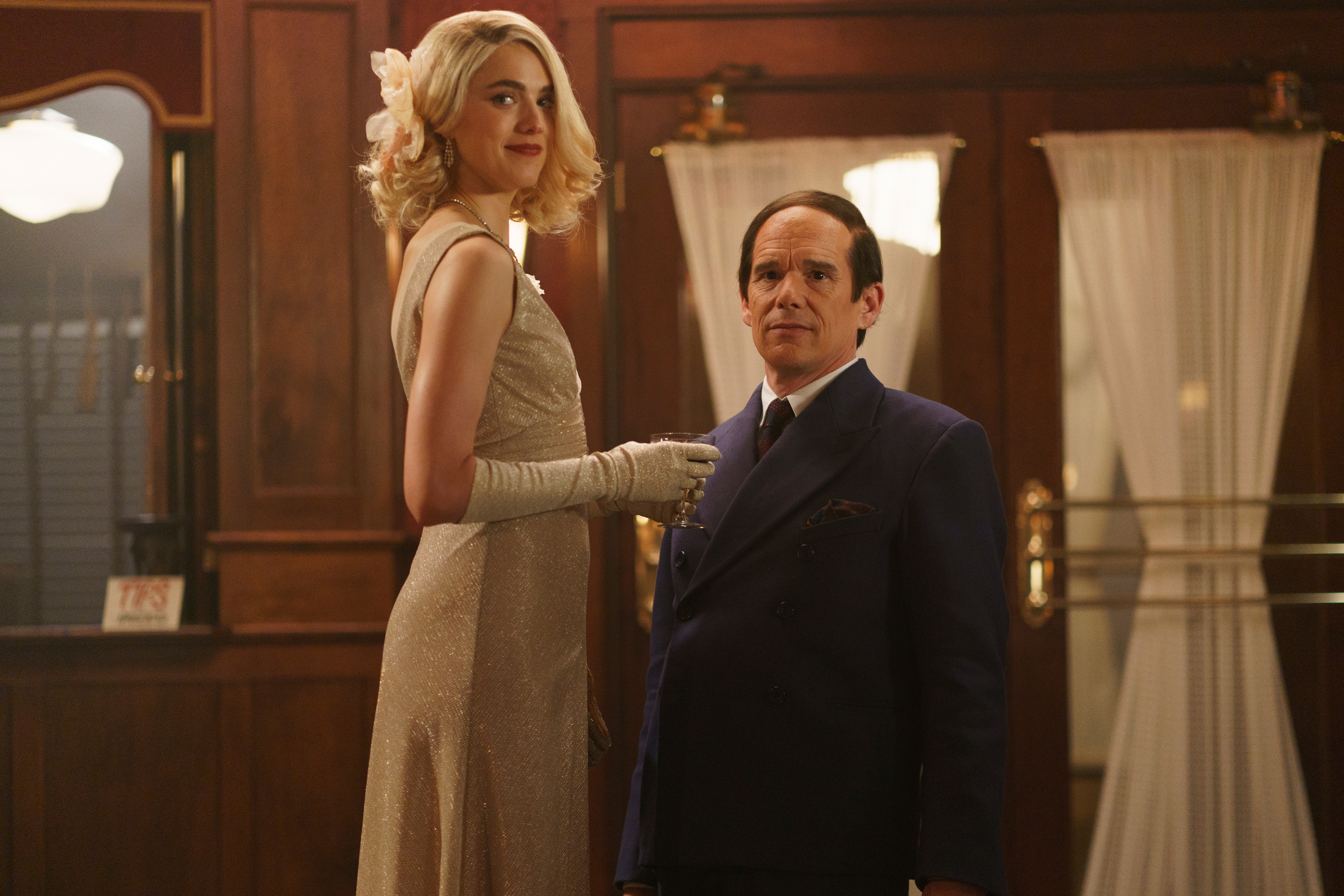
Let’s be clear: this belongs to Ethan Hawke. This is one of those performances where the actor disappears almost instantly. Hawke fully inhabits Lorenz Hart — physically and emotionally — shifting between charm, insecurity, arrogance, humor, and quiet despair, sometimes all within the same breath. For much of the runtime, he’s sitting at a bar, talking. But Hawke pulls it off, capturing a man in decline with uncomfortable precision — someone aware he’s slipping creatively, socially, personally, but lacking the ability to stop it. It’s messy, raw, and deeply human. There’s also a strong physical transformation at play. Hart was famously very short — around five feet tall — and Hawke, who’s much taller, is consistently framed in a way that sells that difference. It’s not just camera trickery either; posture, costuming, and old-school techniques all work together to sell the illusion. The result isn’t distracting — it’s purposeful. It subtly reinforces the character’s insecurity and shrinking sense of place in the world, turning a physical trait into something far more psychological.
Underneath all the wit and rapid-fire dialogue, Blue Moon is a surprisingly brutal character study. At its core, it’s about being replaced — about watching someone else succeed where you once thrived, and realizing there may not be a way back. It explores the slow, quiet erosion of relevance, the kind that doesn’t arrive all at once, but settles in gradually until it’s impossible to ignore. There’s also an undercurrent of unrequited love and emotional denial running through it, adding another layer to Hart’s already fragile state. What makes it hit harder is that Hart isn’t just losing his career — he’s losing his sense of self. The story also touches, with restraint, on his sexuality, his loneliness, and the complicated dynamics of creative partnerships — particularly what happens when one half evolves and the other is left behind. None of this is delivered in a heavy-handed way. It’s present without being spelled out, and that weight is what gives it impact.
Qualley walks in — and the scene shifts with her.
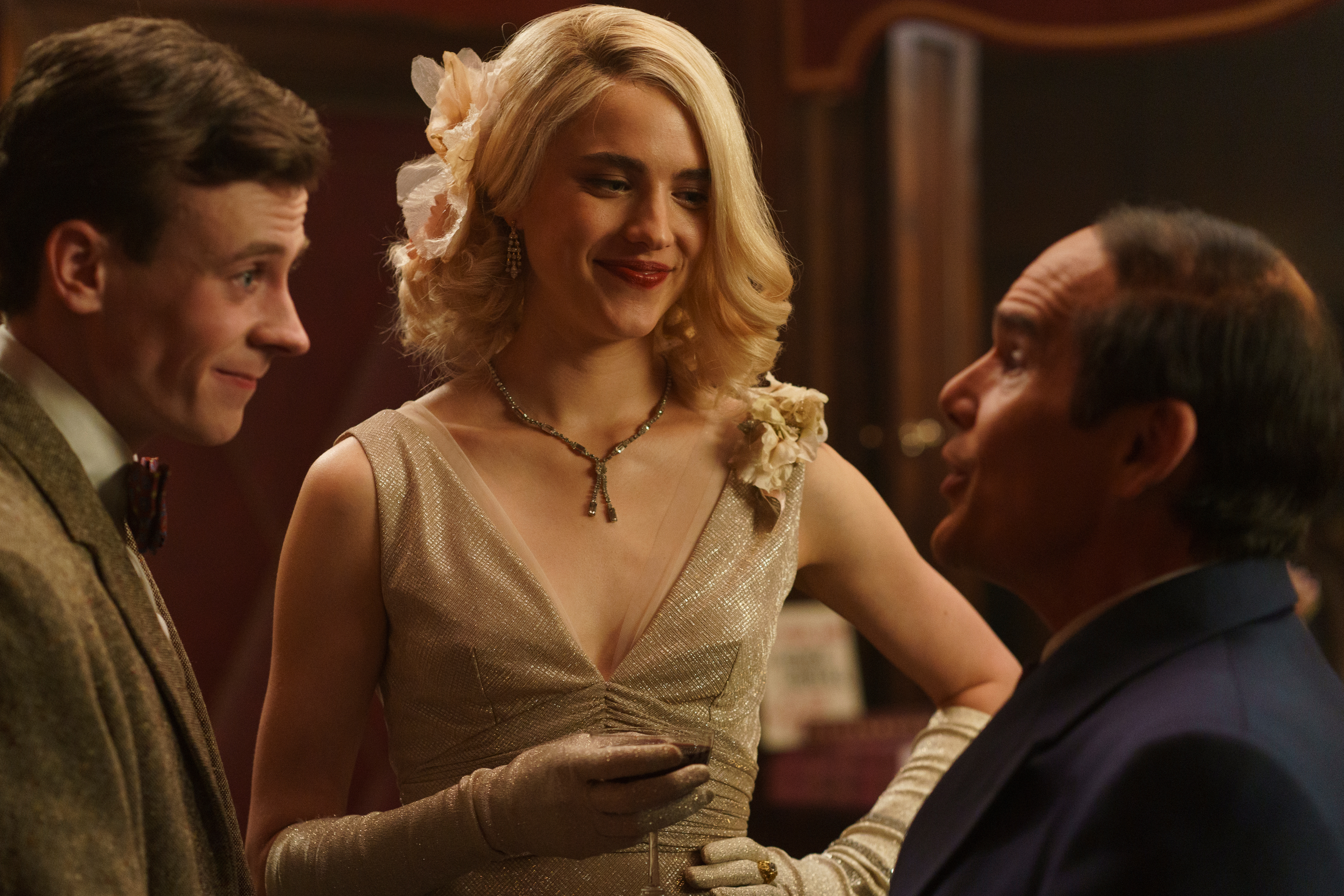
Alright, let’s address the obvious. Margaret Qualley is in this — and her presence stands out. As Elizabeth — a young Yale art student and aspiring production designer who Hart becomes fixated on — Qualley brings a fascinating, hard-to-pin-down energy. There’s a blend of warmth, distance, and quiet discomfort in the performance that makes her feel both present and slightly removed at the same time. It’s never entirely clear whether she’s indulging Hart, humoring him, or simply trying to navigate an awkward situation — and that ambiguity gives the character weight. She’s also consistently compelling to watch. There’s a natural ease to her screen presence that elevates every scene she’s in, adding an extra layer to the dynamic without ever forcing it. The supporting cast around her is just as solid. Bobby Cannavale’s Eddie anchors the bar with a grounded, lived-in presence, while Andrew Scott’s Rodgers carries a quiet confidence that contrasts sharply with Hart’s unraveling. Characters like piano player Morty (Jonah Lees) and writer E.B. White (Patrick Kennedy) drift through the bar, giving the world a sense of movement beyond Hart — a reminder that the scene, the culture, and the momentum haven’t stopped… they’ve just moved on. It’s a strong ensemble overall, but Qualley is the one who lingers.
This isn’t a flashy production. Most of it unfolds inside Sardi’s — a dimly lit, old-school New York bar — and the design leans heavily into that retro, slightly theatrical aesthetic. There’s a warmth to the lighting, a smoky, lived-in texture that feels true to the period without ever drawing attention to itself. Cinematographer Shane F. Kelly keeps things visually restrained but purposeful. The camera moves just enough to maintain energy within the confined space, but never in a way that pulls focus from the performances. It’s controlled, unobtrusive work — exactly what this kind of story needs. Nothing here is trying to impress on a surface level. It’s all in service of the character.
Once in a blue moon… and already gone.
Blue Moon isn’t going to be for everyone. It’s slow, dialogue-heavy, and tightly contained — more interested in conversation than spectacle. Anyone expecting a traditional biopic with big moments and sweeping timelines won’t find that here. Even the stage-like approach, while effective, occasionally shows its limits. But that’s also part of what makes it work. Blue Moon is a small, intimate, character-driven piece that lives or dies on its writing and performances — and thankfully, both are strong enough to carry it. It’s not flashy or loud, but it’s thoughtful, often funny, and more affecting than it first appears in the way it stays with you. Anchored by an excellent turn from Ethan Hawke, and elevated further by a magnetic Margaret Qualley, it’s a thoughtful, slightly melancholic character study that proves sometimes the best drama comes from just sitting at a bar… and realizing the music’s already stopped playing. Or in this case… the song’s still playing — just not to your tune anymore.
3.5 / 5 – Great
Reviewed by Dan Cachia (Mr. Movie)
Blue Moon is released through Sony Pictures Australia