By
By 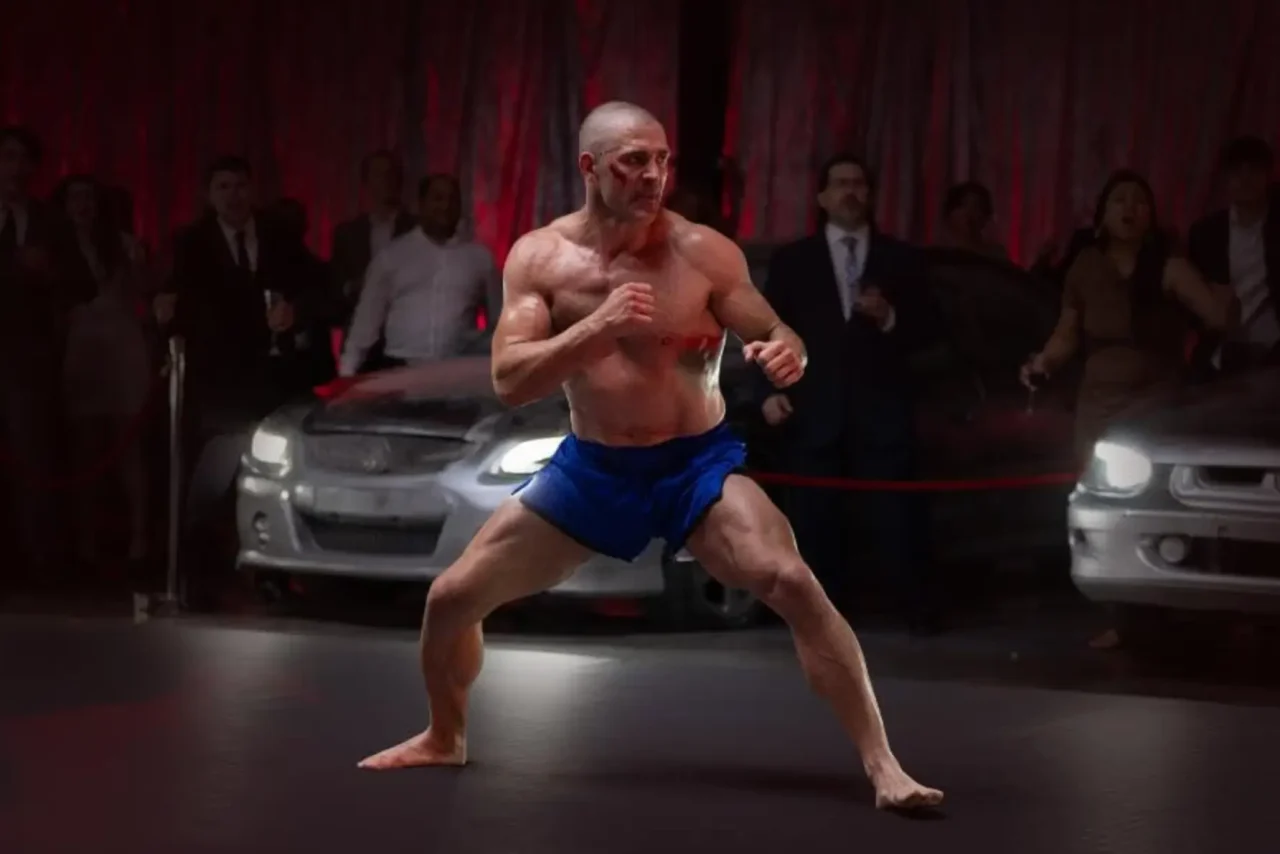
You are a Taekwondo and Karate World Champion, with over 180 first-place medals, more than 200 matches, and black belts in five martial arts disciplines. What was the hardest part of your training journey?
The hardest part of my training journey was learning that motivation isn’t what carries you to success—discipline is. When you’re preparing for competition, especially at an elite level, your body is often pushed to the edge of overtraining. There are days when you wake up exhausted, bruised, and battered from the sessions before. On those days, motivation isn’t always there. In fact, it can disappear completely.
What keeps you going is discipline. It’s the understanding that even when you don’t feel like training—especially when a major event is approaching—you still have to get up and do the work. Over time, I learned to accept that motivation will always fluctuate. Some days you’ll feel unstoppable, and other days you won’t want to train at all.
But success, particularly in a combat sport, has very little to do with how you feel in the moment. It comes down to doing the things you know you must do, whether you feel like it or not. That mindset—showing up and doing the work regardless of how you feel—is, without question, the hardest part of the journey.
You started your career in 2001. What stands out most from that early experience
What stood out most from my early experiences in the industry was learning how to behave and conduct myself professionally on set. When you first start out, there’s a lot to take in—new environments, new people, and the fast-paced nature of a film set. Very quickly, you begin to realise that talent alone isn’t enough. The way you carry yourself, how you treat others, and how professionally you operate become just as important.
One of the first and most valuable lessons I learned was observing the behaviour of those around me—watching how experienced professionals interacted, how they respected the process, and how they worked together as a team. Understanding the etiquette of a set and learning how to conduct myself accordingly was a crucial part of those early days, and it shaped the way I approached my career moving forward.
You were part of Home and Away starting in 2005, appearing in 23 episodes. How has the show evolved over time?
My experience with Home and Away spans a couple of different periods. Early on, I appeared in one or two episodes playing a different character. Then, a few years later, I returned to the show for a more substantial role as part of a specific character’s story arc.
The show itself is really a staple of Australian television. It’s one of those series that almost everyone in Australia knows about or has seen at some point. Being part of something with that kind of legacy was a great experience, and I genuinely enjoyed the time I spent working on it.
As for how the show has evolved, like any long-running series, it tends to grow and shift alongside the times—reflecting changes in Australian culture and the kinds of stories audiences connect with. That ability to adapt is a big part of why it has remained so well known and relevant for so many years.
For me personally, it was a great experience to be involved for that period of time. While it’s probably not something I’d pursue as a long-term commitment, doing a short stint like that was a really enjoyable part of my career.
I remember the Fight Science (2008–2010) series on National Geographic. What was your experience working on that show?
Working on Fight Science for National Geographic was an absolutely incredible experience—honestly one of the best of my life. As a martial artist, it was a unique opportunity to put my speed, power, and technique under scientific scrutiny and see what the body is truly capable of. Instead of just demonstrating skills, we were actually measuring them—testing the real force behind strikes, the speed of movements, and the mechanics behind martial arts techniques.
Being able to combine martial arts with science in that way was fascinating and incredibly rewarding. Looking back on it, it was a phenomenal experience, and it’s something I would gladly do again in a heartbeat.
You have four children. How do you balance work, training, and family life?
Balancing work, training, and family life is definitely challenging—there never seems to be enough time in the day. That said, with careful planning and prioritising what’s most important, I’ve been able to make it all work. It takes effort, flexibility, and a lot of focus, but by organising my schedule and committing to both my family and my goals, I can ensure that each area gets the attention it deserves. It’s not always easy, but it’s absolutely worth it.
I enjoyed your role as Wolf Taylor in The Last Ship (2014). How did you get the role, and how was acting in action TV series different from movies?
I landed the role of Wolf Taylor in The Last Ship through the audition process. I had an initial audition at Warner Brothers Studios, followed by a second round at the studio, and shortly after that, I was offered the role. Interestingly, the showrunners didn’t know about my martial arts background at the time—Stephen Kane actually discovered it by accident during a conversation with me.
In terms of acting, the work itself isn’t all that different from film. Character development, the work ethic you bring, and the process of embodying a role remain the same. The main difference lies in the pace and scale. For a TV series, you’re often working intensively for months, producing episode after episode, whereas films usually have a shorter production window—often two to three months—before wrapping.
You worked alongside Steven Seagal in Maximum Conviction (2012) and Force of Execution (2013). What was it like working with him and director Keoni Waxman?
Working on Maximum Conviction and Force of Execution was a really positive experience. Working with Keoni Waxman was fantastic—he’s a genuinely great guy, and I loved every minute of collaborating with him.
My experience with Steven Seagal was also very good; he was professional on set, and it was a great opportunity to work alongside someone so well-known in the action genre. Overall, it was a rewarding and enjoyable experience from start to finish.
You recently appeared in the Australian series Last King of the Cross. What can you tell us about your character and the show?
In the Australian series Last King of the Cross, I played a character named Pete. Pete is a former SAS soldier—quiet, brooding, and carrying a lot of intensity beneath the surface. Early in the story, he finds himself in jail, but after his release, he begins working as a bodyguard for the Ibrahims.
The role allowed me to showcase some of the specialized skills and discipline of a former SAS operative, bringing both physicality and subtlety to the character. Pete’s journey is compelling because it blends action with the psychological complexity of someone who’s lived through intense experiences, making the show both thrilling and deeply character-driven.
You have worked as a fight choreographer on Mexicali, Beast, Relentless and Life After Fighting. What is the most challenging part of that job?
For me, the role of fight choreographer on projects like Mexicali, Beast, Relentless and Life After Fighting is less about challenges and more about opportunity.
It’s an amazing chance to create using the physicality of martial arts, blending different styles, and making the action feel both authentic and cinematic. My focus is on facilitating that creativity—ensuring each fight sequence flows naturally, showcases technique, and tells a story through movement. I absolutely love immersing myself in that world and letting imagination guide the choreography, turning combat into a visual and dynamic expression of the characters.
Beast (2026) is an upcoming film where you star alongside Russell Crowe and Daniel MacPherson. How did you land the role, and what can you tell us about your character?
I had a read-through and discussion about the role with the director, producer Mark Schwartz, and the casting director. Shortly after that, I was offered the part, and my one condition was that I would also choreograph my own action sequences. This gave me the opportunity to bring both my acting and martial arts expertise directly into shaping the character and the fight scenes.
Your directorial debut, Life After Fighting, drew a lot of attention from martial arts fans. How did you come up with the story and characters?
For me, the stories I create usually come from things I’m truly passionate about. With my directorial debut, Life After Fighting, I wanted to explore two areas close to my heart: martial arts and the safety of children.
The film became an opportunity to bring those passions together, crafting a story and characters that reflect the values and themes I care deeply about, while delivering action that’s authentic and engaging for martial arts fans.
Your next directorial project, Relentless, tells the story of a former soldier and underground fighter. What can audiences expect from it?
Audiences can expect the same passion, heart, and soul in Relentless as they saw in Life After Fighting. While the story centers on a former soldier and underground fighter, at its core, the character is first and foremost a husband and a father.
When tragedy strikes, he’s confronted with an almost unbeatable challenge—not just in the ring, but in life itself. The story follows how he navigates these obstacles, striving to keep fighting and protect what matters most. Interestingly, the “unbeatable opponent” isn’t another person, which makes his journey as much emotional and personal as it is physical, giving audiences a layered and compelling story.
In Mexicali, you play an ex-fighter named Joe, forced to confront gang attacks. What can you tell us about this character?
In Mexicali, I play Joe, an Australian former mercenary who has settled into a quieter life on an avocado farm with the love of his life, Estrella. He’s trying to find peace, embracing farming and a simpler life, but that tranquility is shattered when the cartel threatens to take everything from him.
Joe is a character with a deep-seated warrior spirit, and when that side of him is provoked, he responds with far more force and determination than anyone expects. The role allowed me to explore both the calm, domestic side of a man seeking peace and the fierce, relentless fighter that emerges when his world is under threat.
Luke LaFontaine directed Mexicali and has worked as a fight and stunt coordinator on over 120 films. How was it working with him?
Working with Luke LaFontaine on Mexicali was absolutely fantastic. He’s a deeply caring person who brings a profound understanding of both stunts and the craft of acting. Collaborating with him was not only seamless but also an absolute joy, making the entire production a rewarding experience.
The story was written by Jesse V. Johnson, who also has a background as a fight and stunt coordinator and has made over 30 films. Did you pick up any techniques or ideas from his script that you plan to use in your own films?
Being on set with Jesse V. Johnson was an incredibly valuable experience. Not only did he write the story and serve as a producer, but he was also present every day, offering insights and guidance. His intelligence, sharpness, and practical ideas helped the shoot run seamlessly, and I learned a great deal simply by observing and listening to him.
There’s a lot from that experience—both creative and technical—that I plan to carry forward into my own films, from structuring action sequences to managing the flow of a production efficiently.
What can audiences expect from Mexicali?
Audiences can expect plenty of high-octane action in Mexicali, but at its core, it’s the story of Joe and Estrella. Their loyalty, love, and determination drive the narrative, and you can’t help but root for them. The film explores how hard Joe fights for her, and the heartbreak he experiences when they are separated, giving the story an emotional depth beyond the action.
While it delivers thrilling fight sequences and suspense, Mexicali is truly an action movie with a soul—one that balances intense physicality with the human connection at the heart of the story. I hope audiences not only enjoy the action but also connect with the characters and their journey.
If you could remake any classic martial arts film, which one would you choose?
That’s a tough question, because there are a few classics I’d love to remake. If I had to choose, it would be between Bloodsport, Game of Death, and Hard to Kill. Each of these films has elements that really resonate with me—their storytelling, the action sequences, and the iconic moments all make them incredibly influential in the martial arts genre. Any one of them would be an exciting challenge to reimagine for a modern audience.
What are your three favorite martial arts films of all time?
The Raid part 1 and 2 and Ip Man.
What are your two favorite fight scenes in film history?
Donnie Yen and Wu Jing in Kill zone.
Bruce Lee and Chuck Norris in Way of the Dragon.
Which three recent action movies would you recommend watching?
The Wrecking Crew, Twilight Warriors, Thieves Highway and let’s not forget Mexicali and Life after fighting.