By
By 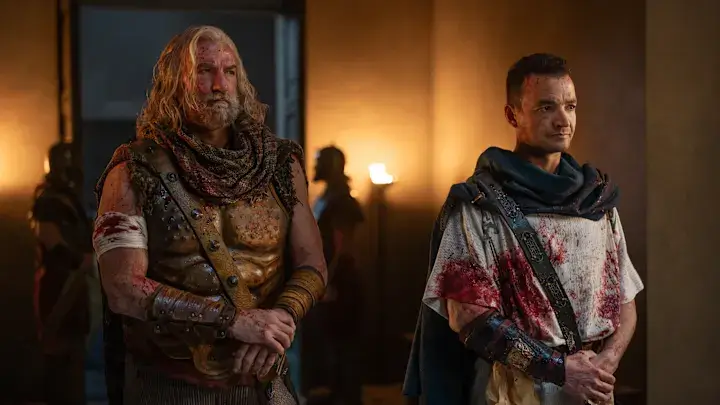
Spartacus: The House of Ashur revives the blood-soaked world of the original series with a bold alternate-history hook: what if Ashur survived and rose to power instead of dying in disgrace. Set after the rebellion’s collapse in a reimagined timeline, the series positions the former slave and schemer not as a casualty of history but as the man who helped shape it, now running the very ludus that once owned him.
Nick E. Tarabay returns as Ashur, and the performance once again anchors the narrative, though not without complications. This version of Ashur is neither a full villain nor a convincing hero, and that moral ambiguity makes him difficult to fully relate to. He is not ruthless enough to embrace outright antagonism, yet he lacks the integrity required of a traditional protagonist. The result is a character who feels caught between identities, which weakens emotional investment.
The situation recalls the controversy surrounding Ellie in The Last of Us adaptation, where casting and characterization choices divided audiences and influenced critical reception. Here, the issue is less about ability and more about alignment; the lead feels miscast for the weight of the role’s physical and symbolic demands.
Opposite him stands Tenika Davis as Achillia, a defiant warrior whose introduction immediately commands attention. Shackled and outnumbered, she fights with precision and intensity, earning her place within the gladiatorial ranks through visible strength and discipline. Davis delivers a performance grounded in conviction, and in many scenes she threatens to outshine the central figure. The same can be said for much of the supporting cast.
A standout among them is Graham McTavish as Korris, Ashur’s physician and quiet strategist. McTavish brings weight and restraint to the role, crafting a character who understands power not through spectacle but through patience and intellect. Korris operates in the shadows of the ludus, observing weaknesses, advising with measured precision, and serving as both confidant and subtle manipulator.
His presence stabilizes the narrative whenever political tensions threaten to overshadow character dynamics. McTavish’s controlled performance adds gravitas, and in several key exchanges he commands the screen with minimal dialogue, proving that influence in this world is not always forged in the arena.
One of the larger challenges lies in physical credibility. While Ashur’s intelligence and manipulation remain believable, his combat prowess is harder to accept. In a franchise built on visceral arena dominance, audiences expect the central figure to project physical threat. Here, that expectation is only partially met, making several fight sequences less convincing than intended.
The series is guided by Steven S. DeKnight, whose previous work on Spartacus defined its operatic tone and unapologetic intensity. His influence is clear. The show retains the stylized slow-motion violence, heightened sexuality, and charged political undercurrents that once made the franchise stand apart. The arena battles remain kinetic, drenched in dramatic flair and choreographed brutality.
The camera lingers on spectacle, emphasizing muscle, steel, and blood with deliberate theatricality. Despite character concerns, the craftsmanship behind the action sequences and visual presentation remains strong.
Spartacus: The House of Ashur ultimately succeeds in preserving the aesthetic identity of the franchise. It delivers the same blend of graphic combat, provocative themes, and power struggles that defined its predecessor.
Viewers who value the series for its bold style, explicit intensity, and operatic storytelling will find much to appreciate. Those seeking a deeply relatable central hero may struggle with this iteration of Ashur. The show thrives on atmosphere and ensemble strength, and for fans of the Spartacus brand, that may be reason enough to return to the arena.