By
By 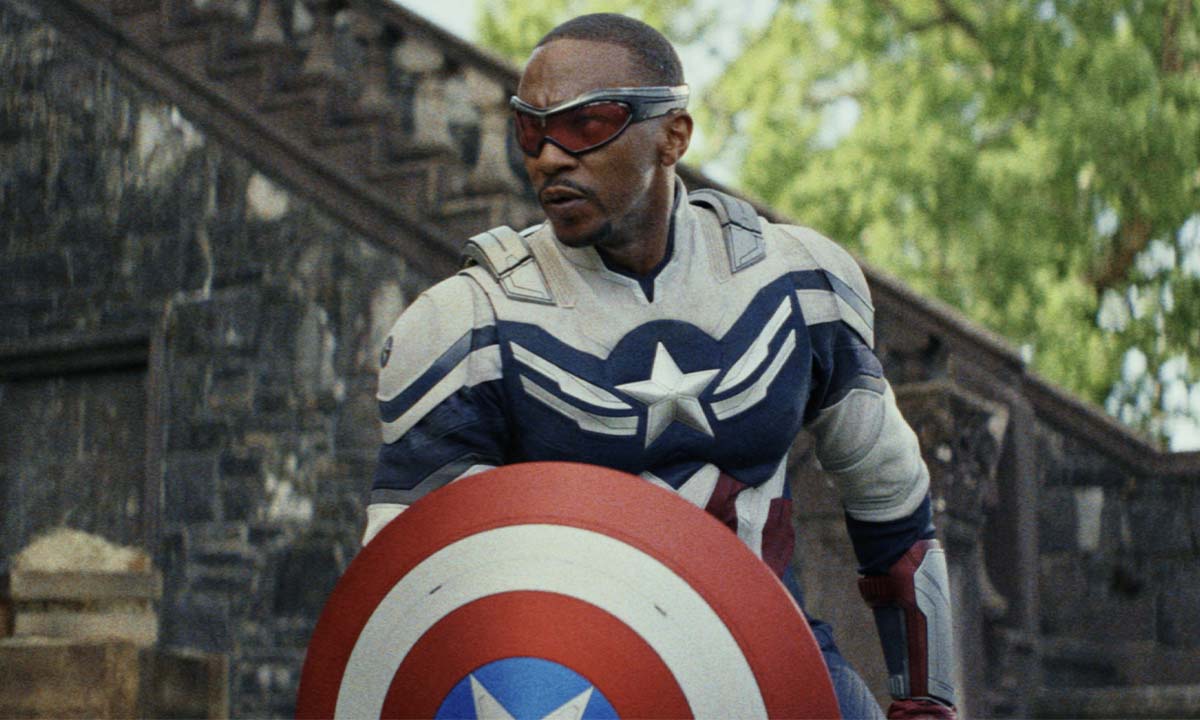
Because of Marvel‘s strangely sparse way of advertising Avengers: Doomsday, fans have had to turn to other leaks and announcements to learn more about the upcoming multiversal adventure. So desperate are they, that even an Italian presentation to cinema owners caught their attention. As fans poured over what amounted to little more than a cast announcement, one thing stood out. The announcer seems to describe one set of heroes as “The Mighty Avengers.”
For readers of Marvel Comics in the mid-2000s, around the time that the New Avengers were a going concern, that phrase stands out. More than just a moniker describing the strength of the combined heroes, the Mighty Avengers signified a team of mainline heroes who went on big, blockbuster style adventures, despite the dark circumstances surrounding their formation. It’s those circumstances that have led Marvel to basically ignore that line-up of Earth’s Mightiest Heroes, and it’s those circumstances that make their potential return in Doomsday so interesting.
A Different Assemblage
Mighty Avengers #1, written by Brian Michael Bendis and illustrated by Frank Cho, felt like a throwback to the Silver Age when it released in 2007. It’s not just the use of thought bubbles, which had been almost completely replaced by internal monologues conveyed through caption boxes. Rather, it’s the construction of the issue. In the main timeline, the Mighty Avengers battle monsters who emerge from the underground, in a manner reminiscent of Giganto from 1961’s Fantastic Four #1. In flashbacks, we see Tony Stark and Carol Danvers pick members of their new team, staring at a giant monitor filled with portraits of Marvel’s mightiest.
Cho, an artist best known for his cheesecake pin-ups, renders the heroes as bright and idealized, with colorist Jason Keith providing extra pop. Cho uses wide panels and near-splash pages to convey the awe of the battles, as befits a team full of heavy hitters such as Ms. Marvel (the moniker Danvers used before taking the name Captain Marvel), Sentry, Wonder Man, Iron Man, the Wasp, and the God of War Ares.
Fun as it is, the pop-art nature of Mighty Avengers #1 is more than a mere nostalgia play. Rather, it serves a thematic purpose, both for Tony Stark and for Marvel Comics. The formation of the Mighty Avengers comes as part of The Initiative storyline, the follow-up to the Civil War storyline. As in the MCU movie that bears its name, the Civil War in Marvel Comics saw Iron Man and Captain America come to blows over the issue of superhero registration.
However, writer Mark Millar, who served as architect for the Civil War event, was much more willing than Kevin Feige to have fans hate the belligerents. Framing himself as a futurist who saw what the people would demand, Stark demanded that his fellow superheroes unmask and register with the government. He went so far in his quest that he hunted down other heroes, he enlisted Reed Richards to create a secret prison in the Negative Zone for those who would not register, and created a clone of his recently-deceased ally Thor to help him carry out his plan. His actions even led to the death of Steve Rogers, a death that lasted quite a while by comic book standards.
In short, things looked pretty grim for Iron Man at the end of Civil War. Thus, The Initiative offered a chance at redemption, as Stark—who took the place of Nick Fury as director of SHIELD—starts to give the world its superheroes again. And the flagship of The Initiative was the Mighty Avengers.
The Mighty, The Fallen
As fun as the first issue of Mighty Avengers is, the series never forgot its relationship to the superhero Civil War. In fact, Marvel published another Avengers book at the same time, New Avengers, which focused on a team of heroes who kept up the fight, despite refusing to register. These heroes—led by Luke Cage, and including Spider-Man, Spider-Woman, Wolverine, Iron Fist, Doctor Strange, and Clint Barton in his Ronin guise—did their good deeds knowing that the Mighty Avengers would arrest them on sight.
Indeed, both series gave plenty of time for the characters to wonder about the morality of their decisions. As the more street-level heroes, the New Avengers saw themselves as the authentic group, a position that Marvel seemed to endorse by having Cage and company discover a hidden Skrull attack long before the Secret Invasion crossover began in earnest. For their part, the Mighty Avengers insisted that they were doing the necessary work of superheroes, that they put aside their own personal feelings about secret identities and government regulations to save the world.
At its best, Mighty Avengers operated something like a superhero deconstruction. Bendis and Cho, the latter eventually replaced by the ever-reliable Mark Bagley, would serve up a heaping helping of two-fisted action. Issue after issue pit the team against monsters and Ultron and symbiotes, to say nothing of the Skrulls. At the same time, the series would stop for the heroes to consider their moral positions.
Those qualities only increased after the Secret Invasion forced the heroic factions to work together, especially when Norman Osborn, the respectable businessman who spends his evenings as Spider-Man’s archenemy the Green Goblin, becomes the world’s hero after ending the Skrull attack. During the Dark Reign event that followed Secret Invasion, Osborn used his influence to exercise control over the United States, essentially turning heroes into his tools.
A Mighty Good Time
We know that Avengers: Doomsday will feature two versions of the Avengers. The Thunderbolts have become the New Avengers, led by Bucky, but under the influence of Valentina Allegra de Fontaine. Although he lost government backing with President Ross turned into the Red Hulk in Brave New World, Sam Wilson has his own Avengers that he leads as Captain America. This group, which the Italian leak described as the Mighty Avengers, includes, of course, Captain America and Joaquin Torres as the Falcon, as well as Ant-Man, Thor, and, surprisingly, Loki.
The teaser at the end of Thunderbolts* suggested that the two Avengers groups do not get along, which matches the status quo at the start of the last major Marvel event, Avengers: Infinity War. In that movie, the two groups bury the hatchet almost immediately, as the threat of Thanos renders any other concerns unimportant.
One would think that the multiversal collapse and the coming of Doctor Doom would certainly also make Bucky and Sam get over their hurt feelings and combine their two groups. But if Doomsday and Secret Wars follow the model set by the Mighty Avengers comic, then the tensions are going to linger for a while.
That might be bad news for the people of the MCU. But for us MCU fans, more Mighty Avengers action is always a good thing, especially if the movie can replicate some of the bold action of the comics.
Avengers: Doomsday arrives in theaters on December 18, 2026.
The post Could Avengers: Doomsday Be Adapting This Forgotten Marvel Team? appeared first on Den of Geek.