By
By 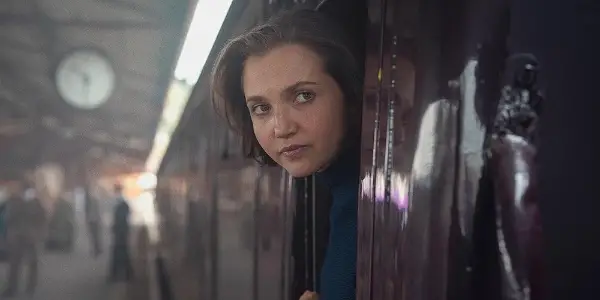
Everyone loves a good mystery. A twisty whodunnit where viewers try to work out the pieces faster than the on-screen would-be detective. And no one does a whodunnit quite like Agatha Christie. With 66 detective novels to her name and an estimated 200 adaptations in film and television, Agatha Christie has proven time and time again she is a sorcerer of mystery, wielding a pen rather than a wand, drawing out the detective hidden in all of us.
Yet from Murder on the Orient Express to Death on the Nile, from Witness for the Protection to And Then There Was None, there is no telling what kind of success an adaptation of an Agatha Christie novel may yield. Unfortunately, for Seven Dials, it never quite strikes the right hour.
A Whodunnit
There is a strange off-setting feeling to the start of Seven Dials. It feels almost like we have walked into a moment that was already in motion before we arrived. The characters feel disconnected from us, our desire to know who they are driving our initial engagement, but our efforts to figure out who will be the first victim clouding its opening. It is not until the morning after the party that the clock starts ticking.
We first meet Lady Eileen (Mia McKenna-Bruce), fondly nicknamed “Bundle”, Lady Catherham (Helena Bonham Carter), and Gery Wade (Cory Mylchreest) in the middle of the party. The mood is celebratory, with promises of the future confessed between champagne and dancing. However, the promises stay just that, as Gery is found dead the next morning from an overdose.
Bundle, unable to accept Gery’s cause of death and noticing conflicting evidence in his room, begins to dive deeper, suspecting a more devilish plot afoot. As she moves through each piece of evidence she finds, leaving no stone unturned, Bundle comes to suspect that the secret extends far beyond who killed Gery, and could affect the entire country and its future.
source: Netflix
Seven Dials works well to establish a framework both narratively and visually. There are shots crafted that carry through the film helping to maintain its continuity. From visual constructions to long wide shots of rooms, there is always the sense of the mystery being larger that the would-be detective, almost out of reach. At the same time, these wide shots feel like they break beyond the walls of the room, feeling unnatural and unsettling, helping to set an unease for the viewers. And while the series never seems to shake its escalated made for TV movie feeling, it certainly draws you in. There is intrigue and deceit hiding around every corner, evidence tucked away for just that one person who is willing to push the questions further.
Each episode begins just like the last – opening shots presented to the sound of a ticking clock. You are instantly forced to feel the seconds ticking down on our heroine – for better or for worse. With cliffhangers at the end of each episode connected by the sound of the clocks, the resolution of the mystery feels inevitable.
source: Netflix
Old Fashioned Mystery
It’s hard to elevate an old-fashioned mystery. We as viewers, are more savvy, having had mysteries brought to life for decades. We need more than the novel may deliver. While The White Lotus and Knives Out each found success in the reintroduction of the mystery genre, they too found ups and downs in their sequels as they tried to rework an already used formula. For Seven Dials, the method here feels old and tired. And with that, it becomes predictable. It’s easy to see where the lines are meeting, giving little surprise to the reveal by the film’s end. It’s satisfying because the mystery goes exactly where it was led, lending to a tight but empty adaptation, whereby you know the conclusion before the characters do.
Additionally, there is little character build-up, a few nuances strewn throughout to give a broader feeling of being fleshed out. But the characters are not the focus, but rather the mystery. As we are enthralled with the whodunnit unraveling before us, it is not until the final moment that we feel almost cheated out of the character development. When sentiment and full-circle emotions are expected, the ending feels hollow and forced. Handholding draws the viewer past the finish line, ensuring that even the smallest details of character and meaning do not go unnoticed, again focusing more on the mystery and its revelation than the one living through it.
While the entirety feels like an entertaining level up from a made-for-TV movie, Seven Dials culminates in a hollow and hokey ending.
Agatha Christie’s: Seven Dias is now on Netflix!
Does content like this matter to you?
Become a Member and support film journalism. Unlock access to all of Film Inquiry`s great articles. Join a community of like-minded readers who are passionate about cinema – get access to our private members Network, give back to independent filmmakers, and more.