By
By 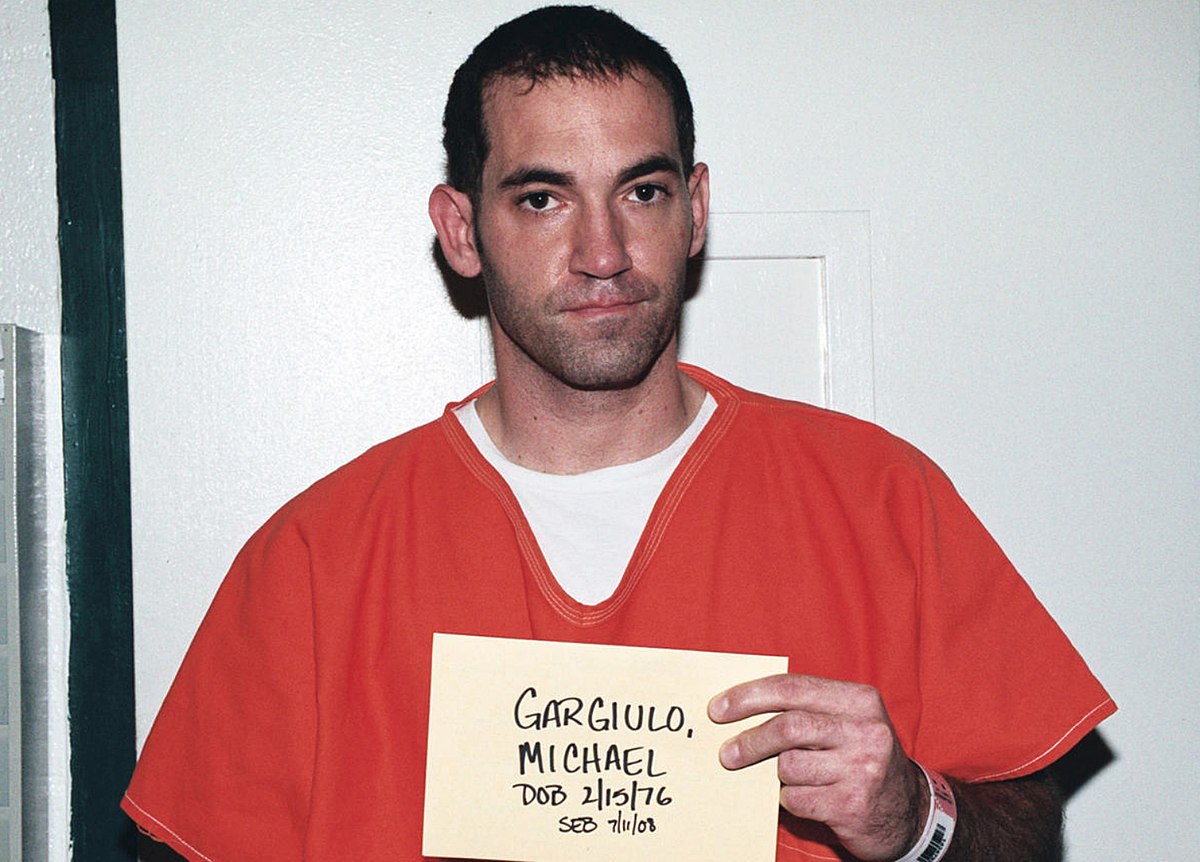
Hollywood loves a monster, preferably one with good lighting and a three-act structure. But every so often, the industry gets one it didn’t order. No casting director, no rewrite, no heroic third act. The story of the so-called Hollywood Ripper is one of those grim reminders that Los Angeles isn’t just a factory for dreams; it’s also a place where ambition, proximity, and anonymity can curdle into something genuinely horrifying.
The Hollywood Ripper: When the Nightmare Lived Next Door
This is not a slasher movie. No clever final girl, no ironic soundtrack cue. Just a real predator moving through the margins of Hollywood in the late 1990s and early 2000s, brushing up against fame without ever touching it… except in the most disturbing way imaginable.
Enter the unfortunately real villain.
Michael Thomas Gargiulo was born in 1976 and grew up in Illinois before relocating to Los Angeles in the late 1990s. Like so many others, he came west chasing opportunity. Unlike almost everyone else, what he brought with him was a capacity for extreme violence.
In Hollywood lore, he would eventually earn the nickname “The Hollywood Ripper,” a tabloid-ready title that sounds like a rejected Rob Zombie pitch. But unlike the overcooked branding exercises Hollywood loves, this one stuck because the crimes happened close to the industry’s physical and cultural heart, and because the circumstances were too grotesque to ignore.
Gargiulo lived near many of his victims. That detail matters. This wasn’t a masked stranger leaping from the shadows. This was someone who blended in, shared buildings, nodded in hallways, and existed in the same small, overpriced Los Angeles ecosystems as people trying to build lives in the industry.
The case that would eventually drag the Hollywood Ripper into the international spotlight began on February 21, 2001.
Ashley Ellerin was 22 years old. She was a fashion student and aspiring designer living in a Hollywood bungalow. On that night, she was supposed to go on a date with a then-up-and-coming actor named Ashton Kutcher.
Ellerin was brutally stabbed to death in her home. The crime was savage. Multiple stab wounds. Defensive injuries. The kind of violence that makes the word “overkill” feel inadequate. The killer fled. The case went cold.
And then Hollywood, doing what Hollywood does best, turned the peripheral detail into the headline.
The Awkward Intersection of Fame and Reality
Ashton Kutcher’s involvement in the story is one of those moments where celebrity culture collides head-on with real tragedy, and nobody comes out looking comfortable.
Kutcher arrived at Ellerin’s home that night to pick her up. She didn’t answer. He looked through a window and saw what he thought was spilled red wine on the floor. He left, assuming she had gone out.
Years later, during Gargiulo’s trial, Kutcher testified as a witness.
It was not a cameo. It was not a publicity beat. It was an uncomfortable, human moment in a courtroom where the stakes were horrifyingly real. Kutcher, by then a major star, spoke plainly about that night, his assumptions, and the shock of later learning the truth.
Hollywood spends millions trying to simulate authenticity. This was the real thing, and it didn’t flatter anyone.
Kutcher was not a suspect, not accused, and not implicated in any wrongdoing. His presence at the trial underscored how close fame can be to tragedy without causing it.
Four years after Ellerin, the pattern was repeated.
Maria Bruno, 32, was found murdered in her Hollywood apartment in December 2005. Like Ellerin, she had been stabbed repeatedly. Gargiulo lived nearby. Again, proximity. Again, the sense that the danger wasn’t lurking in alleyways but sitting right next door.
This time, investigators would later argue, the similarities were too strong to ignore.
Then, in April 2008, Michelle Murphy was attacked in her Santa Monica apartment. Gargiulo stabbed her multiple times while she slept.
But Murphy fought back. She escaped. She survived. Later, she identified Gargiulo as her attacker. Her survival changed everything. The case stopped being a collection of horrors and became a prosecutable narrative. DNA evidence linked Gargiulo to the murders of Ellerin and Bruno, and the Hollywood Ripper was finally in custody.
No Movie Ending, But A Twist
Gargiulo’s trial stretched on for years. It featured gruesome evidence, emotional testimony, and the unsettling reminder that serial killers do not look like serial killers in movies. No dramatic monologues. No operatic madness. No tics or curious dress sense. Just a man, in a chair, and a legacy of murderous violence.
In 2019, Gargiulo was convicted of two counts of first-degree murder (Ashley Ellerin and Maria Bruno) and one count of attempted murder (Michelle Murphy). The jury later recommended the death penalty.
That recommendation would later be overturned due to juror misconduct, because real life, unlike the movies, rarely wraps itself up cleanly. He was eventually sentenced in 2021.
There was, however, a horrific twist to come.
It turned out to be highly likely that Ellerin wasn’t his first victim. He is now believed to have committed his first murder at the age of 17 on August 13, 1993, when he stabbed his neighbor, 18-year-old Tricia Pacaccio, who was the sister of his friend, to death on her back doorstep. Her father Rick found her body the following morning on the back porch.
It is thought he fled to Los Angeles to escape scrutiny around this killing.
Even worse than that, he allegedly made a statement to authorities in the Los Angeles County Jail that just because ten women were killed, and his DNA was present, does not mean he murdered anyone. So authorities believe there may be many more undiscovered victims.
Gargiulo was extradited to Illinois on September 6, 2024, to face trial for the 1993 killing of Tricia Pacaccio. If convicted, he faces a sentence of life without parole in Illinois, while the California situation remains, and the death sentence hangs over him.
Catharsis for families of the victims, the survivor, or any undiscovered victims, remains elusive until the Illinois trial concludes and he is potentially sent back to California.
Hollywood, the Machine, and the Myth
The reason this case lingers in Hollywood history isn’t just the brutality. It’s the proximity to the dream factory.
A killer living next door to aspiring creatives.
A victim preparing for a date with a future movie star.
A courtroom where celebrity and mortality shared the same space.
Hollywood likes to tell itself it’s exceptional. This case was a reminder that it is merely human. Crowded, chaotic, and sometimes catastrophically blind to what’s happening just beyond the glow of ambition.
The irony is that Hollywood has spent decades fictionalizing serial killers into seductive anti-heroes, glamorizing them, while completely missing the banal, cowardly reality of the real thing.
No stylish trench coat. No manifesto. Just a man who chose violence and victims who deserved to live.
The Hollywood Ripper story isn’t a cautionary tale about fame, or Los Angeles, or celebrity culture, though all of those elements orbit it uncomfortably. It’s a reminder that evil doesn’t need Hollywood symbolism or spectacle. Chillingly, it just needs access.
The post Hollywood History: The Hollywood Ripper appeared first on Last Movie Outpost.