By
By 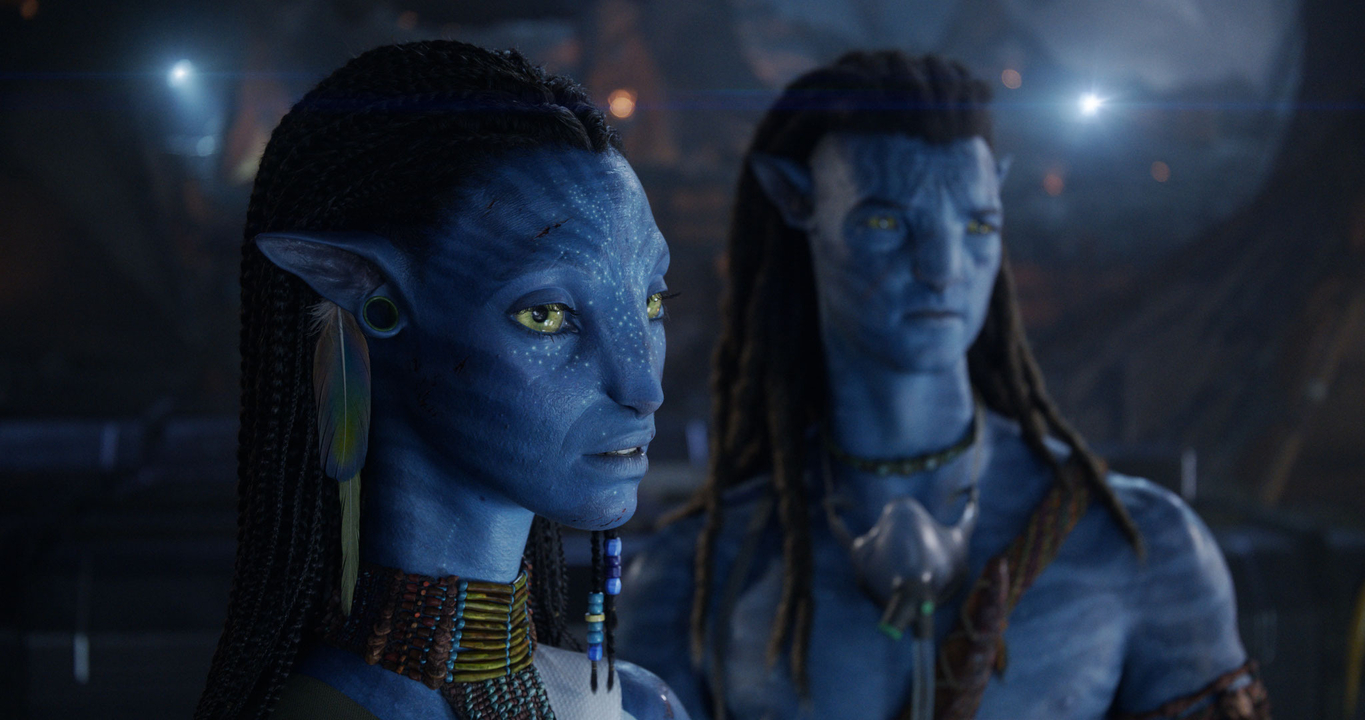
Before viewers returned to Pandora in Avatar: Fire and Ash, they quickly checked in with an old friend. The first teaser for Avengers: Doomsday, which played before James Cameron‘s latest sci-fi adventure, featured no epic battles, no scenes of superheroes saving the day, not even a quippy one-liner. The one minute teaser consisted of nothing but Chris Evans as Steve Rogers riding to a nondescript one-story home and smiling at his infant child. Yet, that was enough to elicit gasps and cheers from the general audience at this writer’s screening, equal to anything that happened during Fire and Ash.
It’s hard to imagine people doing the same for Jake Sully, the human marine played by Sam Worthington, who becomes Na’Vi in the Avatar franchise. The Avatar films are fantastic fun and make tons of money. The previous two received strong notices from critics and currently are the #1 and #3 slots on lists of all-time box office hits, with the third entry sure to follow suit.
But for everything that Cameron does right in the Avatar franchise, certain aspects of the movies keep them from permeating the culture like other phenomena of the 21st century.
The Past Colonizing the Future
Don’t be fooled by the aliens, spaceships, and mech suits. Avatar comes not from the future, but from the past, especially the colonial fictions of the 18th and 19th centuries. Stories about Robinson Crusoe, Alan Quatermain, and Natty Bumppo turned the European expansionist project into high adventure, making the process of white conquest into non-white spaces look like a battle of good and evil.
With Avatar, James Cameron explicitly and implicitly repudiates the racism of those narratives. Most obviously, the films do not portray any actual human beings as the uncivilized other that must be improved by a white hero. Instead, the citizens of Pandora are blue aliens, and the human conquerers include people from across the globe, of various nationalities and ethnicities.
Even with that fictional remove in place, Avatar tries not to embrace the standard colonizing narrative. The film directly identifies Jake and his marines as colonizers who don’t care about the living creatures in Pandora. They want to exploit the land for their own end, to replace the planet that they already destroyed, and they don’t care who they harm in the process. Even when he abandons humans to join the Na’vi, Jake’s mere presence hurts the people because he brings more humans with them. Unlike Natty Bumppo in James Fenimore Cooper’s Leatherstocking novels, Jake doesn’t become the bridge between the Na’vi and the humans as the former dies out; rather, he urges the Na’vi to fight against the encroaching humans, directly stating that humans must be fully driven out of Pandora.
Yet, for as much as Cameron tries to marry post-colonial perspective into his films, they can’t escape the fact that modern audiences don’t have the same thirst for exploration and conquest as those of the past. Whether that represents a better understanding of the evils of colonialism, or if cyberspace is now the great frontier, or if people just don’t love adventure like they used to, the desire just isn’t there. The idea of seeing something new or going someplace never before visited isn’t quite the draw it once was.
Thus, the worlds that Avatar creates are wonderful and beautiful, but viewers who can see everything from their phones don’t have the same interests as housebound Victorians did.
Uncharacteristically Characterless
When one thinks of the culturally-defining movie moments of the past two decades, what comes to mind? The exhausted Avengers eating schwarma? Dominic Toretto sharing Dos Equis with the family? Elsa or Elphaba belting out songs of self-acceptance?
Although all of these movies have their moments of high drama and pure spectacle, it’s these quiet scenes that get turned into memes and get reenacted on TikTok. Why? Because people care about the characters first, and only invest in the spectacles to the extent that things happen to the people they care about. And that’s where Avatar truly falls short.
Each of the characters in Avatar can be defined by a couple of words. Jake is strong and protective, Neytiri is fierce and loyal, Quaritch is headstrong and cruel, Kiri is rebellious and curious, etc. This simplicity helps viewers keep track of the characters while being immersed in amazing worlds, as do Cameron’s simple and timeless themes about the power of family, welcoming the outsider, caring for the environment, and so on.
However, the same familairity that keeps us from being overwhelmed also prevents us from caring about the characters after we leave the theater. No one clammers for a Jake Sully T-shirt because there have already been countless other guys who have a heroic moral turn, often in stories that emphasize that moral complexity more than they do the fantastic world in which the change of heart takes place.
It’s telling that the only parts of Avatar to really become internet memes are Payakan the Tulkun, who gets a plot in Fire and Ash that feels shoehorned in to please the web, and the movie’s papyrus font.
A Cinematic Amusement
To be clear, none of this means that Avatar movies are bad. They are incredible spectacles and demonstrations of pure cinematic prowess. In each of the three films, Cameron combines meat-and-potatoes filmmaking fundamentals with audacious visual flourishes, resulting in films that are both exhilarating and legible.
Moreover, in a time when Netflix and other companies want to destroy the cinema experience, the Avatar movies are celebrations of the theater. They absolutely deserve to be seen in 3D and on the biggest possible screen, as Cameron uses the technology as not just a gimmick to earn an up charge, but to build out the world and reinforce the film’s themes. Each and every Avatar film turns the theater into an amusement park in a manner unique to cinemas.
But, ultimately, the joy of Avatar stays entirely within the movie theater. As soon as you walk out and you deposit your glasses in the recycling bin, your adventures on Pandora slip away just as easily. That’s not a bad thing, but it is certainly a thing with the Avatar franchise, movies that belong on the screen and not in the culture.
Avatar: Fire and Ash should be watched, and should only be watched, in theaters where it is now playing worldwide.
The post Why Is Avatar So Big But No One Seems to Care? appeared first on Den of Geek.