By
By 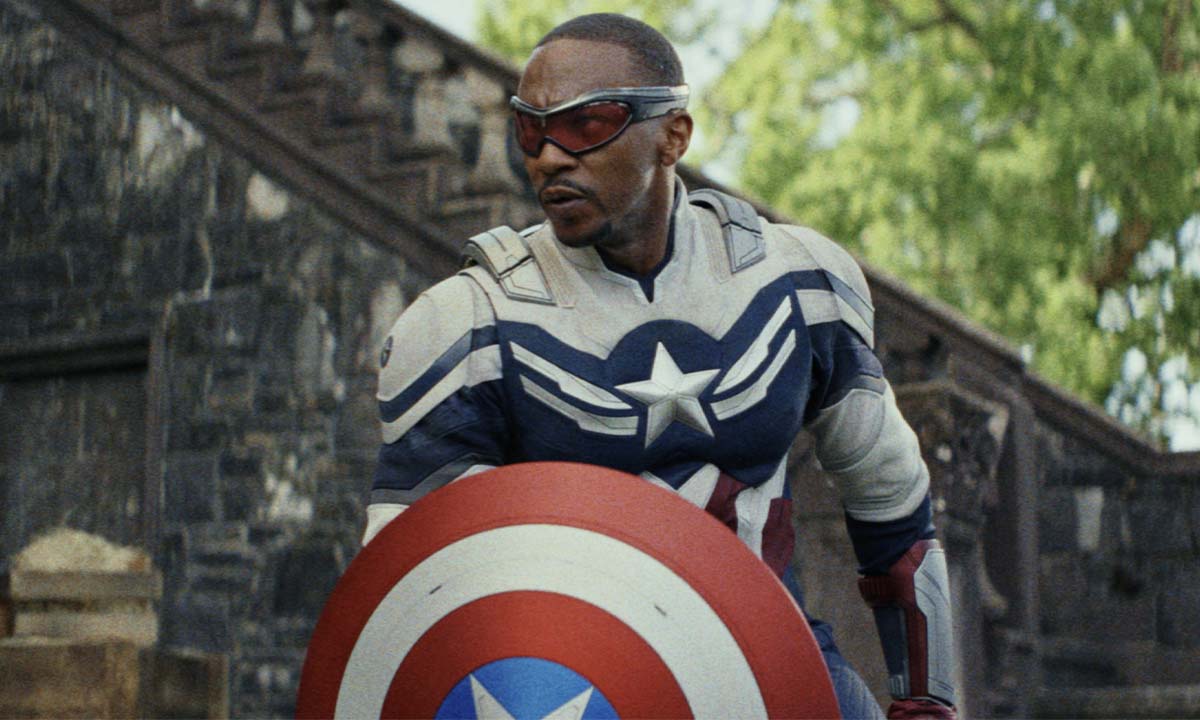
Captain America is back! That’s the message conveyed by the first teaser trailer for Avengers: Doomsday. Coming in at just over one minute long, the leaked clip (now running before showings of Avatar: Fire and Ash) finds Chris Evans playing Steve Rogers in a state of domestic bliss, complete with a young child. Though he may have put his star-spangled suit in storage, the final text promises it won’t stay that way for long. “Steve Rogers will return in Avengers: Doomsday,” it reads.
While that might be good news for those who stopped caring about the franchise after Endgame, it raises questions for those who hoped the MCU could continue to grow. After all, Marvel already has a Captain America in the form of Sam Wilson, to whom Steve left the shield. It seems unlikely that he’ll come to wrestle back the title from Sam, which means that we may end up having two Captain Americas in the MCU. Such a move isn’t unheard of, as both Steve and Sam are Captain America in the Marvel Universe. But here’s the thing: it’s a problem that there are (at least) two Captain Americas in the comics. And if the comics are any indication, that’s two too many.
The Legacy Conundrum
Legacy has always been part of superhero comics, especially in the DC Universe. Thanks to its many reboots, time jumps, and various Crises on Infinite Earths, the line regularly has established characters die, retire, and grow up, leaving established superhero identities for others to inherit.
Marvel uses a sliding timeline that perpetually keeps its main characters in their late twenties or early thirties, thus making reboots and time jumps less likely, but even they’ve come to embrace legacy. Over the past two decades, we’ve had various versions of Captain America, the Hulk, Black Widow, and more. And then there’s Miles Morales, a kid from an alternate reality called the Ultimate Universe who took on the Spider-Man name when his Peter Parker died and now has been integrated into the main Marvel Universe.
Wonderful as Miles is, he represents the problem with legacy characters. There was a legitimate story reason for him to become Spider-Man, as the Peter Parker of the Ultimate Universe died and so that world was without a Spidey. But then, he proved popular enough to stand on his own, so when Marvel decided to end its Ultimate Universe comics in 2015, they found a convoluted way to put Miles into the main universe, which means that there are (at least) two people called Spider-Man swinging around New York City on Earth-616.
Within that fictional NYC, the two Spideys don’t seem to be a problem. But in our world, it’s clearly a problem. If I were to tell you my favorite character is Spider-Man, what comes to mind? You think Peter Parker, your Friendly Neighborhood Spider-Man in the blue and red duds who has been played by Tobey Maguire, Andrew Garfield, and Tom Holland. But what about the other guy? If I want to tell you my favorite character is the main character of the Spider-Verse movies, do I say that my favorite character is Spider-Man? No, I say my favorite character is Miles Morales, which means that he is not the de facto Spider-Man.
Instead of elevating Miles to equal standing to Peter, the fact that he’s a Spider-Man in the same world as Peter Parker means that Miles is not, in fact, ever going to be Spider-Man.
Multiple Universes, Only a Few Identities
At this point, one might reasonably ask why Marvel didn’t just integrate Miles into the mainline universe by copying the Ultimate Universe? Our Peter Parker dies heroically, and now Miles steps up to carry on his legacy, making him the one true Spider-Man.
One need only look back at DC to see why this never happens. In 1986, the Flash a.k.a. Barry Allen heroically sacrifices himself to stop the Anti-Monitor in Crisis on Infinite Earths. Not only was it a powerful death, but it was easily the most exciting thing Barry Allen as a character had ever done.
He was replaced by his sidekick Wally West a.k.a. Kid Flash, who became the new Flash. Even better, Wally had incredible character development over several years and creative teams, a true rarity in mainline superhero comics, so that by the mid-’90s, he was fully established as the favorite version of the Flash. There was no need to bring back Barry Allen, because Wally did everything that Barry could do and he was a better character.
And yet, in 2008’s Final Crisis #2, Barry Allen comes back. And even though DC tried to keep both around, Wally was soon rendered unnecessary and Barry became the true Flash again.
Why did DC bring back Barry Allen, when they had a better Flash already in the Universe? Because some readers and writers like Barry best, and DC wants to sell comics to them. But they also want to sell comics to Wally fans, so they’ll keep Wally. And they also want to create jumping on points for potential new Flash fans, so every couple of years, they’ll make someone the new Flash, and keep them around, just in case.
As a result, the DC Universe is filled with Flashes, as well as Green Lanterns and Robins and Wonder Girls and, like, three Wildcats for some reason. It’s a mess.
Never Let Go
And now, the Marvel Cinematic Universe is ready to follow suit, bringing back Chris Evans as Captain America, for the same reason it brought back Maguire and Garfield as Spider-Man, which is the same reason that there are so many Flashes and Robins and Spider-Mans in comics. People have their favorites and they don’t want them to move on from them. And Marvel wants their money, so they don’t make them move on.
While there’s certainly something to be said for giving the people what they want, it does limit story opportunities, as we may see with Steve Rogers’s return to the MCU. Although we haven’t seen much of Sam as Captain America, he’s already staked out a position unique to himself, something that Steve could never do. Both The Falcon and the Winter Soldier and, to a lesser extent, Captain America: Brave New World have dealt with the fact that a Black man has become the symbol of America, an interesting spin on a well-established character.
Now, the Doomsday teaser does say that Steve Rogers, not Captain America, will return. So there’s a chance that Steve’s not coming back to be Cap. But he doesn’t have to pull on a uniform to undercut Sam. At best, his presence means that there’s going to be two Captains America running the MCU, which creates confusion in the minds of the audience. At worst, and most likely, Sam will be diminished as the also-ran, even if he gets to keep the Captain America title.
Avengers: Doomsday brings Steve Rogers back to theaters on December 18, 2026.
The post Avengers: Doomsday Teaser Shows the MCU is Poised to Repeat Comics’ Greatest Mistake appeared first on Den of Geek.