By
By 
Predator: Badlands (2025)
First hunt. Last chance.
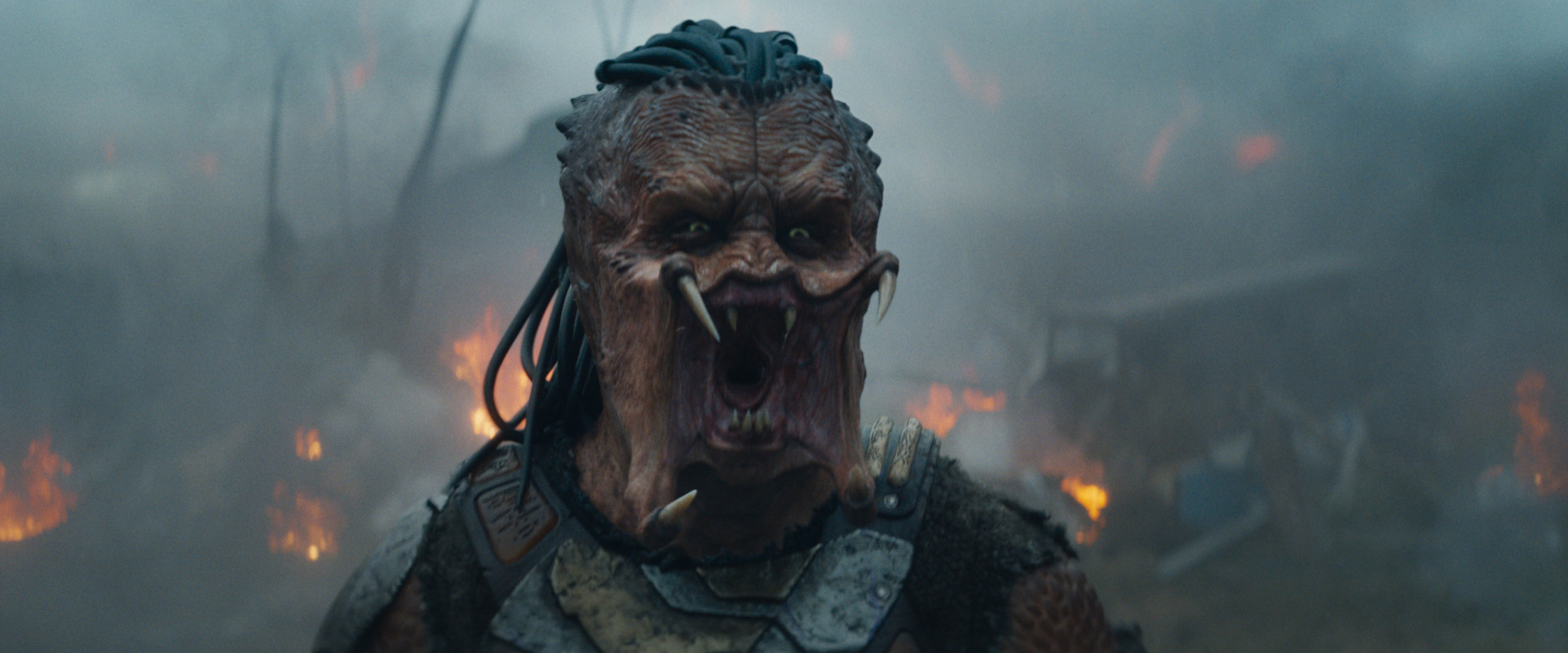
There’s something quietly refreshing about what Dan Trachtenberg pulls off with Predator: Badlands. On paper, it’s assembled from familiar genre components — a rogue hero, a reluctant ally, a revenge-tinged journey through a hostile world — yet Trachtenberg reshapes those tropes into something that actually breathes. Four decades into the series, Dan Trachtenberg — now practically a Predator specialist after 2022’s Prey and the Disney+ animated spinoff Killer of Killers (2025) — finds fresh meaning in a creature that once existed solely to kill The Yautja have long been defined as hunters, villains, or nostalgic icons; here, they’re given depth, driven less by bloodlust than by code and instinct. It’s not about taming the monster — it’s about finally understanding what makes it hunt.
Predator: Badlands follows Dek (portrayed with imposing physicality by New Zealand actor and stuntman Dimitrius Schuster-Koloamatangi), a young Yautja cast out from his clan after defying his tyrannical father (Reuben de Jong). When Dek’s older brother Kwei (Mike Homik, making his feature-film debut) intervenes against their father’s brutal order to execute him, tragedy strikes — setting Dek on a path of exile, survival, and reluctant self-discovery.
The franchise refuses to die — neither does he.
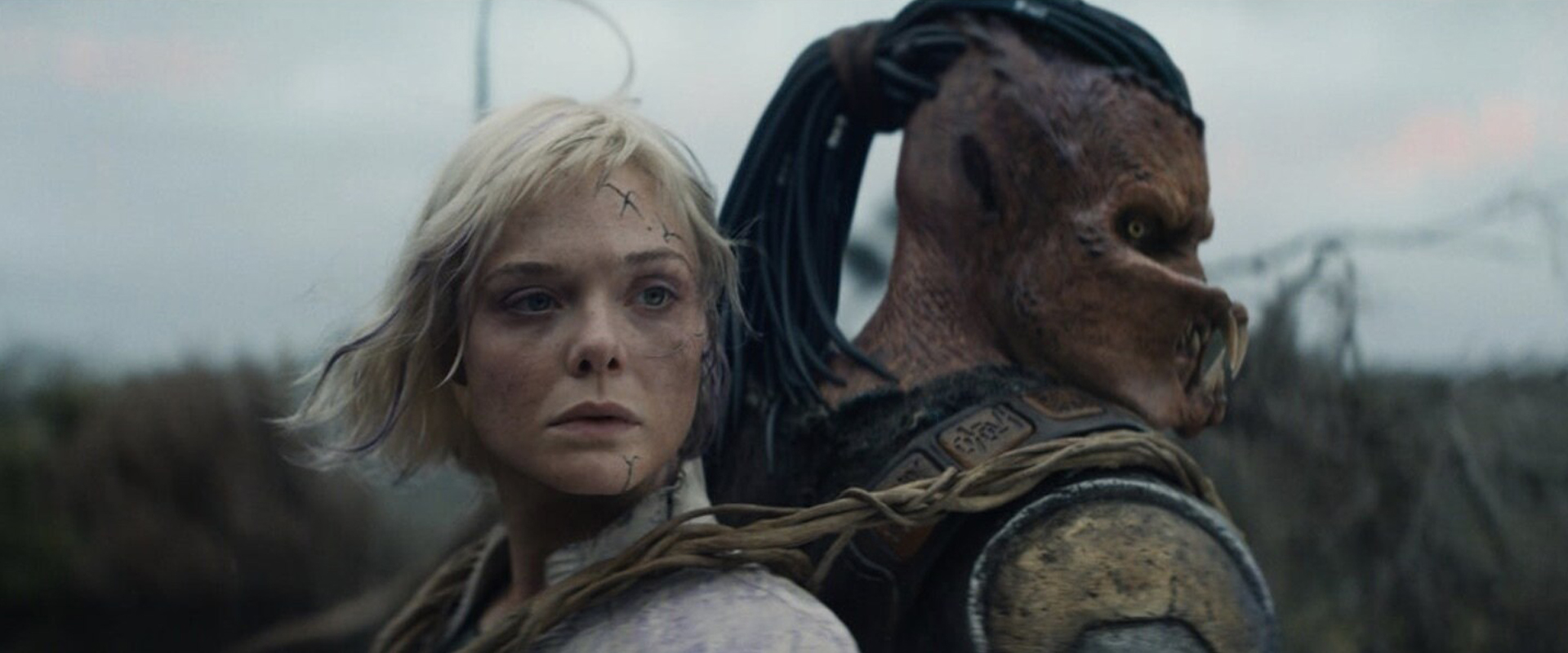
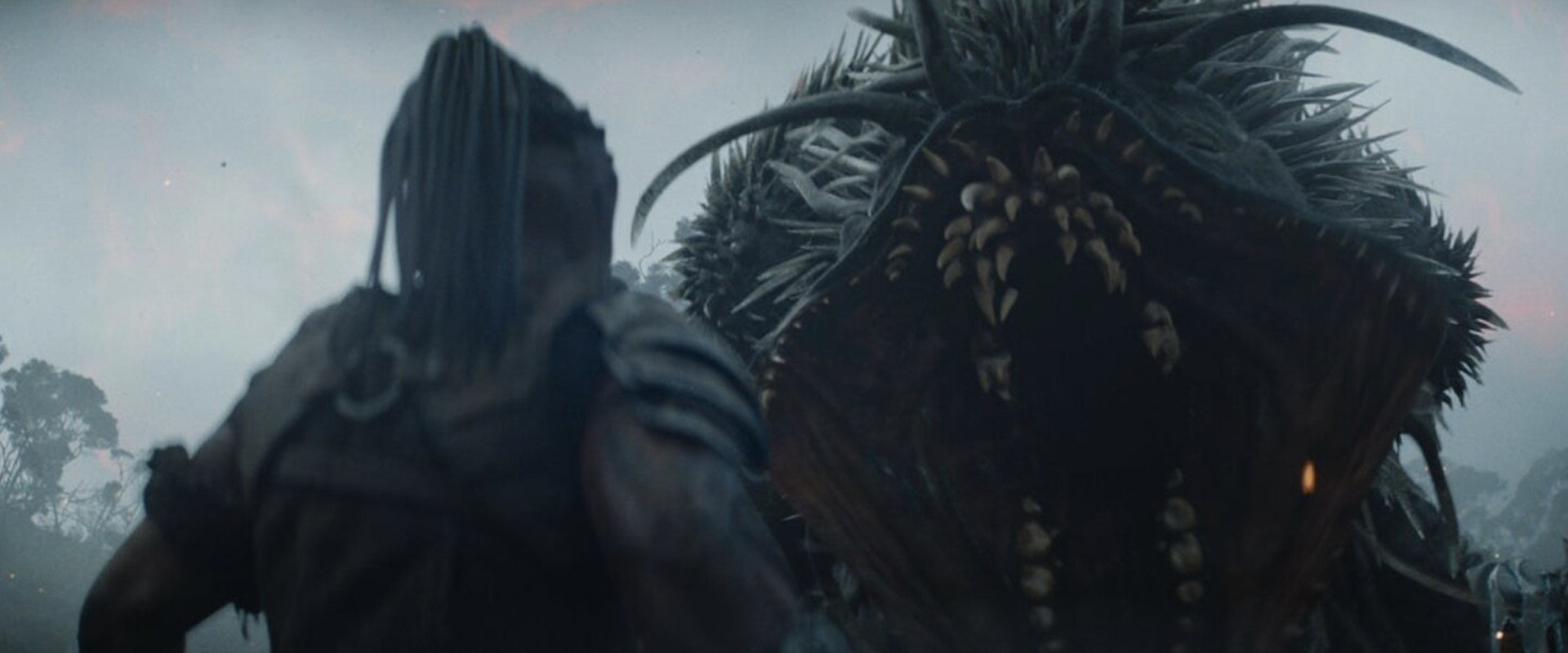
Dek eventually crash-lands on the hostile planet Genna — a world teeming with lethal flora, predatory fauna, and the decaying ruins of a failed Weyland-Yutani terraforming mission. (Yes, those guys — the ever-scheming corporation from the Alien franchise.) Here, his only real ally is Thia (Elle Fanning), a damaged Weyland-Yutani synthetic whose fading directives and fractured empathy give the story its pulse. Using fragments of old colony data, she helps Dek track the Kalisk — a colossal apex predator that dominates Genna’s toxic swamps. Together they hunt: Dek driven by the need to reclaim his honour, Thia propelled by a lingering instinct to matter in a world that’s long forgotten her.
As scavengers and synthetic operatives close in to exploit the planet’s resources, Dek and Thia’s alliance forces him to reconsider the Yautja code not as a static edict but as something shaped by survival, loyalty and choice. For the first time in the series, the Yautja creed feels malleable — a belief system shaped by experience rather than etched in blood. The film reframes the hunter as something closer to a tragic warrior: still lethal, still proud, but capable of conscience.
Trachtenberg delivers the expected carnage with a steady hand. The violence is sharp and imaginative without overwhelming the story, and he knows when to hold back, letting tension and suggestion do much of the heavy lifting. It’s not flawless, but the control gives the carnage some shape — enough to keep it engaging.
The Badlands breed strange alliances.
The filmmaking thrives on momentum and curiosity. Each sequence pushes deeper into strange, evocative corners of the Predator universe. The editing is crisp, the pacing brisk enough to keep the threat alive from scene to scene. For all its digital muscle, Badlands still feels tactile — the grit, the dust, the sense that the world itself is a living organism. The cinematography, by Jeff Cutter — who also shot 2022’s Prey — leans too dark and muted; the desaturated palette and murky lighting flatten some of the spectacle, making a few action beats harder to read than they should be. The score by Sarah Schachner and Benjamin Wallfisch merges Yautja chants with sleek, icy synths, giving the film its pulse and atmosphere — it hums more than it blares, perfectly complementing Trachtenberg’s mix of pulp and poetry.
The film stumbles now and then. The middle act wobbles between savagery and silliness, unsure whether it wants to be primal or playful. The climactic fight, shot in near-total darkness, occasionally confuses more than it thrills. And yes, there’s an oddly cute creature sidekick clearly designed for merchandising — a tonal gamble saved only by a late environmental twist. These missteps are minor but noticeable in an otherwise confident production.
Still, it’s fascinating that a Predator movie now leans closer to the spiritual world-building of James Cameron’s Avatar than the muscle-bound energy of the 1987 original. This one’s sleeker, more PG-13-friendly, and likely to divide purists — but that accessibility may be what keeps the hunt alive. And with the addition of the Weyland-Yutani subplot, the film practically begs for another Alien vs Predator revival — and honestly, if the craft stays this strong, that wouldn’t be a bad thing.
Trachtenberg’s gamer instincts remain sharp: Genna’s towering ruins recall Shadow of the Colossus, the creature design channels God of War, and the combat choreography could’ve been lifted straight from Halo. He treats these digital mythologies with affection rather than irony, and that sincerity gives the film its edge. When the action lands, it’s ferocious, balletic, and oddly beautiful.
Flaws aside, Predator: Badlands pumps new life into a franchise that should’ve run dry years ago. It’s intelligent without being self-important, thrilling without being brainless, and smart enough to let the hunt speak for itself. It may not hit the raw intensity of Prey, nor does it top Killer of Killers — still the standout of Trachtenberg’s recent run — but it’s confident, cinematic, and alive with curiosity for what’s still lurking out there in the dark. Four decades on, that’s an achievement worth celebrating — proof that even an old hunter can still surprise its prey. The hunt’s far from over, and damn, it’s still worth the chase.
3 / 5 – Good
Reviewed by Stu Cachia (S-Littner)
Predator: Badlands is released through 20th Century Fox Australia