By
By 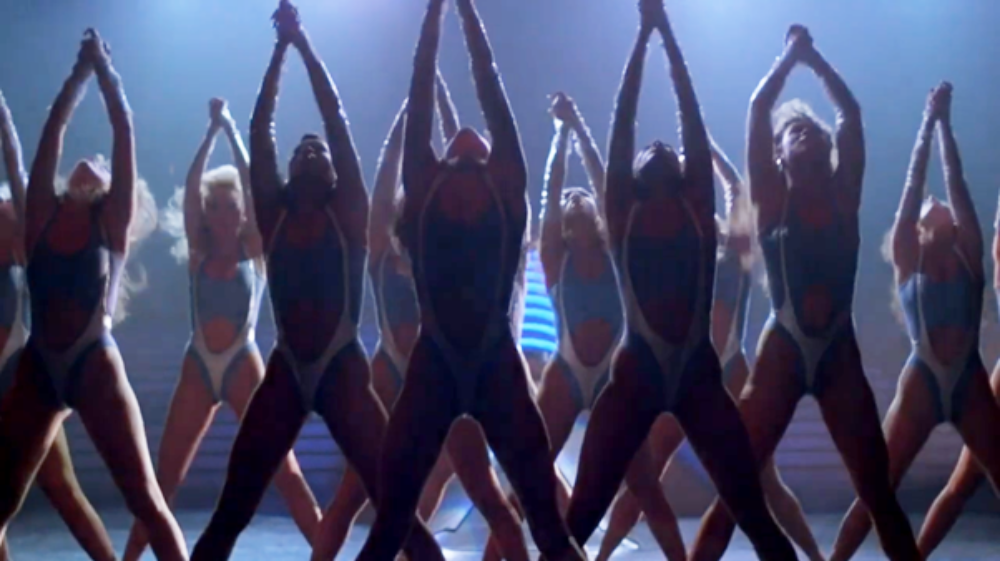
With Edgar Wright’s The Running Man remake scheduled for release on 11 November 2025, there is no better time to revisit the 1987 original. I consider The Running Man to be an underrated gem. You may not agree, but I’ll do my best to articulate why I’m right.
If you haven’t yet managed to catch this 38-year-old movie, I should warn you that spoilers lie ahead.
So without further ado, it’s time to start…running!
I’m going to give the audience what *I* think they want.
The Running Man is based on the book of the same name, published in 1982 and set in the futuristic year of 2025. Stephen King wrote it under his pseudonym, Richard Bachman. The 1987 movie is nothing like the book outside of a few character names, the dystopian near-future setting and the basic concept of a gameshow that kills its contestants.
The changes were so fundamental that Stephen King refused to let the producers put his name on the poster. Despite King being outed as being Bachman in 1985, only Bachman’s name appears in the credits. That must have been a huge blow to the movie’s marketing department.
I have some sympathy for the changes, up to a point. In the book, the gameshow lacks any kind of pizazz and momentum and makes you wonder why it would become a hit with the public. Ben Richards, the book’s protagonist, is frequently alone while on the run. We spend a lot of time in his head, and only see events unfold from his point-of-view. The ‘hunters’ chasing him (changed to ‘stalkers’ in the movie) are mostly unseen and anonymous.
This isn’t a criticism of the book. It works in the novel because Richards’ paranoia becomes our own and we feel as trapped and panicked as he does. But the style doesn’t lend itself well to a visual medium. It needs adaptation.
Despite this, the original script delivered to the producers was faithful to the book. Christopher Reeve was signed to star, but left the project when filming was pushed back.
Sensational! Perfect contestant. I want him.
Enter Arnold Schwarzenegger, the man of the moment. Once he signed on to play Richards, screenwriter Steven E. De Souza (Commando, Die Hard) was brought in to take another swing at the screenplay.
He didn’t even try to retain anything from the book. He simply used the concept as a jumping off point and wrote something that fit Arnold’s larger-than-life persona like an XXXL neon suit.
Book Richards was sickly and thin. Arnold was…Arnold. You don’t need me to explain it.
The result is a WWE-style spectacular with cartoon gladiators, a baying crowd thirsty for blood, spectacular lighting, a Harold Faltermeyer synth soundtrack and the hottest dance troupe in movie history.
We’re experiencing technical difficulties!
The Running Man underwent a somewhat troubled production, with a conveyor belt of directors passing through, including George P. Cosmatos (Rambo: First Blood Part 2), Alex Cox (Repo Man) and Ferdinand Fairfax (Nate and Hayes). Producer Rob Cohen finally settled on Andrew Davis (The Fugitive, Under Siege) only to fire him after a week’s shooting for going behind schedule and $8m over budget.
$8m? In one week? Must have been one hell of a party.
Enter Starsky himself, Paul Michael Glaser, who had moved from acting into directing but had worked mainly in television. His one theatrically released movie, Band of the Hand, was a failed television pilot.
It was an odd choice, but with Glaser being used to the fast pace of television, he was seen as the ideal man to come in at short notice complete the job on time. And he did. The movie was wrapped and ready for a summer 1987 release.
Arnold was unhappy with the final product. He later complained that Glaser shot The Running Man like a TV movie and lost the deeper themes, although he did acknowledge that Glaser had little time to fix these things.
Arnold was also unhappy with The Running Man occupying the same summer release window as his other 1987 blockbuster, Predator. He knew which movie was the better bet, so he flexed his muscles and pushed The Running Man back to November.
But finally, it was…
SHOWTIME!
We have one hell of a show for you tonight
The movie begins with an opening text crawl. The year is 2017 (they couldn’t even keep the same year as the book!) and everything is shit. The economy has tanked, natural resources are in short supply and a police state rules with an iron fist.
Information is controlled via ICS, a 24-hour state television network that broadcasts fake news and sadistic gameshows to keep the populace off the streets and glued to their screens. The system is represented by the creator and host of The Running Man gameshow, Damon Killian (Richard Dawson).
Ben Richards is a police officer framed for firing on a crowd and killing 60 people during a food riot, which earns him the nickname ‘The Butcher of Bakersfield.’ This represents a major departure from the book. Book Richards is a poor, unemployed everyman who needs money to save his sick child. Movie Richards is a state stormtrooper, albeit one with a conscience. He refuses to fire on the crowd but is detained and framed for it anyway.
I’m not sure who the propagandists would have pinned it on if Richards had followed orders. Maybe he was set up to be the patsy either way.
We know almost nothing about Richards’ life before Bakersfield, but we don’t need to. He’s Arnold. He’s a force of nature. Nobody cared about Clint Eastwood’s backstory in A Fistful of Dollars. We didn’t even know his name (I think it was Ian).
The Running Man showcases Arnold at the peak of his powers as a stoic, reluctant antihero with a real edge, a moral code, clear motivation and a seemingly limitless reservoir of one-liners. Or, as Killian put it:
“You’ve got talent, you’ve got charisma and you’ve got balls.”
What else do you need to know?
Hi, cutie pie. You know, one of us is in deep trouble
Richards stages a jailbreak with his two prison buddies, nerdy Weiss (Marvin J. McIntyre) and Laughlin (Yaphet Kotto). They rendezvous with an underground resistance movement led by Mic, played by Mick Fleetwood, who appears to be playing Mick Fleetwood.
No, really. They age him up appropriately and he says the state burned his songs. It’s one of my favourite details of the movie.
Mick Fleetwood depicted in 2017 in The Running Man, versus Mick Fleetwood in 2017. Uncanny.
Richards refuses to join the resistance because he wouldn’t have much of a character arc otherwise. He just wants to escape to another country and sip pina coladas with the help of his brother Edward, which Arnold amusingly pronounces ‘Edvud.’
We never see Edvud – he’s been taken away for re-education and his apartment now belongs to ICS jingle writer Amber Mendez (Maria Conchita Alonso). Richards takes her hostage and tries to leave the country via an airport.
It’s a bad idea, but I love how Richards dons a loud shirt and styles it out, hiding in plain sight. But it isn’t long before Amber ruins it by punching him in the balls and ratting him out to the airport police. He would have made it if he left her at home.
Killian visits Richards in prison and, after much banter, asks him to volunteer for The Running Man. Richards politely declines (“fuck you”) but Killian forces him to agree or he will put Weiss and Laughlin on the show instead (they have also been caught).
There’s a lot of excitement here. A lot of adrenaline.
The build up to the show represents everything I love about this movie. Our introduction to the mad world of The Running Man is set to a synth track called ‘Paula’s theme,’ named for Paula Abdul, who choreographed the dance sequences.
The movie intercuts between the hot dancers, the studio audience, upper class twits hanging out in wine bars and the underclass gathering around big screens in the streets.
We see the soft introduction of Buzzsaw, one of the stalkers, as he shoulder presses a damn motorbike. We visit the stalker locker room and the production team behind the scenes. It is bustling, vibrant and interactive.
The movie leans on this trick a lot to great effect. Every time there’s action or tension, we cut to these groups for a reaction shot. The editing is exceptional, and it makes you feel part of the show.
The calm centre of this storm is Richards being led down a dull corridor to the stage, accompanied by a suit droning on and on in legal speak. It’s a nice contrast.
Killian…I’ll be back
I have to mention how great Richard Dawson is as Killian. Dawson was of course a real-life gameshow host, so the role wasn’t much of a stretch for him. During filming, the director had trouble keeping him on script because he would adlib and riff along with the audience. He is absolutely in his element, commanding the mic and being the perfect foil for Richards.
The movie highlights the contrast between Killian’s public and private personas. In public he is kind, jovial and funny. Behind the scenes he is egotistical, mean and petty, but still quite funny. He’s not evil, or a creep that preys on women. He’s just a dick; the kind of villain you love to hate.
Killian introduces Richards to the booing audience. They run an edited clip of the Bakersfield massacre that makes him look guilty. Fake news before it was fashionable.
Richards is strapped into a sled that’s going to be shot down a steel chute into the game zone. Just before he blasts off, Killian reveals a shocking twist: Weiss and Laughlin have been put in the game anyway, so Richards’ selfless act to save his friends was all for nothing.
There’s only one thing Richards can do: win the whole fucking thing.
Wait…what was my line again?
Richards articulates this ambition with a certain three-word phrase that has come to be associated with Arnold Schwarzenegger. Steven E. De Souza is the one who suggested to Arnold that they make it his catchphrase. After hearing it in The Terminator, he wrote it into the Commando script, and now we have its third and arguably best-delivered outing in The Running Man.
‘Killian…I’ll be back.’
Somehow Killian tops it with his reply:
‘Only in a re-run.’
He smells blood, and nothing on Earth is gonna stop him
What follows is a series of escalating encounters between the contestants and the stalkers. In the book, The Running Man is a thirty-day chase around the country with daily updates on television.
The movie is more immediate. Contestants are placed inside 400 abandoned square blocks of Los Angeles and given three hours to escape. Or die. Whichever comes first.
The stalkers have badass names like Dynamo, Fireball, Sub Zero, and Buzzsaw. They have their own bespoke walk-ons like professional wrestlers. Each stalker carries distinct weapons that end up being used against them most of the time.
These guys are legit. They have to be to pose a threat to Richards. Fireball is the smallest physically but carries a flamethrower and flies with a fucking jetpack! Also, he is played by legendary NFL star Jim Brown.
Buzzsaw wields a chainsaw and rides a motorbike. He is played by Gus Rethwisch, who competed in World’s Strongest Man and absolutely dwarfs Arnold when they fight.
Careful, you could have someone’s eye out with that
Dynamo wears a mohawk, shoots lightning and sings Opera. He is played by Erland van Lidth, an amateur wrestler and opera singer, who sadly died shortly before the movie was released.
Sub Zero dresses like an Ice Hockey player. His weapons include a razor-sharp Hockey stick and exploding pucks. He is played by Professor Toru Tanaka, a former soldier and wrestler.
Also present is Captain Freedom, a retired stalker turned pundit. He is played by Arnold’s Predator co-star Jesse Ventura: a Vietnam veteran, former biker and wrestler. He too towers over Arnold.
People rightly make a big deal about Predator’s badass cast, but these guys are formidable too and inflict real damage on our heroes. Weiss and Laughlin are not long for this world.
The truth? Hasn’t been very popular lately
The story of The Running Man isn’t just about surviving the game. Like all good tales, a grander quest emerges, centring around a satellite uplink that exists somewhere in the game zone. If they can find it, the resistance can take control the airwaves and broadcast the truth.
Amber becomes involved after seeing doctored footage of Richards’ arrest at the airport. She tries to expose the fake footage, gets caught and chucked into the game. She can be annoying at times but comes good in the end.
The gameshow portion of the movie, also known as act two, isn’t without its flaws. When we are with the contestants, it isn’t always clear what is being broadcast. Presumably they aren’t showing their discussions about satellites or resistance movements to the public.
At one point Dynamo seems to be attempting to rape Amber, and another scene uncovers a damning revelation about former winners of the show. I suppose we should assume that if we don’t see a reaction shot from the audience, the commercials are on. But it could be clearer at times.
This is what I hate. Third-act problems.
The biggest self-own in the entire movie involves changes made to a scene where Richards and Amber are ‘killed’ by Captain freedom, only for it to be later revealed as an AI deep fake (another example of The Running Man being ahead of its time).
In the original cut of the movie, the fake isn’t revealed until after the showdown with Captain Freedom. I can only imagine the shock of seeing our heroes killed off in that manner.
Unfortunately, a few idiots at the test screenings ruined it for us all, so the scene was re-edited. In the final cut, we see the production team preparing the deep fake in advance, so the fight has no tension or shock factor at all.
Is it too late to ask Starsky for a director’s cut?
The third act sees Richards and Amber linking up with Mick Fleetwood like a latter-day Buckingham Nicks. This is where Richards completes his character arc by leading the charge rather than running away. He is The Running Man no longer.
Well, he’s still running, only towards something rather than away from something. Never mind.
The resistance storms the studio, seizes control of the network and saves the day. Killian gets his comeuppance and everybody cheers.
It isn’t clear what they have achieved on a broader scale, but it is a feelgood ending. Perhaps they inspired a revolution like in The Hunger Games. Or perhaps soldiers shot them immediately after. You decide!
John Parr’s Restless Heart plays over the end credits, which is a glorious slice of 80s cheese and more than we deserve.
I’d just hate to see you get cancelled tonight when you could go the distance
The Running Man made $38.2m at the US box office on a budget of $27m. Reviews were middling, with Roger Ebert awarding the movie 2.5 stars out of 4. The movie stands at 65% on Rotten Tomatoes, if you care about such things. The audience score is similar at 61%.
With those kind of numbers, the movie should have faded quickly from the public consciousness. But it hasn’t.
One might argue that The Running Man is more culturally relevant than ever. It predicted fake news, AI deepfakes, rage bait, reality television, the fickle nature of celebrity worship and the widening wealth gap between the rich and the poor.
The only issue is that it touches lightly upon these subjects and doesn’t exploit them to full effect in the same way movies like Robocop, released the same year, achieved. The themes are present, but somewhat lost amongst the razzmatazz and one-liners. Nevertheless, it got a lot of things right, and will remain relevant as a result.
Americans love television. They wean their kids on it.
The Running Man’s biggest contribution to the cultural landscape is the movies and TV shows it inspired. It led directly to the creation of the American Gladiators gameshow. The UK version, which for obvious reasons is just called Gladiators, ran for eight years in the 1990s before being relaunched with great success in 2024.
Stalker: 2025 edition. She can stalk me any time fnar fnar.
The public’s appetite for onscreen combat and cartoon warriors remains high.
In terms of cinema, it is difficult to see movies such as Battle Royale or The Hunger Games existing without The Running Man.
Another underrated movie in the ‘deadly reality show’ genre is Series 7 The Contenders from 2001, which sticks in my mind as the last movie I ever watched on VHS. It is filmed exactly like an MTV reality show from the early 2000s and is available on YouTube. Worth a watch.
I should point out that The Running Man wasn’t even the first movie of this type. The 1983 French movie Le Prix du Danger (The Prize of Peril) has a very similar premise and is based on Robert Sheckley’s 1958 short story of the same name. German television had already adapted it into the 1970 movie Das Millionenspiel.
It is unclear whether Le Prix du Danger inspired Stephen King or the The Running Man producers but…well, you decide.
They want ratings. I can get ten points for his biceps alone
Subjectively, I consider The Running Man to be a five-star movie. It ranks among the movies I watch the most and it never gets old. That said, I have long since accepted that my view is a minority one, and the movie certainly has its flaws, so for my official LMO rating I will be a little more objective.
The post Retro Review: THE RUNNING MAN (1987) appeared first on Last Movie Outpost.