By
By 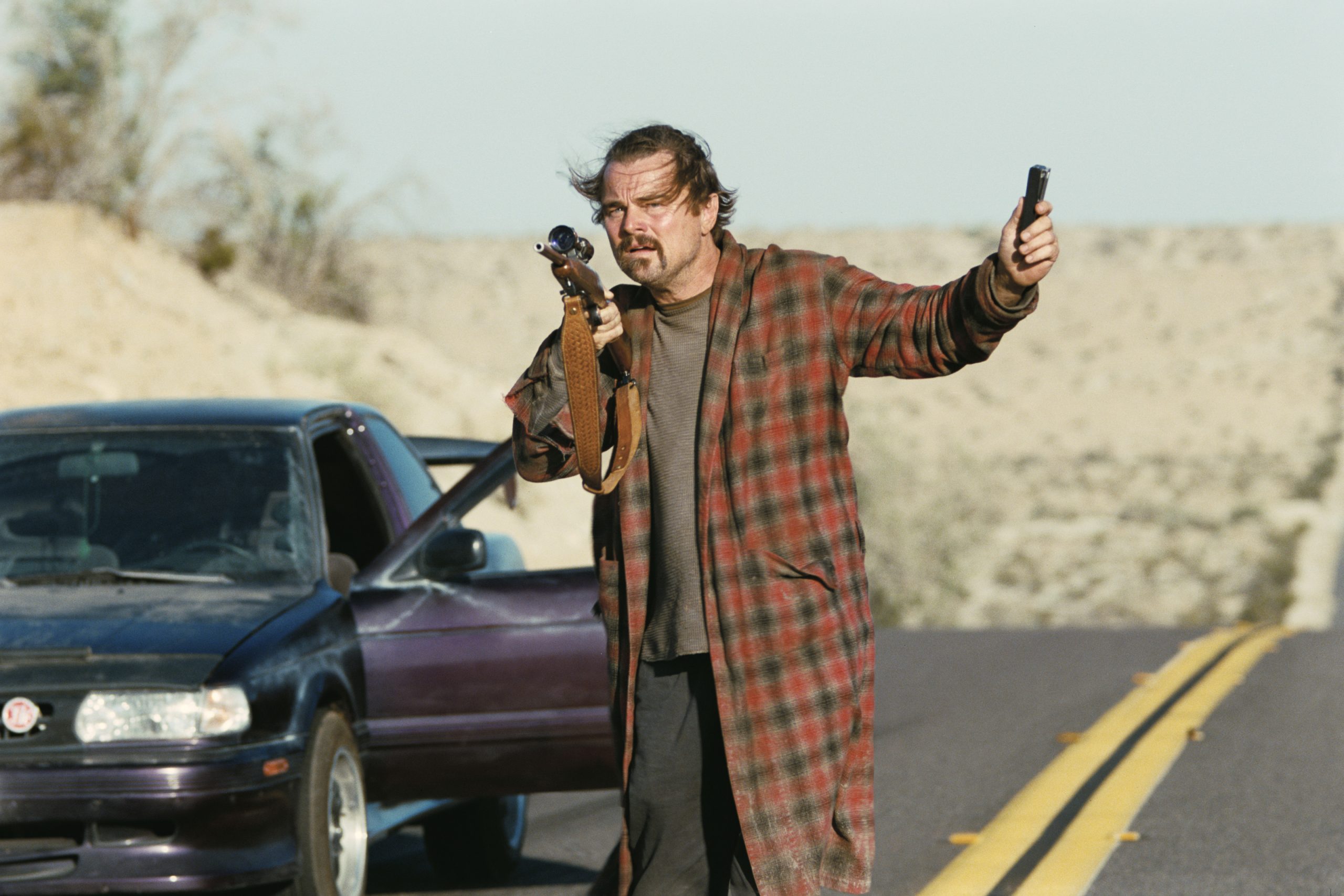
One Battle After Another (2025)
Some search for battle, others are born into it.
Paul Thomas Anderson’s One Battle After Another is ambitious, loud, and, frankly, underwhelming. It has moments of power — strong performances, good cinematography, PTA’s most expensive endeavor to date — but too often the film feels like it’s waving ideological flags while forgetting to make us care.
The plot, as far as one can stitch it together: Leonardo DiCaprio’s Bob Ferguson is a once-lionized revolutionary who has spent the better part of two decades in hiding, numbed by drugs and paranoia as he tries to escape the wreckage of his past. Sixteen years earlier, he and his guerrilla cell — the so-called “French 75” — stormed a U.S. immigration detention centre and freed hundreds of detainees, an act that still shadows him. Among them was Perfidia Beverly Hills (Teyana Taylor), Bob’s former lover and the mother of his daughter Willa, whose hardline zeal embodied the movement at its fiercest.
Forgot his codeword, remembered his calling card.
In the present, Bob’s old nemesis Colonel Steven J. Lockjaw (Sean Penn) re-emerges at the helm of a far-right militia, dragging Bob back into the open. His estranged daughter Willa (newcomer Chase Infiniti) is caught in the crossfire, put directly in harm’s way as the conflict reignites. To survive, Bob leans on a patchwork of allies and half-forgotten comrades — Sergio St. Carlos (Benicio del Toro) drifts in and out as a Sensei/accomplice/refuge, while Regina Hall’s DeAndre and others fill out a loose network of ex-revolutionaries and underground resistance. What follows is a jagged mix of clandestine meetings, desert car chases, riots in neon-lit cityscapes, and intergenerational clashes over what the struggle even means. Every “battle” bleeds into another, leaving the film as scattered as its characters.
Some of the ideas here are interesting: Bob’s moral conflict, the generational gap between him and his daughter, how idealism decays when threatened, how memory and trauma distort. The visuals are solid: Michael Bauman’s VistaVision cameras capture wide desert landscapes, claustrophobic interiors, high-contrast raids; the shootouts and car chases (PTA’s biggest scale yet) are well staged. Music by Jonny Greenwood underscores the anxiety and tension.
Every battle leaves scars. Hers are just beginning.
But — and this is a big but — the film leans too heavily into political polemic. It’s very left-leaning, which is fine in theory, but here it often feels heavy-handed, more intent on reducing the opposing side to cartoon villains than on deepening character. Scenes of immigrant detention camps, ICE raids, white-supremacist militia factions under Lockjaw — they’re framed to provoke outrage rather than insight. Even the Christmas Adventurers Society — a militia-like sect whose very name takes a jab at faith and tradition — feels less like a fully imagined creation than a provocation, one of those PTA flourishes that plays more like a stunt than substance.
The pacing and structure are messy. The film runs about 162 minutes. There are tonal whiplashes: serious activism segments followed by absurd satirical bits, followed by emotional father-daughter moments that try for intimacy but get lost. Bob is sympathetic, but we rarely see enough consistent vulnerability to deeply feel his struggle. Willa is interesting as a character, but her arc is too often subsumed in spectacle. Lockjaw is villainous, but almost to the point of caricature.
Yes, the performances are good. Leo DiCaprio is in his element when Bob is grappling with guilt and fear; Chase Infiniti shows real promise in her film debut as Willa; Sean Penn is scary and magnetic as Lockjaw, though Anderson draws him with such cruelty that the character — and his arc — come off as nasty and over the top. Teyana Taylor is fierce, though sidelined in the present timeline. None of them quite cross into all-timer territory — there’s no single monologue or scene that feels destined for acting classes — but they all do heavy lifting.
The Big Lebowski … but if the Dude had unresolved revolutionary trauma.
In the end, One Battle After Another feels like a movie trying to do too much. It wants to be a political indictment, a thriller, a family drama, a road movie, a satire — each part has flashes of greatness, but the sum is frustratingly uneven. It’s hard to connect fully with anyone. Bob’s the closest thing to the heart, yet his inner journey gets obscured by spectacle. Willa matters, but for long stretches she feels more like symbol than person.
If you’re a fan of PTA and want to see him push at the limits, there’s plenty here to admire. But for all its cinematic craft — strong actors, good visuals, ambitious scope — One Battle After Another is not one of his greats. It’s too messy, too politically urgent without enough emotional foundation, too keen on shock to deliver lasting impact.
2.5 / 5 – Alright
Reviewed by Dan Cachia (Mr. Movie)
One Battle After Another is released through Warner Bros. Australia