By
By 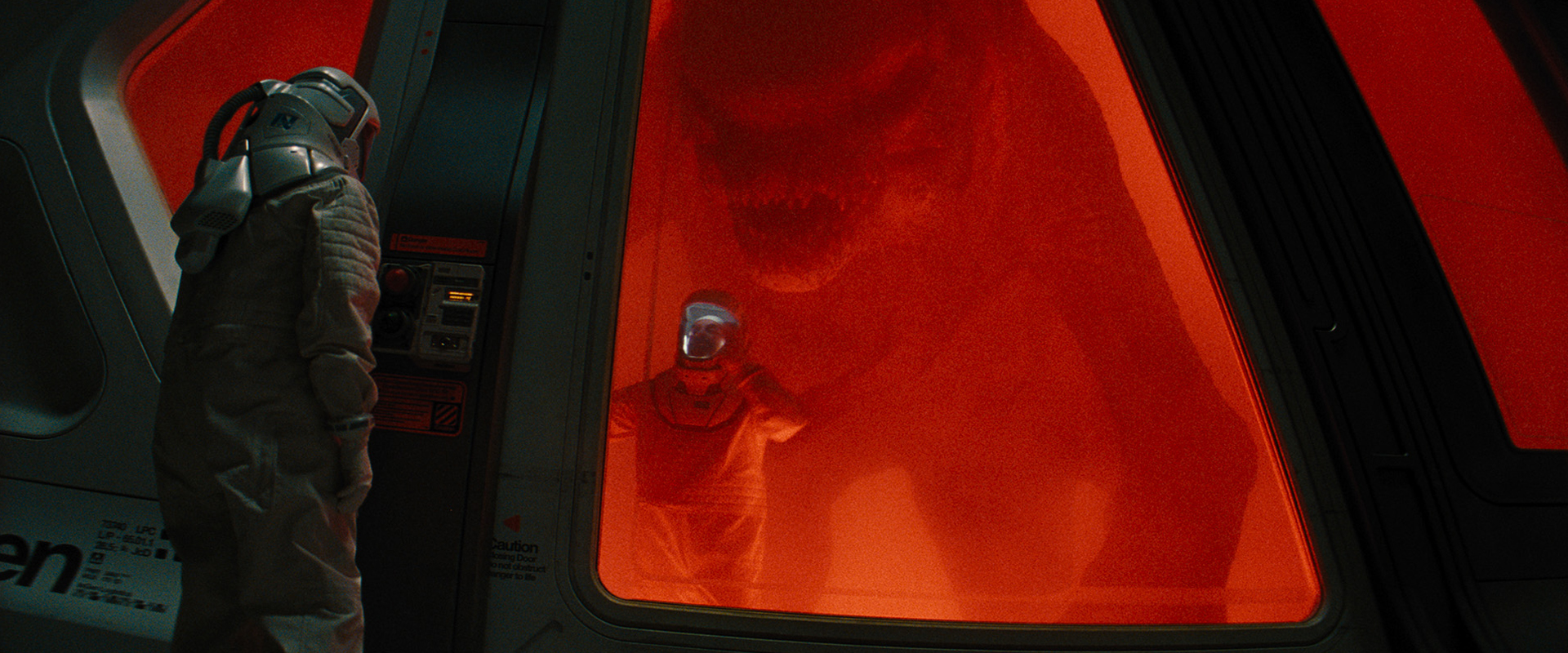
Jurassic World: Rebirth (2025)
A new era is born.
The opener slaps. Cleanly staged, tense without yelling, and it announces director Gareth Edwards’ MO straight away: show just enough, trust scale and sound design, then pull back before spectacle turns to slurry. Across two hours, that restraint mostly holds. This is confident, widescreen dinosaur cinema — mercifully not a wall-to-wall VFX demo reel — and yes, to the people claiming there are “no dinosaurs in the film”: what movie were you watching? Land, sea, and air all get their time to chomp.
Forget dinos in the kitchen … now they’re in the airlock.
The structure is classic adventure pulp: a new team ventures into a tropical no-fly zone, chasing DNA from the biggest beasts of sea, land, and sky — Mosasaurus, Titanosaurus, Quetzalcoatlus — while a shipwrecked family fights to survive in the same area, hoping to be found before it’s too late. The “air” chapter is the standout: an egg-nest heist in a cliffside aerie that goes spectacularly sideways when mom Quetzalcoatlus punches in from the clouds. It’s tactile, legible, and packed with that old Spielbergian “oh no, we shouldn’t be here” awe.
New creatures help the franchise feel fresh without turning it into a toy catalog. The Distortus rex (D-Rex) is a gnarly, melancholy mutation — part T-Rex, part nightmare sketch — with proportions the film plays a little loose with (imposing, but its size shifts between shots). The winged Mutadons are nasty little gremlins. Both the D-Rex and Mutadons are franchise inventions, splicing traits from other dinosaurs into gnarly hybrids, while Aquilops — a tiny horned dinosaur based on a real Early Cretaceous species — gets a surprisingly charming subplot that invites the audience to root for it. Nice world-texture, too: the “dinosaurs among us” setup from Dominion actually plays well here, with society having grown almost bored of them since their reappearance. A wandering sauropod blocking a busy intersection barely causes panic — just mild annoyance — until a crane team shows up to gently move it. It lands like the kind of viral clip people scroll past with a shrug.
This T-Rex doesn’t just steal the scene … it devours it whole.
Set-pieces are crisply handled. Filmmaker Edwards keeps the dino action readable — wide shots, real geography, clean cutting — and when he leans into verticality or water pressure, the sequences sing. Alongside the air-nest heist, another highlight is the white-knuckle raft escape through a flooded ravine, with a T-Rex snapping at the stern as if auditioning for Jaws. The tension bites, even if the film is guilty of one too many “characters survive by inches” moments. And visually? It might be the best-looking film in the Jurassic World series — lush environments, grounded creature integration, and a sense of scale that actually feels enormous.
It’s a major step up from 2002’s Dominion in the way each scene is staged and paced, even if the overall story beats are familiar. The cast is uniformly sharp: Scarlett Johansson, Black Widow (2021), embodies a flinty, unflappable lead as covert‑ops expert Zora Bennett; Jonathan Bailey, Wicked (2024), brings warm‑nerd charm as the paleontologist Dr. Henry Loomis; Mahershala Ali, Green Book (2018), steadies the team’s moral center as ship captain Duncan Kincaid. Even Rupert Friend, Pride & Prejudice (2005), sinks his teeth into the role of antagonist Martin Krebs — a polished biotech executive whose courteous facade conceals a calculating predator. This ensemble refresh is the right call — new faces, clean slate.
Injecting the franchise with high-stakes tension.
Quibbles? The family thread is introduced rather abruptly — it starts with Reuben Delgado (Manuel García‑Rulfo), his daughters Teresa (Luna Blaise) and Isabella (Audrina Miranda), and Teresa’s boyfriend Xavier (David Iacono) mid-crisis at sea, before the film has earned their emotional weight. Luna Blaise capably anchors Teresa with real vulnerability, and Audrina Miranda adds heart as her younger sister. David Iacono brings unexpected comic relief as the lazy, nervous Xavier — initially exasperating, but gradually sympathetic through small acts of bravery. The dual-plot cross-cutting sometimes blunts momentum just when a sequence is heating up. And while the D-Rex design rules, its scale drifts scene to scene — cool, but inconsistent. None of it capsizes the ride.
Bottom line: Rebirth doesn’t rediscover the franchise’s primal terror, but it does rediscover craft. Smartly staged set-pieces, a killer “air” chapter, a thrilling T. Rex raft chase, and the strongest visuals in the series make this the most purely enjoyable entry since World. Solid fun.
3.5 / 5 – Great
Reviewed by Stu Cachia (S-Littner)
Jurassic World: Rebirth is released through Universal Pictures Australia