By
By 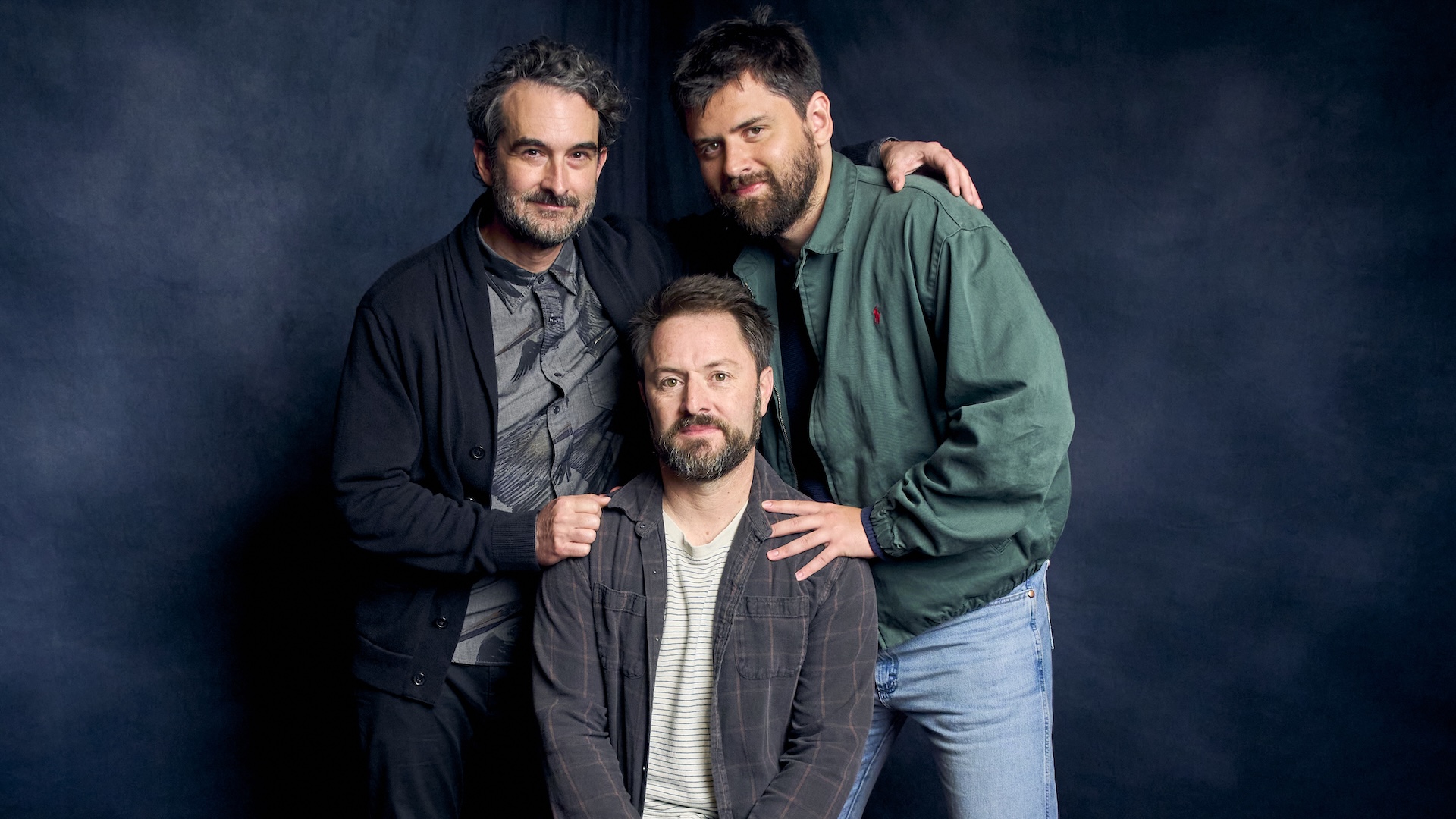
It is not uncommon to become emotional when listening to a beautiful piece of music. Who among us hasn’t been moved to tears by the ethereal moonlit march of Debussy’s “Clair de Lune,” the big sonic goodbyes of Taylor Swift’s “Bigger Than the Whole Sky,” or the distortion pedals of pop-punk band Sum 41’s 2001 debut album All Killer No Filler?
Wait… what? One of those things is very much not like the others. But it still makes perfect sense to Adam Cayton-Holland. While deep in the throes of grief-induced PTSD, the Denver-based stand-up comedian and writer got some questionable advice from a therapist; a moment that he has now incorporated into the personal film See You When I See You.
“The tip they gave me was ‘go find an album that you never listened to with your sister, buy it, listen to it again and again and again, and you won’t have any connotations with her,’” he says. “So I got a Sum 41 album All Killer No Filler and I played it fucking non-stop for months in my car. Now when I hear it, I sob immediately. It was the worst advice ever.”
Many stories examine how challenging the grieving process is, but few truly delve into just how weird it can be as well. One day you’re seemingly fine, the next you’re full-on weeping to an album that includes lyrics like “Be standin’ on the corner, talkin’ all that kufuffin / But you don’t make sense from all the gas you be huffin’.”
The oddity of grief is a topic well-explored by See You When I See You, written by Cayton-Holland, directed by indie legend Jay Duplass, and starring ascendent actor/director Cooper Raiff as the Cayton-Holland insert character “Aaron Whistler.” The film, which screened at the 2026 SXSW Film Festival & TV Festival this March, is based on the events of Cayton-Holland’s life and details Aaron’s struggle to come to terms with the death of his younger sister Leah (Kaitlyn Dever) via substance abuse, experiments with therapy, and yes, a healthy dose of early aughts rock music.
After Cayton-Holland first recounted his painful, personal story in the touching 2018 book Tragedy Plus Time: A Tragi-Comic Memoir, he saw writing a screenplay as a way to further articulate his experience.
“I was processing a lot of the pain in the writing of the memoir,” he says. “I didn’t sit down to write it because I had my thoughts gathered; I gathered thoughts while writing it. Seeing the response to the memoir, knowing how personal the story was, but how universal the themes were and how people reacted to it, I thought more about ‘what’s a way to tell this that everyone can relate to while keeping my true story?’ That helped put it on the screen.”
The resulting script drew the attention of producers Kumail Nanjiani, Emily V. Gordon, and Jay Duplass, the last of whom just so happened to be looking to get back in the director’s chair after spending much of the previous decade shepherding other artists’ visions as a producer.
“It’s just heartfelt and funny, which is kind of what I’ve been doing my whole life,” Duplass says. “Obviously these past few years I’ve been opening up to other people’s stories. This one is certainly like the biggest, purest, most emotionally unwieldy story but also super funny. I felt like I couldn’t say no.”
It also got a major buy-in from Raiff, himself a director of note (Cha Cha Real Smooth) who doesn’t always love acting but was willing to make an exception upon reading Cayton-Holland’s script.
“Jay sent me the script and I just adored it and felt really connected to every character this family,” Raiff says, shouting out fellow Whistler family actors David Duchovny, Hope Davis, and Lucy Boynton. “I don’t like acting but I like acting for Jay. Jay’s been my mentor, my filmmaking dad, for six years now but I never got to see him in action. I just learned so much.”
As evidenced by the aforementioned Sum 41 debacle, a major theme of See You When I See You is memory as a double-edged sword. Aaron cherishes memories of his sister but they also create a considerable amount of pain and confusion.
“When you have PTSD and this traumatic event of losing someone that did physical damage to your brain, what nobody tells you is your memories are all shattered,” Cayton-Holland says. “Your sense of nostalgia gets shattered. If it was all so great, why did it end up like this? That sucks because these people that you lose are so much more than the sad ending. You had this great life with them but the PTSD is blocking that. Really, my journey was one of being able to recover memories and appreciate them as a gift. That’s a grief journey that a lot of people can relate to.”
The film creatively renders this struggle as Aaron’s mundane but meaningful recollections featuring Leah slowly transform into disaster scenarios in his mind.
“That was one of the most exciting things about the movie: creating a visual journey of a man trying to climb out of PTSD,” Duplass says. “What does that look like? What does that feel like? Part of that involves memory but what’s really happening is you’re experiencing things in the present moment that’s a function of your broken brain.”
Thankfully the real-life Cayton-Holland was able to find some stability and peace with the help of therapeutic techniques like Eye Movement Desensitization and Reprocessing (EMDR). The process includes bilateral stimulation, which can involve guided eye movements or handheld buzzers, and is designed to simulate deep REM sleep and regenerate repressed memories in a way that some find spooky. It’s also challenging to only pretend at EDMR without experiencing the real thing, as Raiff found out.
“On the day, they actually gave me real clickers and I accidentally did EMDR,” he says. “It was not the take we used. It was too intense. It’s like you’re hypnotized. I saw a flash of something and was like ‘uh… that’s not Aaron.’”
See You When I See You premiered January 27 at the Sundance Film Festival and screened again March 13 at SXSW.
The post See You When I See You Examines the Oddities of Grief appeared first on Den of Geek.