By
By 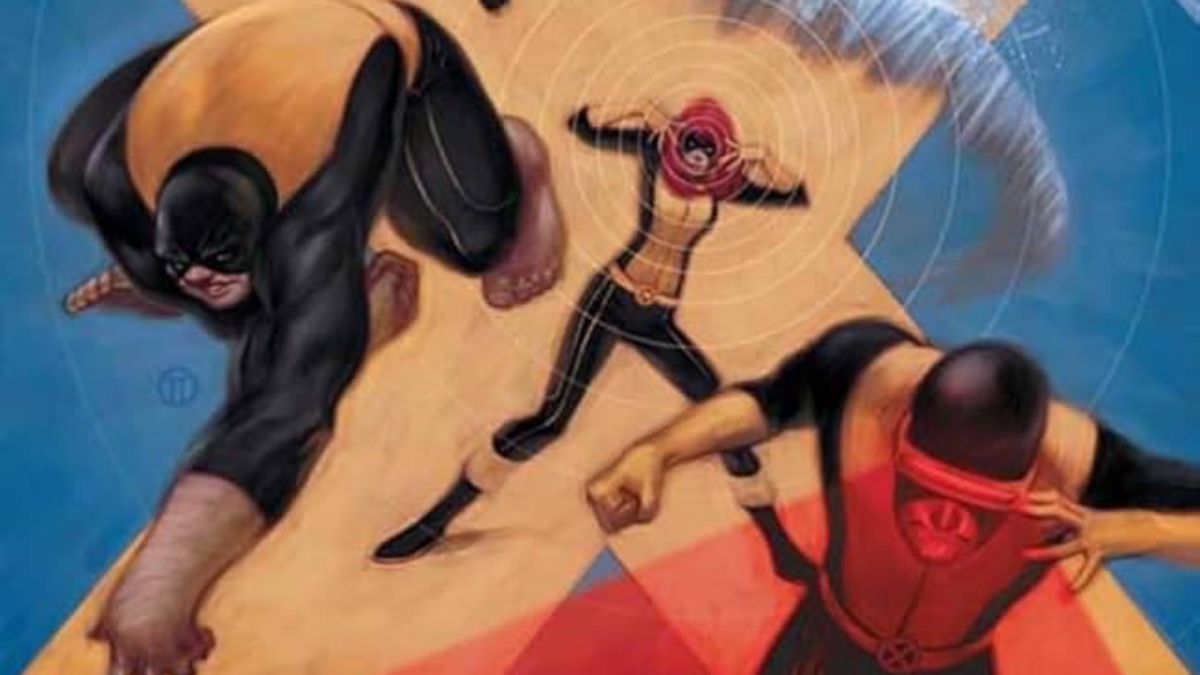
The X-Men are coming to the MCU. Mutants have long been the most significant missing piece that the big screen shared universe has yet to bring over from the comics. A lot has happened to set up the X-Men, including Disney acquiring former rights holders 20th Century Fox, reshaping Ms. Marvel into a mutant, and putting Deadpool and Wolverine into alternate-reality MCU films. The studio has even announced that Thunderbolts* director Jake Schreier will helm the mutants’ first entry.
But outside of that, we have no idea how the X-Men will appear in the MCU. Worse, the X-Men have a long and (appropriately) evolving history in the comics, which means that there’s no one definitive story to guide Schreier and his screenwriter Michael Lesslie.
Yet, the comics aren’t without options. The 2011 graphic novel X-Men: Season One by writer Dennis Hopeless and Jamie McKelvie provides the clearest introduction to the team, retelling the 1960s stories by Stan Lee and Jack Kirby through a modern lens.
A Mutating Legacy
Who are the X-Men? That question is surprisingly hard to answer, even for hardcore comic book readers. The basic premise describes the X-Men as a team of mutants—people born with incredible powers—who fight to protect a world that hates and fears them. But the line-up is harder to pin down. Wolverine and Storm have to be members, right? What about Gambit and Rogue? Younger fans might insist that Kamala Khan and Namor be on the team.
When they began back in 1963, the X-Men consisted of five teenagers, all brought to study at Xavier’s School for Gifted Youngsters, operated by Charles Xavier aka Professor X. Cyclops, Beast, Marvel Girl, Iceman, and Angel all wore matching blue and yellow uniforms and fought one-note baddies like Magneto, the Brotherhood of Evil Mutants, and the Vanisher.
Famously, those Silver Age X-Men comics were among the weakest of Lee and Kirby’s offerings, and the series only got marginally better when writer Roy Thomas and artist Neal Adams came aboard, adding Banshee, Havok, and Polaris to the roster. The X-Men truly became the X-Men with 1974’s Giant-Size X-Men #1, written by Len Wein and penciled by Dave Cockrum, and with Chris Claremont writing the main book shortly thereafter. That period added or introduced Wolverine, Storm, and Nightcrawler to the roster, leading to great and oft-adapted stories such as The Dark Phoenix Saga and Days of Future Past.
So important is that era that it’s easy to disregard the first X-Men stories. Normally, it’s fine to pick and choose, but ignoring the earliest days of the X-Men presents challenges to those who want to adapt them for other media. That’s where X-Men: Season One comes in.
Meeting the Mutants
Anyone glancing at a synopsis of X-Men: Season One would see little difference between the graphic novel and the first few issues of the original series from 1963. It begins with new student Jean Grey coming to Xavier’s school, meeting the firm but supportive headmaster and making friends with her oddball new classmates before being forced to join them in stopping the mutant terrorist Magneto from launching nuclear weapons against the humans. Shortly thereafter, she encounters other villains, including the Scarlet Witch and Quicksilver in the Brotherhood of Evil Mutants and Unus the Untouchable, the man with the power to not be touched.
Goofy as all these concepts are, Hopeless and McKelvie ground them in emotion that feels real. As a teen who wants nothing more than to be normal, Jean at first resents her parents sending her to a boarding school instead of getting to finish her education at her regular high school. She gets swept away by the rich and charming Warren Worthington III aka Angel, she gets annoyed by the juvenile Bobby Drake aka Iceman, and she makes fast friends with the exuberant and brilliant Hank McCoy aka Beast. Jean doesn’t know what to make of the serious and awkward Scott Summers, who wants so badly to be the great leader Cyclops and believes earnestly in Xavier’s dream, but doesn’t know if he can pull it off.
The framing above makes it sound like Season One uses Jean as an accessory to the men around her, which would be very much in line with the uncharitable way Lee wrote the characters in the Sixties. But Hopeless and McKelvie make Jean very much her own person, and let her perspective and desires drive the way she interacts with her classmate.
Nowhere is that more apparent than in the book’s romance arc. Almost immediately after entering the Xavier Mansion, she gets knocked over by Cyclops, who freezes while lying on top of her. Jean defuses the situation by making a joke, which only freaks out Cyclops more, sending him running from the room in embarrassment. Conversely, Angel gives her a proper greeting and introduces her to the others, doing his best to make her feel comfortable.
Jean is immediately attracted to the confident and handsome Angel, even more so when he removes his shirt to prepare for their first training session and reveals both his chiseled physique and his incredible wings. Those feelings only increase when Angel shares his insecurities with her, drawing attention to anti-mutant bigotry that she, as an outwardly “normal” attractive young woman, doesn’t experience.
Yet, when Angel fails to return her affections, Jean finds herself more drawn to the serious Cyclops. Her attraction to him stems less from initial good looks and what others would expect a pretty girl to like and more from how she sees herself. Cyclops cares about things, and Jean also wants to be someone passionate about a cause. She chooses Cyclops because he matches her goals and needs.
Through Jean’s arc and maturity, we’re brought into the larger world of the X-Men. As she learns about the bigotry facing mutants, we understand how people would love the Avengers and the Fantastic Four but hate the X-Men. As she develops her abilities, we understand how the X-Men are different from other superheroes. And as she bonds with her teammates, we see what binds the X-Men together.
To Screens, My X-Men!
Although much of the MCU’s future is currently muddied by leaker speculation and only drips of information, it seems likely that the team won’t properly appear until sometime after Avengers: Secret Wars in 2027. However, it also seems likely that we’ll get to see our first proper X-Man later this year, as Sadie Sink is heavily rumored to play Jean Grey in Spider-Man: Brand New Day.
If Brand New Day is indeed Jean Grey’s first day in the MCU, then X-Men: Season One makes even more sense as the perfect story to adapt. Through Sink as Grey, the average viewer can finally understand how the X-Men can be feared and hated in a world filled with superheroes, and—even better—understand why the X-Men are one of comics’ most enduring and important franchises.
X-Men: Season One is available on Marvel Unlimited.
The post The MCU Must Use This X-Men Story to Guide Their Adaptation appeared first on Den of Geek.