By
By 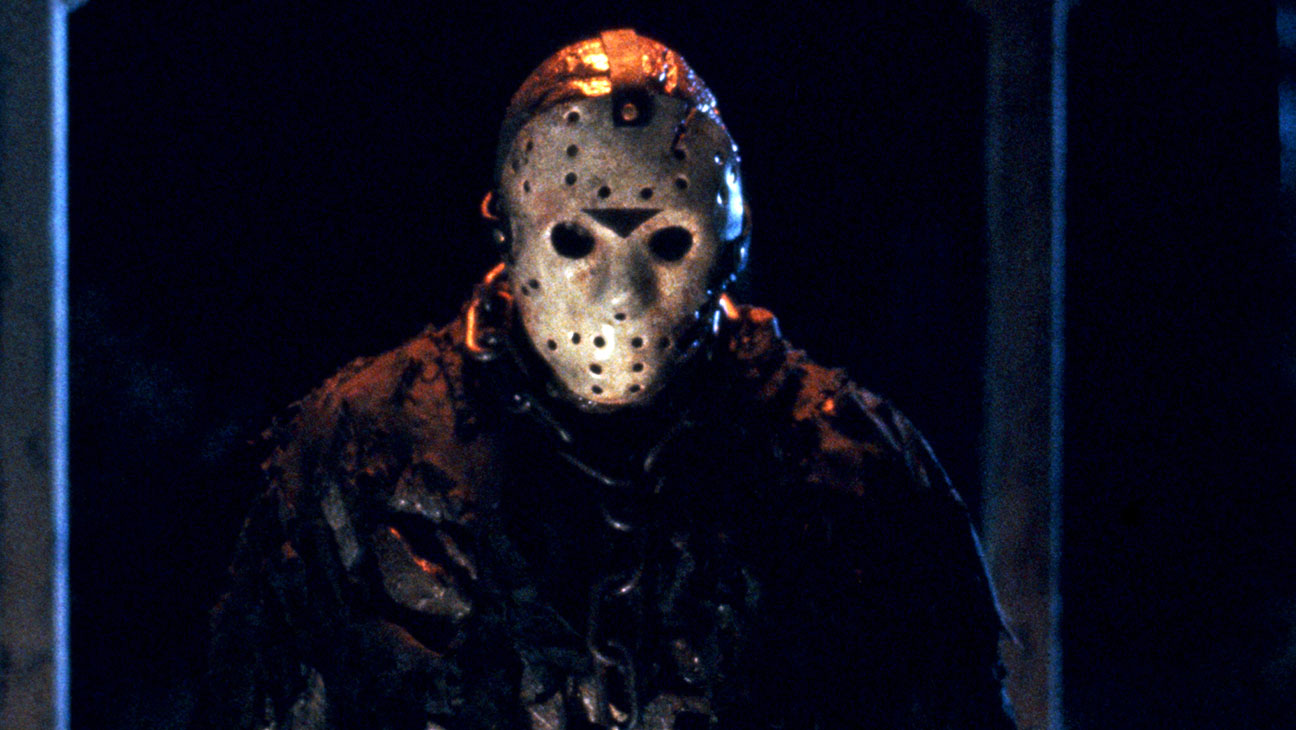
By 1988, Jason Voorhees was a shambling corpse without purpose, both literally and metaphorically. Paramount Studios, who released the original 1980 film by director Sean S. Cunningham and writer Victor Miller, had ordered Jason’s death for the third entry, 1984’s Friday the 13th: The Final Chapter. When that too proved a money-maker, Paramount allowed the franchise to continue, first by putting another person behind the mask for 1985’s A New Beginning and then resurrecting Jason as a zombie for the comedic, self-aware Jason Lives (1986).
In 1988, Paramount found something new to do with the late Mr. Voorhees: pit him against another monster, a troubled teen named Tina Shepherd, who had telekinetic powers and an abusive parent, just like Carrie White of the Stephen King novel and Brian De Palma film. The monster mash gave Jason a level of excitement and direction that he would not have again until Freddy vs. Jason, proving that the Friday the 13th series could have, and should have, evolved into a monster fight franchise.
Jason Lives, Barely
By this point, it’s no slander to say that originality was never part of Friday the 13th‘s origin. After seeing the profit turned by John Carpenter’s Halloween, Cunningham decided to make his own holiday-based slasher. Writer Victor Miller stuck closer to the giallo model that inspired early slashers like Halloween and Black Christmas, with a whodunnit based around Pamela Voorhees (Betsy Palmer) seeking revenge for the drowning death of her son, Jason. Throw in some great effects by Tom Savini and a surprise ending stolen (by Cunningham’s own admission) from Carrie, and Friday the 13th served its purpose, making $59,754,601 worldwide off a budget of no more than $650,000.
And that’s where things start to get messy. Obviously, a movie that successful calls for a sequel. But Pamela Voorhees was beheaded at the end of the first movie, and her entire motivation was revenge for her son’s death. So who would haunt Camp Crystal Lake now?
Turns out, it would be Jason, who was not in fact dead, but was living in the woods and just watching his mom from afar? It’s not clear.
Which is, of course, the secret pleasure of the franchise. Nothing really makes sense in Friday the 13th, certainly not between films. The amount of time that’s passed, the actual day on which an individual entry takes place; these things are explained about as well as Jason’s apparent ability to teleport to his latest victim.
As with the teleportation, no fan of the series really needs an explanation of the timeline or of Jason’s status among the living. They just want to see Jason kill people in spectacular ways. Jason did that best in Friday the 13th: The Final Chapter, a tightly-constructed slasher with interesting characters and memorable kills. After the misfire of A New Beginning, Jason Lives added humor and classic Universal scares into the mix, making Jason a gothic monster.
Both of these movies evolved Jason, bringing him to his full culmination with Friday the 13th Part VII: The New Blood.
Jason vs. Carrie… er, Tina
The New Blood opens like every other Friday the 13th sequel, with a series of flashbacks from previous movies, giving the illusion of a coherent narrative. After the credits, however, we get something very different. Young Tina Shepherd (Jennifer Banko), a blond moppet who resembles Carol Anne Freeling from Poltergeist more than any of the franchise’s doomed counselors, runs from her lakeside home and into a canoe after witnessing her father (John Otrin) beat her mother (Susan Blu). When her father comes out to console her, he gets no farther than the dock before Tina uses her telekinetic abilities to collapse the dock, drowning her dad.
The movie then jumps several years ahead, to a teenage Tina living with her mother and trying to cope with her powers and her trauma. Working closely with the Shepherds is Dr. Crews (Terry Kiser), who hopes to turn his study of Tina’s powers into a bestselling book. Pretending to care for Tina, but rather hoping an extreme move will trigger her powers, Dr. Crews brings Tina and her mother to a cabin at Crystal Lake, the same place where her father died. And, because this is Crystal Lake, it’s also the same place where a bunch of teens are partying.
The return to the lake does indeed trigger Tina’s powers, and her memories of her father lead to a telekinetic explosion that frees Jason from the chains that have been holding him at the bottom. As Jason arises and does what he does so well, Tina wonders if she’s not the one responsible for all of the carnage.
All of this builds to a stand-off between Tina and Jason, giving the unkillable zombie a true challenge (sorry, Tommy Jarvis). Using her powers, she stands up to Jason better than even the plucky Ginny Field (Amy Steel) from Part II. Even better, it gives us a glimpse of what would have happened if Carrie White would have left the prom and went to Crystal Lake to relax, a concept that appeals to horror nerds of any stripe.
In short, The New Blood did exactly what it said it would do, injecting the franchise with new energy—energy that was immediately squandered.
Bad Old Blood
At this point, some readers may point out that The New Blood is hardly the best Friday the 13th movie, a point no one can dispute. Director John Carl Buechler, a special effects great who is also known for lesser horror films such as Troll (the predecessor to the infamous best worst movie), struggles to balance the character work and even the kill scenes with his forte, the special effects. The effects are good, but like most Friday movies in the second half of the Paramount era, they were so heavily censored that the good stuff didn’t make it on screen.
But the idea behind The New Blood stands out, even if the execution is lacking. Need proof? Just look at what followed. Unable to actually bring Voorhees to NYC, Jason Takes Manhattan plays as a tired retread of better mainline Friday movies. The first two New Line Cinema movies completely reinvented the character, first unsuccessfully (Jason Goes to Hell) and then successfully (Jason X). Even the 2009 remake fails to make much of an impression, outside of some truly nasty kills.
No, only the uneven Freddy vs. Jason has any juice, and for one good reason: it pits Jason against another monster. We could have had so many more exciting, if not exactly good, Friday the 13th movies if only the franchise had learned its lesson sooner and followed the lead of The New Blood.
Friday the 13th Part VII: The New Blood is now streaming on Paramount+.
The post Friday the 13th Part VII Should Have Been the Model for the Franchise appeared first on Den of Geek.