By
By 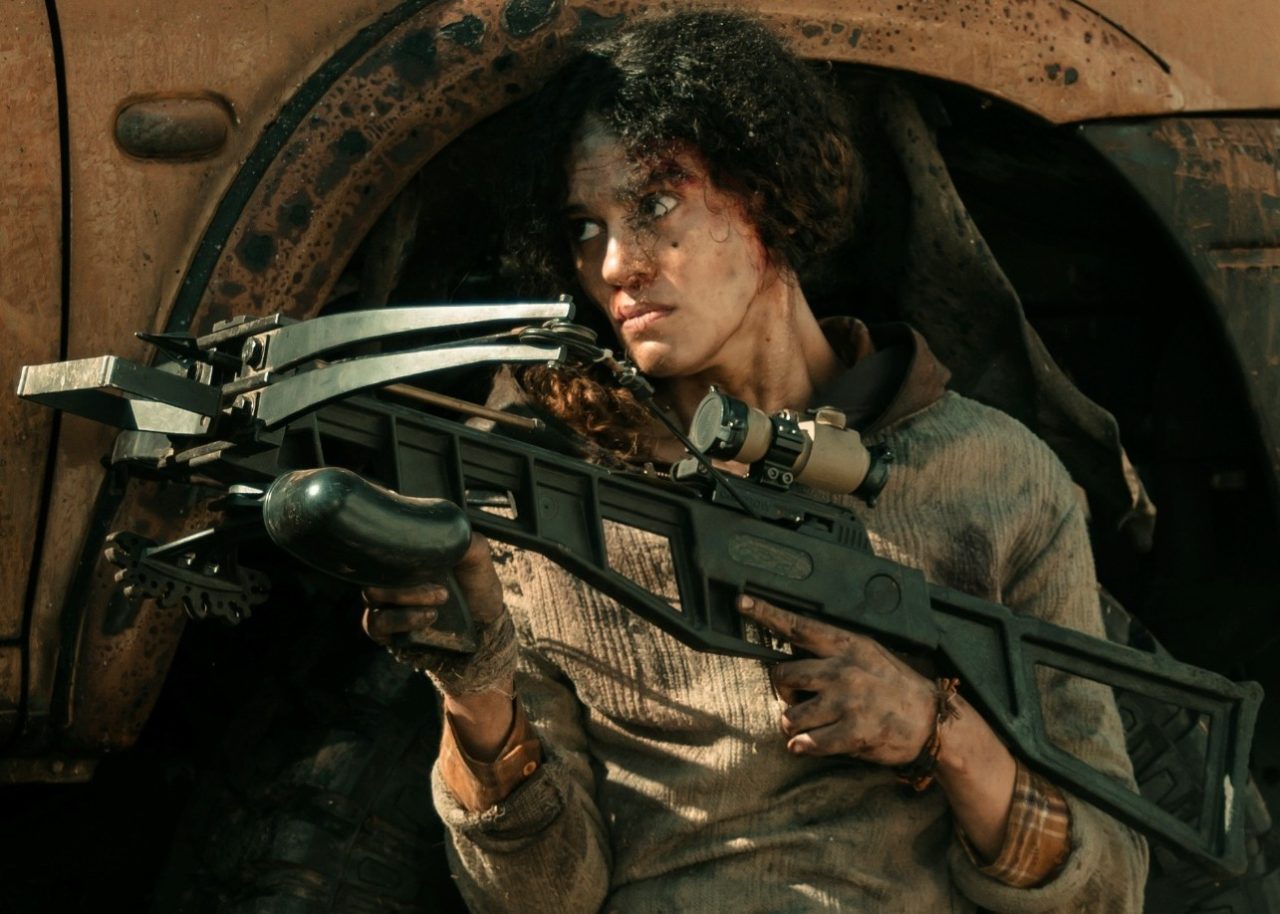
Jessica Brok arrives as a lean survival action thriller built around a simple, primal hook: a retired special forces operative must fight her way through hostile terrain and sadistic enemies to reclaim her kidnapped daughter.
Set deep within the African wilderness, the film blends manhunt tension with endurance-based combat, evolving from a military mission into a Hard Target–style hunt and Rambo-like survival scenario without overcomplicating its premise or overexplaining its stakes.
Danica De La Rey Jones headlines the film as Jessica Brok, a woman attempting to outrun her past until violence forces her back into it. Jones commits fully to the role, portraying Brok as disciplined, emotionally guarded, and driven by maternal urgency rather than ideology. Still, the film struggles to convince entirely on her physical credibility as an elite combatant.
For seasoned action audiences, the disconnect occasionally surfaces between what the story claims Brok can do and what Jones’s performance fully sells on screen. This feels less like a lack of effort and more like a casting and execution gap, especially when the film demands extreme resilience and combat dominance.
Danica De La Rey Jones has appeared in only seven feature films to date, and this role clearly signals an attempt to position herself as a next-generation action heroine, following a path similar to recent Hollywood transitions made by performers such as Ana de Armas, Daisy Ridley, and Anya Taylor-Joy.
Opposing her is a gang of vengeful psychopaths led by a villain with visual flair and menace, though the character remains frustratingly underwritten. The antagonist’s style suggests depth and history that the script never fully explores, reducing what could have been a memorable foil into a functional obstacle.
The film is directed by Alastair Orr, marking his sixth feature across roughly fifteen years. Orr’s previous work has largely remained outside the global spotlight, yet his command here is confident and practical. He understands how to stretch limited resources, how to pace escalation, and how to frame action for clarity rather than chaos.
This is not a glossy Hollywood production, but it is a disciplined one, and Orr deserves credit for delivering a coherent, theatrical-ready action film from South Africa, a market that rarely receives such exposure.
Visually, the film is one of its strongest elements. The cinematography consistently elevates the material, using the African wilderness as both setting and adversary. Wide shots emphasize isolation and vulnerability, while tighter handheld work during chases and confrontations maintains urgency without sacrificing spatial logic. The environment feels oppressive, unpredictable, and alive, reinforcing the survival theme far more effectively than dialogue ever could.
Stunt work is solid throughout, which comes as no surprise given Kerry Gregg’s involvement, whose résumé includes major productions such as Beast, Novocaine, and One Piece. Falls, explosions, and physical exchanges are executed with control and weight.
The fight choreography, however, proves uneven. This is surprising considering François Groenewald and DeVille Vannik’s extensive experience on high-profile projects like Boy Kills World and Resident Evil. While functional, several close-quarters encounters lack the sharpness and personality needed to fully sell Jessica Brok as a lethal force.
Despite its shortcomings, Jessica Brok stands as a respectable and often engaging action film, particularly within its regional context. It favors grit over gloss and authenticity over excess, and in doing so, outperforms many formula-driven Hollywood releases.
This film will appeal most to action fans who value practical stunts, grounded survival narratives, and international productions willing to take risks outside the studio system, even when ambition slightly outpaces execution.
Special thanks to Submersive Media for providing the film screener.