By
By 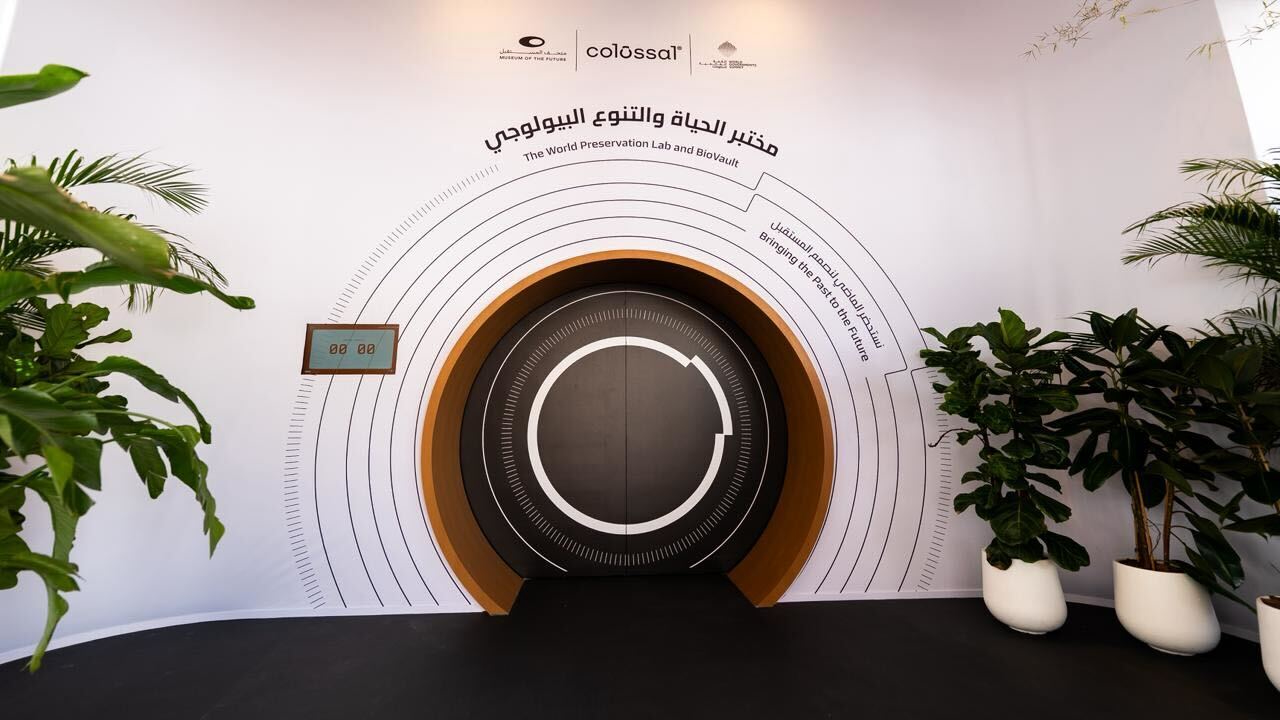
Is it better to hope for the best and plan for the worst, or to simply be practical… and still plan for the worst? It might be a glass all-empty sutation, but the announcement of the world’s first BioVault in Dubai that will preserve the biodiversity of endangered species from across the globe certainly appears realistic about the direction things are headed in.
Revealed by the UAE government and Colossal Biosciences out of the World Governments Summit—the 13-year-old international event held in Dubai every February—the Colossal BioVault and World Preservation Lab will be housed permanently at Dubai’s Museum of the Future, beginning this year. The revelation is the culmination of a nine-figure-investment into the first of its kind BioVault, which will be devoted specifically to protecting the biodiversity of species potentially on the brink of collapse.
The directive is of major important to the UAE government, with Crown Prince Hamdan bin Mohammed bin Rashid Al Maktoum reportedly directing the investment into both the BioVault and accompanying educational opportunities the lab will facilitate. Located in the Museum of the Future—a kind of permanent world’s fair installation where researchers, scientists, technologists, and otherwise self-described futurists put up exhibits each February—the laboratory will be both a research center and presumable tourist attraction in which children will be encouraged to make field trips.
The bottom line, though, is that the BioVault will preserve living cell lines and genetic data from endangered species with the aim of preventing the type of genetic hegemony that is threatening animals on the cusp of vanishing like the red wolf or the white rhinoceros. It will also be part of a larger Colossal BioVault network for the Texas-based company.
Last year, Colossal got much internet attention (including right here) for announcing that it had essentially genetically engineered the return of the dire wolf of legend (or an exact genome-replica of it), but this is arguably part of its greater scientific mission which is to help living species on the edge, as well as store millions of samples from over 10,000 species in BioVaults all over the world. The first one located in Dubai will apparently be targeting what Colossal describes as the 100 most imperiled species globally and in the UAE. The facility will furthermore take advantage of advanced robotics, AI monitoring, and cryopreservation technologies.
“I believe the future belongs to those who harness technology and innovation to address our greatest challenges,” said Majed Al Mansoor, the executive director of the Museum of the Future. “By working with Colossal Biosciences, leaders in synthetic biology and conservation, we are taking a bold step to advance science that safeguards our planet, restores ecosystems, and builds a sustainable legacy for future generations. In its first year, the initiative will prioritize fieldwork and DNA research across species, laying the scientific groundwork for future biodiversity protection and conservation.”
The aims of the initiative seem undeniably prudent and even vital with some studies showing projections where nearly half of the Earth’s species going extinct by 2050 due to climate change, deforestation, overpopulation, and a litany of other manmade woes which are pushing ecosystems to their breaking point. That the technology Colossal is developing will be open-sourced is a positive sign of an attempt to prevent worst case scenarios.
Nonetheless, the fact that this seems more apropos for preserving wildlife on the brink than actually substantially addressing the above issues belies what feels like a global crisis of dithering and an inability to do big things in the 21st century on a macro scale. But maybe we can stop everything else going exactly the way of the dodo…
The post World’s First BioVault for Wildlife Preservation a Good Sign for What’s Turning Into a Dire Future appeared first on Den of Geek.