By
By 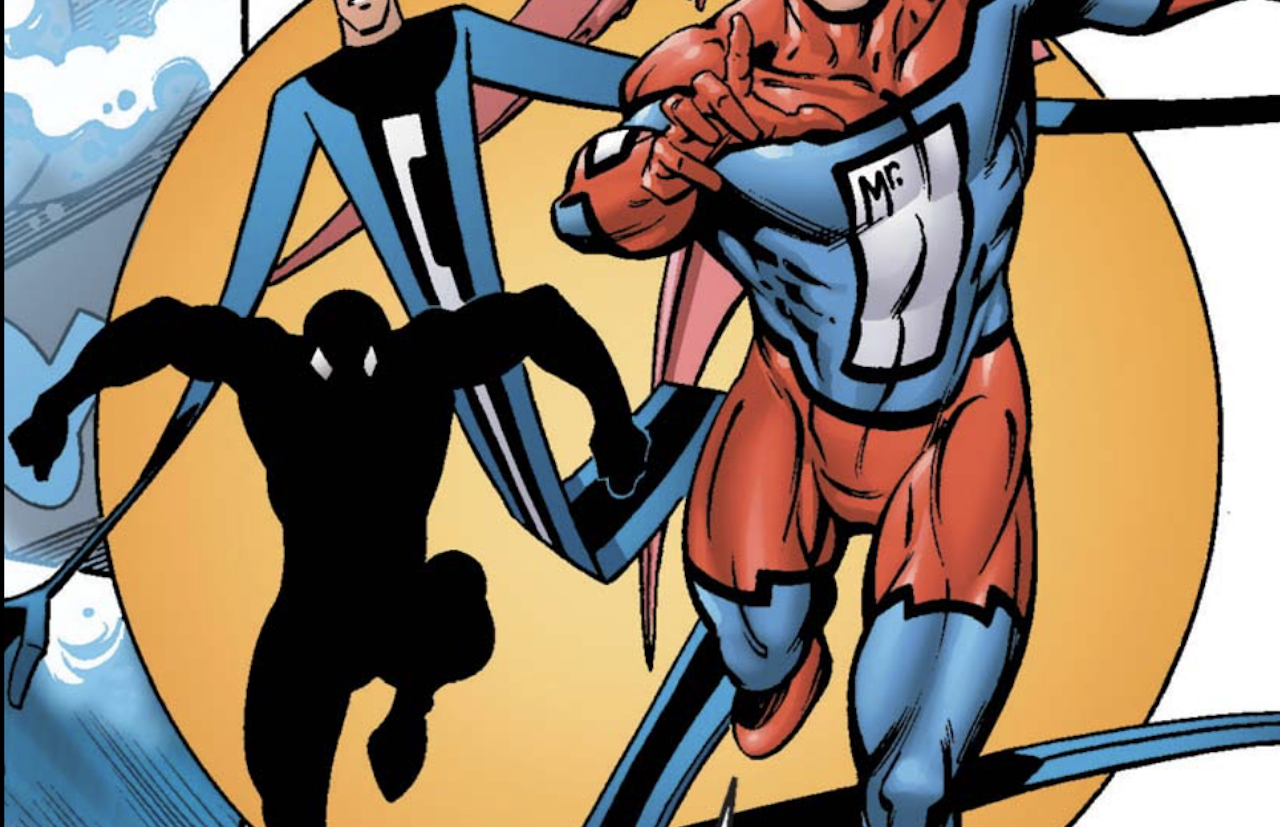
This post contains spoilers for Wonder Man.
Unlike most stories in the Marvel Cinematic Universe, Wonder Man isn’t about a titanic struggle between superheroes and supervillains. Instead, most of the show’s eight episodes follow actor Simon Williams (Yahya Abdul-Mateen II) as he tries to land a part in the big screen remake of the ’80s action movie Wonder Man. However, there is one super-person who creates problems Simon: DeMarr Davis a.k.a. Doorman.
As seen in the show’s fourth episode, DeMarr (Byron Bowers) was an actual door man at an LA club who gained the power to turn his body into a teleportation portal after interacting with some goo. Thanks to star Josh Gad (playing himself), DeMarr hits the big time as Doorman. But his fame ends suddenly when an accident strands Gad in DeMarr’s portals, prompting studios to adopt the Doorman Clause and banning super-powered people from sets across the country.
In Wonder Man, Doorman’s story is at once funny, tragic, and weird. The Marvel Comics version of Doorman is just as funny and tragic, but so much weirder.
Great Lakes Avengers, Assemble
Everything you need to know about Doorman can be found in his first appearance in 1989’s West Coast Avengers #49, written and penciled by John Byrne. In that story, Hawkeye and the West Coast Avengers (already a b-tier team) go to Milwaukee to investigate a team calling themselves the Avengers. There he meets Mr. Immortal, Flatman, Dinah Soar, and Big Bertha, all of whom have powers. However, the powers are so lame that when Hawkeye joins the team and names them the Great Lakes Avengers, it’s a serious upgrade.
And even among that lot, Doorman has the least to do. He simply stands around waiting until one of his teammates needs to get somewhere, and then obliges by teleporting them along.
As you might guess, the Great Lakes Avengers exist to be mocked. Outside a few background mentions, they’re largely absent from comics after their first appearances, only to resurface as jokes in a couple issues of Deadpool and Thunderbolts in the late ’90s.
Perhaps the biggest indignity came in 2005, when the Great Lakes Avengers got their own miniseries by Dan Slott and Paul Pelletier and added to their roster Squirrel Girl, another risible hero. The series was well-received by critics and readers, but only one character broke out as the star: Squirrel Girl, who soon became a supporting player in New Avengers and eventually had her own fan-favorite series.
Open to Doorman
In almost all of these examples, Doorman is the least impressive member of the unimpressive team. And yet, in each instance, he continues to do his best, simply happy to help where he can.
We see that quality on display in the aforementioned 2005 miniseries by Slott and Pelletier. Part parody of cynical event comics such as Avengers Disassembled or Identity Crisis, in which superheroes die after their worst secrets come to light, each issue of the GLA miniseries saw another member of the team come to a horrible end. The mounting casualties depress his teammates, but Doorman tries to stay positive, even while putting together a memorial for his fallen comrades.
So devoted to his team is Doorman that he doesn’t even get too upset when he punches the big ticket himself and arrives in the afterlife, because at least he gets to reunite with his old pals. It’s there that Doorman encounters the cosmic entity Oblivion, who reveals that Doorman’s mutant abilities connect him to the Darkforce Dimension. Oblivion makes Doorman into the new Angel of Death, which requires him to collect the souls of the departed, but also allows him to return his buddies to life.
For the most part, Doorman’s Angel of Death role never comes up again, besides a couple issues of the Great Lakes Avengers ongoing that ran between 2016 and 2017. Instead, when the GLA do show up, they exist just to be dumped on. The one great exception is a surprisingly heartfelt story that Slott and artist Paul Grist did in the 2005 GLX-Mas Special. When DeMarr visits his father for the holidays, he has to listen as his dad harangues him for wasting time as a Z-list hero.
Although hurt that not even his father respects him, DeMarr knows that his powers have value, and we see him not just shepherding others into the great beyond, but even taking time to lend a hand to Santa Claus. The story ends with a gut-punch, as DeMarr reveals to his father that he actually came for him, that his father died hanging Christmas lights earlier that night. And so those powers, which don’t seem to matter, allow Doorman to help his father one last time.
At that moment, DeMarr proves to his father, and to the readers, what he has known all along. That he truly is a hero.
The Least Does the Most
The MCU and Marvel Comics Doorman may have very different origins and stories, but they both capture everything wonderful about Z-list superheroes. Guys like Superman, Batman, and Spider-Man are easy to love, with their titanic battles, genre-defining creators, and influential power sets. Doorman and his fellow Great Lakes Avengers are easy to mock, people whose silly costumes and unusual abilities don’t do much more than get kittens out of trees or stop runaway cars.
But as Doorman’s story reveals, sometimes, that’s enough. Sometimes, it’s more important that someone’s doing what they can to help somebody, even if they get it wrong, even if they look ridiculous in the process. The Marvel Universe is big enough for every type of hero—as long as someone opens the door for them.
Every episode of Wonder Man is now streaming on Disney+.
The post Wonder Man: Who is Doorman in the Marvel Canon? appeared first on Den of Geek.