By
By 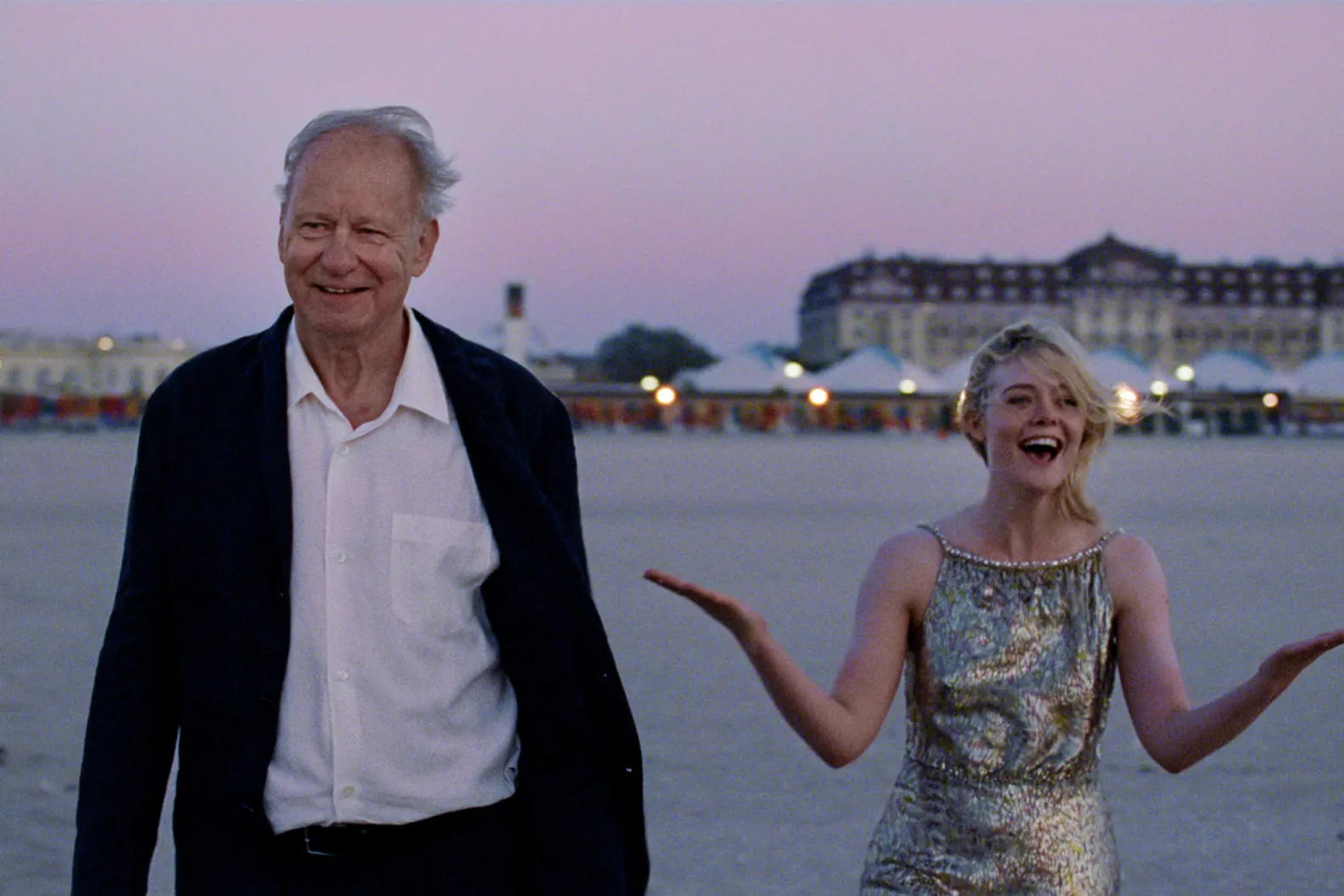
This article contains no spoilers for Sentimental Value but does describe a couple of scenes.
As in most years, the Oscar nominations of 2026 reward big movies. There’s the spectacular horror of Sinners and Frankenstein. There’s the bravado filmmaking of One Battle After Another and Marty Supreme. There’s big feelings of Hamnet and the big weirdness of Bugonia. But if there’s one movie that seems out of place in this celebration of all things bold and brassy, it’s Sentimental Value, the quiet, personal drama/comedy from Danish-Norwegian director Joachim Trier.
Sentimental Value mostly deals with family strife, particularly as it involves a house whose ownership of which comes into question after a matriarch’s death. It’s also about the shooting of a movie, and thus Hollywood does interject—mostly in the form of a glamorous American actress portrayed by Elle Fanning and in a hilariously prescient line about Netflix—but there’s little of the glitz usually associated with show business films. Instead, Trier devotes much of his screen time to conversations between family members, conversations that rarely escalate into high drama shouting matches. And yet, it’s that very lack of drama, that very quiet that makes Sentimental Value stand out in the Best Picture crowd.
Capturing an Uncomfortable Laugh
In Sentimental Value‘s most extravagant moment, respected but fading Norwegian director Gustav Borg (Stellan Skarsgård) takes American actor Rachel Kemp (Fanning) through the final scene of the movie they’re shooting. As he walks her through the family house where the movie will be shot, he notes both the technical details of the bravado oner they’ll do and the emotional notes she’ll need to hit. To prepare herself to play a mother who hangs herself after sending her son to school, Rachel asks earnest, thoughtful questions.
The discussion brings the duo into the room where the suicide scene will take place, and Rachel sits on a stool to take it all in. When she asks if the hook she’s supposed to use for the hanging would support a grown woman’s weight, Gustav answers in the affirmative. “Well it happened like that,” he says with a bit of smile. “With my mother.” Rachel responds with shock at the information and when Gustav points out that his mother used the very stool on which she sits, she bolts up with discomfort.
The description above fails to do justice to the way Trier unfolds the scene. We viewers already know the relationship between the character that Kemp is playing and Gustav’s mother Karin, a holocaust survivor who formerly lived in the house. We also know that Gustav initially wanted his elder daughter Nora (Renate Reinsve, once again working with Trier after 2021’s excellent The Worst Person in the World) to play the part. Nora refused, in part because of her anger at Gustav, who abandoned the family to make his movies and has only returned after the death of their own mother to make his film.
In short, we viewers know the full weight of the scene that Rachel is doing before she does, and we watch her process the information like we watch a horror movie victim walk toward a hidden killer. Yet, we laugh when Rachel jumps up from the stool. We snicker when, at the end of the scene, Gustav and his other daughter Agnes (Inga Ibsdotter Lilleaas) laugh that stool is in fact from Ikea, while the earnest Rachel talks through her part in the background.
How could something so bleak and so real also be so funny? That’s the magic of Trier’s direction.
Assured, Unspoken Direction
Sentimental Value is a movie about a movie making family that cannot speak about its suffering. While it does include occasional snippets from movies that Gustav made earlier in his career, including one in which Agnes starred as a child, most of the struggle comes through in conversations. Yet, the characters refuse to address their feelings directly through speech, so Trier fills the film with conversations in which people talk past one another.
One of the best examples occurs right before Gustav and Rachel arrive at the house in the aforementioned scene. Nora and Agnes stand in the kitchen, and Agnes tries to talk kindly about their father. Nora doesn’t endorse the sentiments, nor does she explicitly rebuke them; rather, she just follows along with the conversation. That is, until Agnes mentions that their father has cast Kemp in the part Nora turned down, a part informed by their grandmother’s life.
Even more than the words she says, Nora expresses her hurt and betrayal with the look on her face, in her inability to fully express herself. Likewise, Agnes’s attempts to smooth over the tension doesn’t convey the depth to which she wants peace and belonging, her desire for both her sister and her father to be alright.
When Rachel and Gustav (along with Cory Michael Smith a.k.a. the Riddler from Gotham, who gets turned away without speaking a line) come to the house, Nora grabs a vase and shoots out the door. The shot of Nora running away from her father and toward the camera, vase in hand, looks ridiculous, and it should be. Trier allows us to laugh at her absurd desperation.
But the shot also captures the movie’s theme. Nora grabs the vase because it represents for her the house that’s being turned into a movie set, the memories of her recently passed mother, and the frustrations she has with her father. It has sentimental value.
Nora’s hardly alone in attaching feelings to objects or practices, feelings that she cannot speak or even acknowledge. Indeed, Gustav expresses his feelings through his movies, and sees the act of making a film in his family house and trying to cast Nora as a supreme act of paternal love. It’s for him both an admission of guilt and a plea for forgiveness, neither of which he can express through words.
Instead, these big feelings come out in objects, looks, and half-finished conversations, all of which Trier captures with his camera, like the vase in Nora’s hand.
The Value of Sentiment
Neither an actress getting awkward about stool nor a woman running with a vase are the most attention-grabbing parts of this year’s Oscars batch. Even F1, easily the most inconsequential of the Best Picture noms, at least has visceral racing sequences and a killer Hans Zimmer score.
But few Best Picture movies have the same complex character dynamics and eye for detail that we find in Sentimental Value. Trier shows what movies can do best, using images to capture the thoughts we cannot say, the feelings that we cannot express, and the sentiments we cannot forget.
Sentimental Value is available to buy or rent through all major platforms.
The post Sentimental Value Is the Quiet Best Picture Nom That Deserves Your Attention appeared first on Den of Geek.