By
By 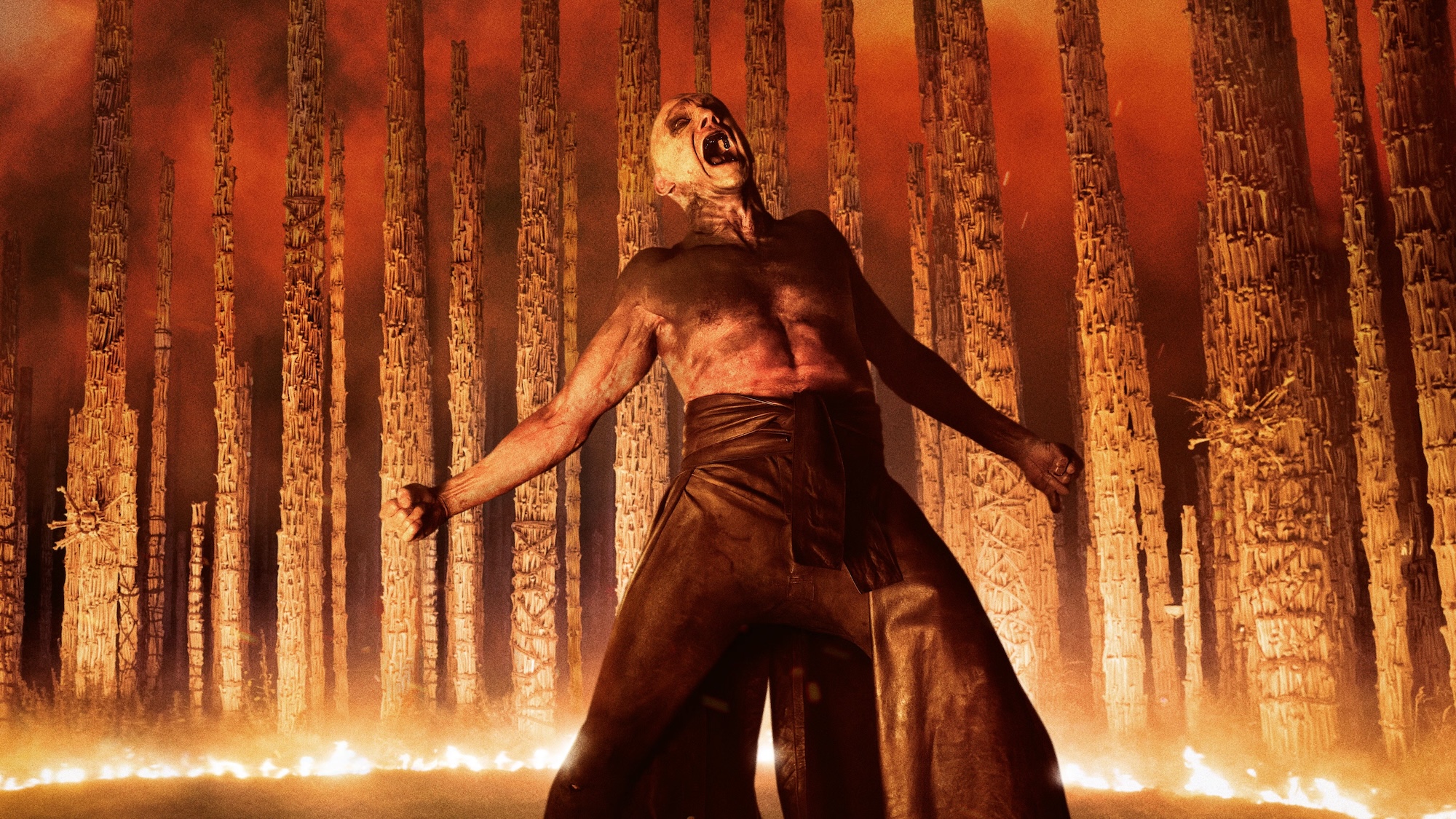
28 Years Later: The Bone Temple is a tale of two zombie movies. The first is a meditative consideration of what loneliness with an inquisitive mind can yield in the face of absolute cataclysm. The other is a more familiar, and frankly tired, yarn about the type of cruel sadism such catastrophe produces in the wicked or devout. Unfortunately it’s a combination that on many occasions proves to be one and the same.
The first story is infinitely more interesting than the latter, but all things being equal, and each subplot being penned by Alex Garland, they can both engross to varying degrees. And when the disparate narrative threads finally, inevitably converge in the third act, Bone Temple finds its grace and belatedly earns its spot in a horror franchise that’s always had more on its mind than zombie teeth marks—although rest assured there’s plenty of that too via the most gory 28 Years film to date, complete with literal zombie brain-eating, as well as the most confrontational political allegory in the four movies to date. As it turns out, the rampant rise of anti-intellectualism in a post-COVID world can be far scarier than a simple rage virus.
The two poles of this are represented by Ralph Fiennes’s Dr. Ian Kelson—the half-mad but wholly sweet physician who has built the titular pile of bones as a monument to the dead lost to the rage virus pandemic these last 28 some years—and Jack O’Connell’s more briefly seen and self-styled Sir Jimmy of the Crystal. One is an atheist dependent on reason, the other (as we soon learn) is a Satanist who has processed the zombie apocalypse ravaging Britain since his childhood as a sign that Old Nick has dethroned God, so it’s time to play for the winning team. Not so strangely though, whether a follower of Christ or the other guy, devotion looks a lot like aggression and suppression of the followers under one’s thumb.
As you might recall from the last film, one such unwilling sheep is Spike (Alfie Williams), who ended 28 Years Later by electing to pursue a walkabout on the British mainland after leaving his bucolic childhood home on Holy Island. He unfortunately does not get very far until he is “saved,” up to a point, by Sir Jimmy and his gang of supplicants who are all expected to dress and act like the boss. They each even adopt the name “Jimmy.” The Jimmys might’ve saved Spike from a horde of the infected, but if he wishes to live much longer he will need to conform by donning his own blond wig and participating in their leader’s cruel ideas of justice and “charity” to other survivors they meet along the way.
While 28 Days Later predated and essentially predicted the glut of apocalyptic TV shows and movies we’ve had in this century about what humans look like when society breaks down—think The Last of Us, Bird Box, and most especially The Walking Dead empire—it nevertheless feels a bit thin here, despite a gregarious and boastful performance by O’Connell.
Where the movie far better excels, then, is when it picks up the threads of Dr. Kelson, who in the previous movie was revealed to be a wizened medical doctor equal parts Ben Kenobi and Ben Gunn. If the last film revealed how he honored the dead, including by offering euthanasia to the terminally ill in a hopeless landscape, The Bone Temple sees the man of science pivot to finding hope in all this bleakness… and perhaps a cure to the rage virus that infects even the most feral, such as a monstrous Alpha whom Kelson takes to calling Samson (Chi Lewis-Parry). The big guy keeps coming back for fresh shots of morphine from a good doctor who seeks to study and empathize instead of eradicate. And with each fresh hit, remnants of the man behind the rage peek through.
28 Years Later: The Bone Temple is the first 28 film masterminded by Garland and Danny Boyle that the latter did not direct. In his place, Nia DaCosta of Hedda and Candyman fame—as well as a work-for-hire gig in the Marvel mines via The Marvels—steps behind the camera. She makes for a fresh and astute directorial voice. Whereas Boyle sought to bookend last June’s 28 Years Later with the kind of manic hysteria that defined so much of the turn of the 21st century’s indie cinema (while reaching for something almost primeval and pastoral in-between), DaCosta brings a separate sensibility to the baton she’s handed.
When it comes to Kelson’s bizarre interactions with his infected Goliath, the film achieves a slippery lyricism that is both quietly big-hearted and slyly comical. Fiennes is an incredibly gifted actor, and with Dr. Kelson he gets a role that allows him to indulge both extremes of his onscreen persona. The avuncular warmth that makes him perfect for droll Wes Anderson comedies or prestige pieces in need of a doubting priest is on full display when he sways to ‘80s pop music with his own drugged-up zombie sidekick. As one scene-partner later says, he just seems easy to talk to, or for that matter point a camera toward.
At the same time, this is the guy who played Lord Voldemort, and he knows how to chew scenery to the marrow, which occurs in this movie via the tour de force sequence that marks the highlight of the picture. Who knew M. Gustav could rage like Ozzy Osbourne at the gates of Hell when the need arises?
The sequences with Fiennes are, in short, deeply compelling and the reason to see the movie. It’s when the film flips back to Jimmy and the boys that the picture runs into trouble. While young Williams made for an effective innocent condemned to the times of the damned in the last installment, he all but gets swallowed up into the furniture of the Jimmys subplot where O’Connell prances and mugs somehow even more than in his turn as a river dancing vampire in Sinners. It’s a big swing, and both it and a few interesting turns in the margins, including The Brutalist’s Emma Laird as a ruthless true believer of the Jimmy cause, help buoy what is frankly the most unpleasant chapter in the entire 28 Days/Years cycle.
DaCosta’s general approach to tone and aesthetic in the horror space is a good deal grislier, and at times Grand Guignol, than anything we’ve previously seen in this series. Those instincts served her well in her Candyman redo but come off as purely nihilistic in this film during an especially repellent torture sequence that will test most viewers’ patience. The centerpiece sequence is obviously meant to echo the barbarity of man throughout history, but the set-piece proves more dispiriting than provocative.
She and Garland are clearly chasing a bigger portrait of where a regressive and backward-looking worldview inevitably leads: cycles of dogmatic control, oppression, and suffering gussied up in codes of honor and devotion. It’s a glimpse into the final destination of a post-BREXIT UK, and a West ruled by anti-vaxxers and know-nothing disciples of algorithms that will make rage-infected zombies of us all.
There are some grand ideas here, but it’s only when they converge for a transcendent climax at the Bone Temple that the movie reaches some semblance of equanimity. But I suppose the best compliment I can give is that, after it’s over, it did leave me eager for the promised third and closing part of a trilogy from Garland’s pen. Having witnessed two-thirds of the vision, it would be its own act of sacrilege to not learn where these filmmakers are determined to reach in their stroll along the River Styx.
28 Years Later: The Bone Temple opens on Jan. 16.
The post 28 Years Later: The Bone Temple Review: You Gotta See Ralph Fiennes Rage appeared first on Den of Geek.