By
By 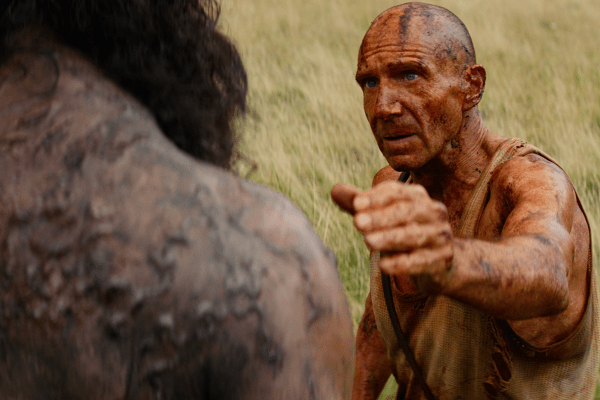
After escaping a tumultuous coming‑of‑age under his father’s forceful hand and delivering his ailing mother to her final resting place, Spike (Alfie Williams) has now taken up with a band of satanists. In 28 Years Later: The Bone Temple, Nia DaCosta’s sequel to last year’s reinvention of the franchise, a movie that picks up right where the last one left off and carries on its meditative yet unabashedly goofy vibe, Spike finds himself in a new kind of “kill or be killed” situation. Under his eye, Spike is forced to duel a member of Lord Jimmy Crystal’s (Jack O’Connell) death cult that has just taken him in, where survival means becoming part of the tribe. Or, as they put it, one of the fist’s many fingers. As Spike soon discovers, though, being a member of a death cult isn’t much better than just being dead. After all, what’s worse: dying, or losing a piece of your soul in order to survive?
That’s the central question The Bone Temple seems to pursue: What is humanity? What does it mean to lose it? To find it again? And could the very infection that turned the world into a dystopian nightmare 28 years ago be cured by rediscovering the humanity within the infected? This haunting pursuit drives Dr. Kelson (Ralph Fiennes), whose unsettling brilliance lies in his unwavering belief that the infected aren’t lost souls, but patients battling a disease, one he still hopes to cure.
Like its predecessor, The Bone Temple is a deeply weird film; a total subversion of what we expect from the zombie genre and even from earlier entries in the 28 Days Later franchise. But while the first film tackled themes of masculinity, identity, and coming-of-age through an often jarring blend of sincerity and absurdity, this sequel sharpens those ideas and presents them with more tonal clarity. In many ways, The Bone Temple deepens the themes laid out before it, but it also casts a harsher light on some of the first film’s more outlandish choices – most notably that cartoonishly insane final sequence, which feels even more out of place in hindsight. This time around, the film’s identity feels more fully formed and internally consistent under DaCosta’s watch.
[READ MORE: Our review of ‘Primate‘ directed by Johannes Roberts and starring Johnny Sequoyah]
Take Lord Jimmy Crystal’s fiendish death cult: their tenuous grasp on reality is perfectly summed up by their matching blonde wigs and shared willingness to all go by some variation of “Jimmy.” But when they get to killing, they are chilling. They’re childish and hare-brained, but that only makes them more utterly terrifying. Yes, they quote Tellytummies (sic), but they also flay passersby with all the casualness of preparing a Sunday roast. It simply doesn’t register as problematic (not to them, anyway) because they’ve devoted themselves to the Dark Lord, Old Nick, and his only son, Jimmy Crystal. There’s something about their simple-mindedness that makes them scarier than even the infected, in that they really do think in the black-and-white dichotomy of children. And they relish their kills. But there are (thankfully) no cartoonish acrobatics here to punctuate that childishness. They’re just a deranged band of satanists who gleefully carve up the infected and the uninfected alike. And, as it turns out, they make for rather poor role models.
While I ultimately found 28 Years Later to be a thoughtful and often transcendent film that tackled some genuinely compelling ideas about masculinity and coming-of-age, its tonal shifts could be more than a bit jarring. That’s never an issue in The Bone Temple. Yes, there are moments that are intentionally funny or lighthearted, but they always feel aligned with the film’s core sensibility. It’s all of a singular piece. That said, this entry does feel a bit like a bottle episode in the Ongoing Adventures of Spike In ZombieLand. Its scope is narrower, with most of the action confined to the titular Bone Temple; an incredible set, used to striking effect (they’ve really gotten their money’s worth across the two films at this point.) Like its predecessor, this movie feels more like a chapter in an unfolding trilogy than a fully self-contained story. Without a proper conclusion, it would feel incomplete. That being said, The Bone Temple gave me a much clearer sense of the trilogy’s overall vision than I had after 28 Years Later, and I’m genuinely excited to see how Danny Boyle and Alex Garland plan to wrap it all up, especially now that this narrative stretches across the entire franchise and its evolving lore.
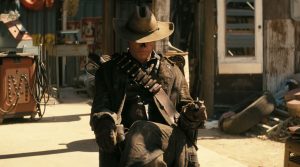
Ralph Fiennes gets an expanded role here as Dr. Kelson. Between his physical appearance, smothered in orange iodine and caked in old blood, and his relentlessly curious experimental mind, Kelson is a hard character to look away from. Some much of the performance is in the intelligence that twinkles in Fiennes eyes or the little looks of recognition that flash between him and new pal Samson (Chi Lewis-Parry). Jack O’Connell’s return as Lord Jimmy Crystal is another terrifyingly deranged turn from the actor, who plays him as a man living by his own twisted code. His creed, which he drills into his devoted followers, is fueled by cruelty and designed to strip them of their humanity. Jimmy is sadistic, yes, but O’Connell plays him as a figure of contradiction. Beneath all the pomposity and showmanship lies a deeply wounded, broken human being, desperate to justify his own horrors by turning the world around him into a reflection of his tormented interior.
The film also continues to explore the evolving relationship between Dr. Kelson and the Alpha-infected Sampson, he of the big-donged variety. As Jimmy seeks to strip Spike of his humanity, breaking him down to something feral and obedient, Kelso is engaged in the opposite pursuit. He treats Sampson not as a monster, but as a man gripped by a disease, and one who might still be reached. These two arcs mirror each other in form and intent, posing two sides of the same question: what remains of a person when the world has taught them to survive without compassion?
Just as this is a story about humanity, it is also one about sacrifice — what must be given up or preserved to retain one’s soul. The film explores this not through sterile moralizing but through a fever dream of religious imagery, most notably drawn from Christianity and Satanism. The Bone Temple itself drips with spiritual metaphor, from its infernal architecture to Jimmy’s obsessive reverence for Old Nick. Unlike Kelso’s near-scientific faith in redemption, Jimmy’s religion is pure performance, a stage for cruelty disguised as belief. Between them, the film carves out a rich symbolic landscape where humanity is something that must be both fought for and, at times, willingly surrendered. Bring on the final chapter.
CONCLUSION: Nia DaCosta proves a steady hand in continuing the 28 Years Later story, this time framing it as an ideological battle between two opposing forces: Ralph Fiennes’ atheist humanist Dr. Kelso and Jack O’Connell’s sadistic satanist Jimmy. The result is weird, singular, and enthusiastically carries the story forward.
B
For other reviews, interviews, and featured articles, be sure to:
Follow Silver Screen Riot on Letterboxd
Follow Silver Screen Riot on Facebook
Follow Silver Screen Riot on Twitter
Follow Silver Screen Riot on BlueSky
Follow Silver Screen Riot on Substack
The post ‘28 YEARS LATER: THE BONE TEMPLE’ A Funky Continuation of the Infection appeared first on Silver Screen Riot.