By
By 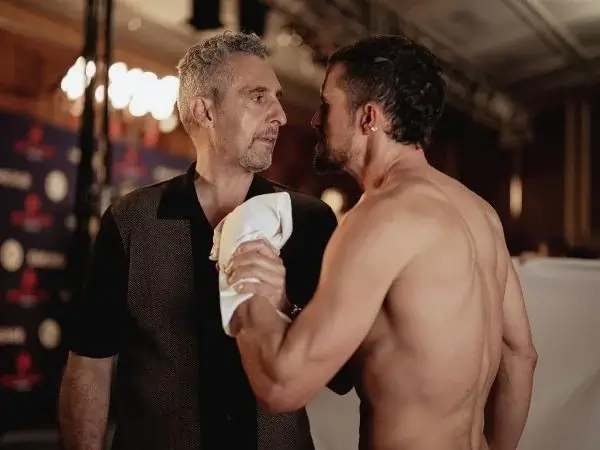
The Cut opens as a familiar boxing story before revealing its true hook: a fallen fighter offered a last-minute shot at redemption that becomes a brutal countdown against his own body.
What initially resembles a classic underdog comeback quickly shifts into an endurance narrative focused less on punches thrown in the ring than on the extreme physical cost of making weight, transforming a sports drama into a grim study of obsession and self-destruction without relying on traditional fight spectacle.
Orlando Bloom carries the film as an unnamed former super-welterweight once known as the Wolf of Dublin, a man whose career ended abruptly a decade earlier after a moment of unexplained distraction cost him a decisive bout.
Now reduced to coaching children and cleaning toilets at a local gym, he accepts a risky offer from a promoter to replace a dead fighter in a high-profile Las Vegas match. Bloom plays the role with stripped-down intensity, shedding his familiar leading-man polish in favor of exhaustion, hunger, and quiet desperation, while grounding the character in stubborn pride rather than overt sentimentality.
The film’s primary antagonist is not another boxer but John Turturro’s Boz, a ruthless replacement trainer who views the fighter as raw material rather than a human being, embodying the cold logic of results-at-any-cost professionalism. Turturro leans into detached cruelty rather than theatrical menace, making Boz unsettling precisely because his indifference feels procedural and routine.
Supporting roles reinforce the central conflict rather than expanding it. Catriona Balfe plays Caitlin, the boxer’s partner and original trainer, whose concern and restraint contrast sharply with Boz’s methods, though the script limits her emotional impact by reducing the relationship to functional opposition rather than lived intimacy. Gary Beadle’s promoter serves as the transactional catalyst, presenting opportunity as a financial equation rather than a moral choice.
The film is directed by Sean Ellis, following his atmospheric period horror film The Cursed, and that background shapes every creative decision here. Ellis avoids conventional sports-movie rhythms entirely, presenting the story as an extended training sequence that grows increasingly claustrophobic and grotesque. There are no full boxing matches beyond the opening flashback, a deliberate omission that reframes violence inward, turning dehydration, starvation, and physical breakdown into the main spectacle.
The camera lingers on damaged skin, strained muscles, and hollowed eyes, using tight framing and muted lighting to trap the viewer inside the boxer’s deteriorating body. Practical effects and makeup emphasize physical decay rather than stylized gore, while the editing favors repetition and duration to make each ordeal feel cumulative rather than dramatic.
Action in The Cut is internalized rather than kinetic, relying on bodily stress instead of choreography, which may frustrate viewers expecting traditional fight sequences but reinforces the film’s central thesis about the sport’s unseen dangers. Ellis uses stillness and discomfort where most boxing films would deploy momentum and triumph.
The Cut will appeal to viewers interested in darker, unconventional takes on sports cinema, particularly those drawn to psychological and physical extremity rather than inspirational arcs. Fans of actor-driven character studies will find Bloom’s performance committed and transformative, while audiences seeking catharsis, uplift, or classic boxing thrills will likely find the experience punishing rather than rewarding.