By
By 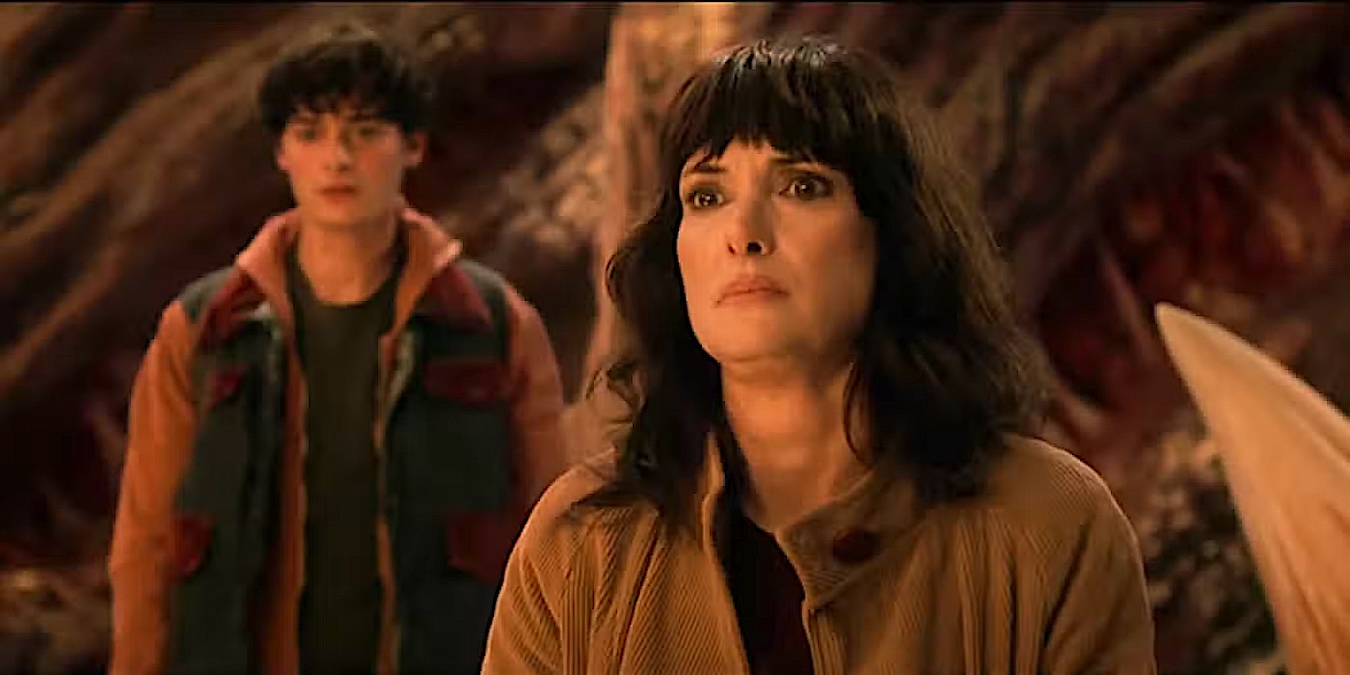
This article contains Stranger Things spoilers. Like all of it.
Winona Ryder was not in the final season of Stranger Things nearly enough. Once the marquee name around whom the first season was built and marketed, the actor responsible for giving Joyce Byers a ferocious mama bear energy that bordered on delirium has spent the last few episode-churns largely relegated to background status; and in the case of Stranger Things 5‘s finale, an appendage to the growth of her son Will Byers (Noah Schnapp) in much the same way that old Jim Hopper (David Harbour) eventually became a vital, but supporting, facilitator for Eleven’s journey into quasi-martyrdom.
The underuse of Joyce and Hop marks one of several major issues you can pick at when it comes to discussing Stranger Things’ last dance. But the thing about showrunners Matt and Ross Duffer is that at the end of the day, they usually know how to craft an emotionally effective ending, and in the case of closing the book on their landmark Netflix series, that included having the good grace to tip the hat to a performer who first gave their show its sense of urgency. Which might be a long way to say: when you give a star enough oxygen, they will always pack a punch—or swing an ax, in Ms. Ryder’s case.
Hence one of the best and frankly subtler easter eggs of Stranger Things’ series finale, which occurred when Joyce Byers cut off the head of big bad Vecna (Jamie Campbell Bower) like he’s a goddamn 19th century vampire.
No Redemption for Vecna
While much of the final showdown between the Hawkins Scooby Gang and the combined power of the Mind Flayer and Vecna plays a bit like a superhero movie—or a Dungeons & Dragons campaign cover, complete with Jeff Easley artwork—the final, fatal moments between Vecna and Millie Bobby Brown’s Eleven, plus the rest of the heroes, amounts to a different sensibility entirely. Up until this coup de grace, the Hawkins crew have only been killing faceless monsters whose heads open up into countless rows of teeth. But even in his transmuted shape, Venca is still just a once-painfully-human soul on a power trip. He might carry himself like Freddy Krueger or a demon made flesh, but Henry Creel remains just a guy who’s willfully turned himself into a monster.
For a moment Stranger Things even uses this setup to briefly flirt with what’s become a tired cliché when it comes to villainy in modern pop culture. The show contemplates offering Henry a helping hand and endless empathy. And poor Will Buyers of all people gets to be the one to offer the fiend a now familiar fig leaf. It wasn’t your fault, he promises. You can be saved, he suggests. Wouldst thou like the taste of an unearned redemption arc? When Darth Vader received one in 1983, it was kind of novel within nerd fiction, but on the other side of Kylo Ren, Loki, Draco Malfoy, and hell even MODOK, this beat has gotten pretty staid.
Some fictional baddies are just too evil, and that definitely includes a serial killers with a god complex and penchant for kidnapping children. So fortunately, no, Vecna rejects a strained chance for forgiveness and instead reveals he is as big and bad as Count Dracula. And fortuitously, one member of the Stranger Things ensemble has experience when it comes to dealing this that sort of thing.
Joyes Goes Medieval Mina on His Neck
Thus the most satisfying and subtle easter egg in a series renowned for its deafening, neon-lit callbacks: Joyce Byers gets to cut off the vampire’s head just like she did in Bram Stoker’s Dracula more than 30 years ago in 1992.
The moment comes after the battle appears to have been won, and the other monster hunters led most spectacularly by El have managed to seemingly slay the beast. In fact, El won the fight when she impaled Vecna on what appears to be a pony-sized fang growing inside the Mind Flayer’s throat (we won’t try to determine the biomechanics of that). The moment is not unlike Jonathan Harker and Quincy P. Morris running hunting knives into the vampire in Bram Stoker’s original 1897 novel, or the climactic schadenfreude that occurs when a Bowie knife emerges in Francis Ford Coppola’s far more sympathetic requiem for a vampire in the 1992 film. That was a film, by the by, which also cast Gary Oldman as Dracula and Winona Ryder as his prized prey, Mina Harker.
On page and screen, Dracula is impaled by vampire hunters who have chased the dark prince across land and sea. But the deed is not done, at least in Coppola’s film, until the full ritual is complete; until Mina Harker chops his head off.
So it is with Vecna, who after being defeated has just enough life left in him to still scare the heroes and audiences alike by drawing one last breath. In his final moments, Venca reverts to Henry, the introverted lad who succumbed to the Mind Flayer’s offers of dark powers perhaps out of loneliness and self-loathing. If you’ve seen Stranger Things: The First Shadow on Broadway or the West End, yo even know that Joyce Byers would remember that scared boy in her high school who walked with a sense of foreboding behind his step.
But Joyce has no sympathy for the boy he once was or the creature he’s since become. She remembers only her own child; a little boy this cruelly kidnapped and tortured when he was but 12 years old, and whom Vecna and the Upside Down has targeted ever since.
“You fucked with the wrong family,” Joyce intones before dropping the blade, again. And again. And again.
There is something old-school primal about Joyce executing Vecna in this way, something of the old world; in effect it echoes the Victorian era’s self-styled learned men and women, represented by Stoker’s fellowship of heroes, reverting to medieval rites of superstitious annihilation. It is also purely satisfying in a way that even seems to outdo Coppola’s Dracula movie, which showed the vampire with a great deal of sympathy—but no real sense of redemption. When Ryder beheaded a monster in that movie, it was an act of mercy for a person she pitied but was beyond literal and (perhaps) spiritual salvation. When she does so here, it’s far more medieval.
Some might take issue with that, but we consider it just one more ode to pop culture influences of yore, not unlike when other ‘80s movie heroes like William Ragsdale and Roddy McDowall in Fright Night or Bruce Campbell in Evil Dead swung axes first and asked questions later. This fact seems to be confirmed and underscored when Mike uses D&D’s proxy of Dracula, Count Strahd von Zarovich, to stand-in for Vecna during the final fateful campaign in his childhood basement on the night high school ends.
The monsters who scare us most growing up are those that cannot be reasoned with or rationalized. But they can be quelled by a mother’s love, or in the case of Winona Ryder, her mean, lean, chopping swing.
The post Stranger Things Finale Remembered to Give Winona Ryder One Great Easter Egg Moment appeared first on Den of Geek.