By
By 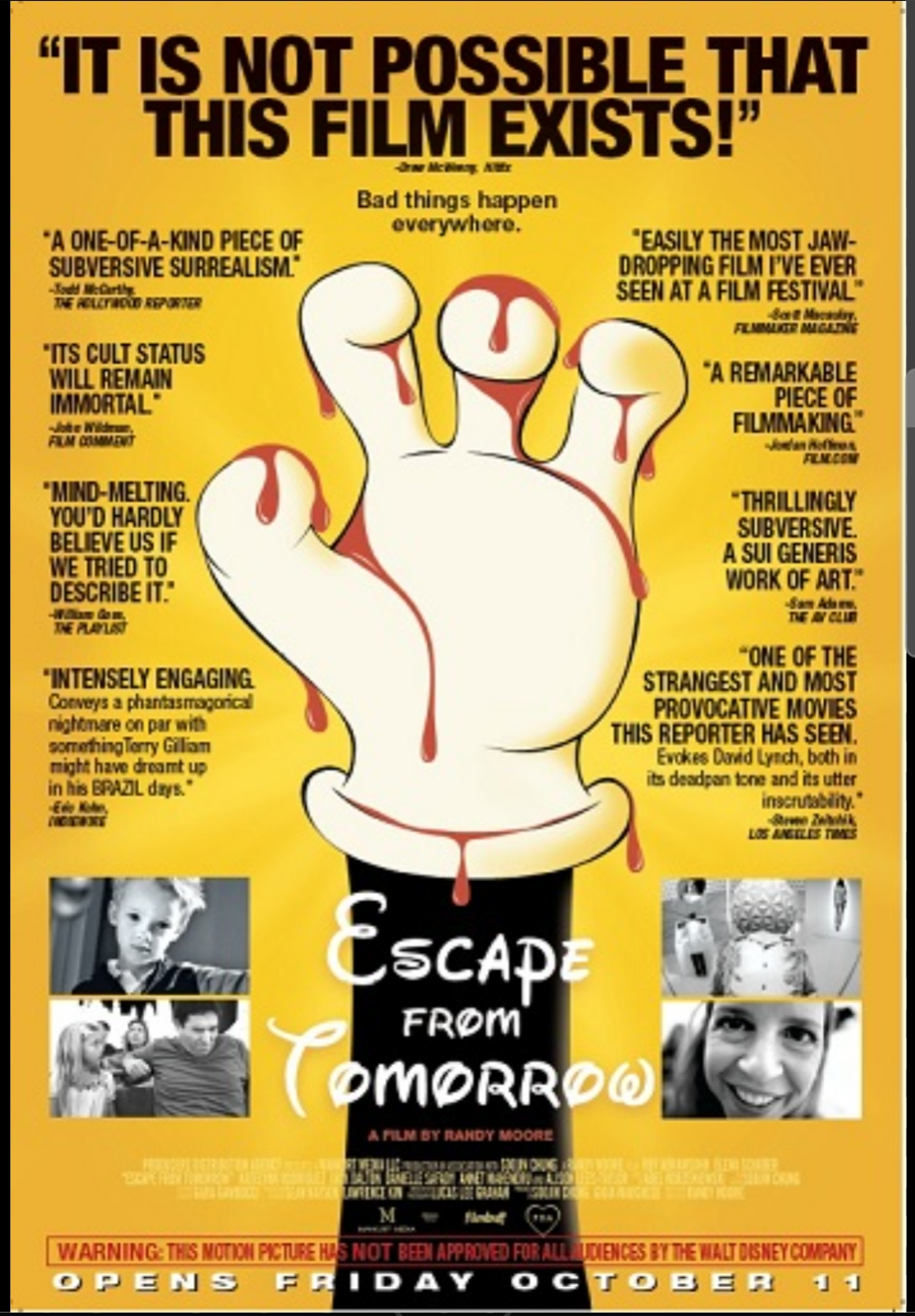
There is gonzo filmmaking, and then there is guerrilla filmmaking. Then there is Escape From Tomorrow. The infamous, crazy project that might just be “the most illegal movie ever made in America”, and it remains suspended in a moral and legal limbo to this day. So what is it? What happened? And why? Hold on to your mouse-ears, Outposters, because Hollywood History is back!
The Crazy, True, Tale Of The Totally Unpermitted Escape From Tomorrow
There are movies that push boundaries. There are movies that challenge authority. And then there is Escape From Tomorrow. This project said “Boundaries? What are those?” and then went and made a movie inside Disneyland and Walt Disney World…
…without asking anyone for permission.
This is Hollywood history at its oddest: a guerrilla film that technically exists, was definitely finished, screened at festivals, yet to this day remains trapped in some kind of legal theme-park purgatory. It is too dangerous to release commercially, but too iconic a project to forget.
The idea was simple:
“Let’s make a movie in Disney… in secret”
In 2011, filmmaker Randy Moore, an indie director with a background in surreal ads and shorts, was hanging around at a Disney parks and he had an epiphany that would make even the most die-hard cinephile give him one of those looks. Could he shoot an entire movie in these parks without a single permit?
This wasn’t a metaphor. Or a stunt. Or a wonderfully illegal fever dream. Randy literally meant: bring actors, cameras, and crew into Disney parks and shoot the movie entirely under the cover of being real tourists.
Why? Because Moore wanted the parks to feel real. He wanted the bright false joy and corporate magic to bleed into the film itself. Not on a soundstage, not with matte paintings, but inside the actual happiest places on earth.
So he assembled a tiny crew, wrote a script called Escape From Tomorrow, and didn’t tell Disney. No permits. No location releases. No legal waivers. Just over-priced churros, hidden cameras, and a severe disregard for copyright law.
How Do You Film a Movie in Disney Without Disney Knowing?
At this point in history, guerrilla filmmaking had mostly been used to shoot one or two scenes on real streets without permits. But an entire feature? That’s next-level.
Here was the secret plan:
1. Dress It Up Like a Vacation – Actors wore normal vacation attire. No wardrobe trailer. No makeup tents. Just four people blending into a sea of Mickey ears.
2. Shoot Handheld, Fast, and Quiet – No huge camera rigs. Everything was small, nimble, and looked as if “Hey, we’re just filming a vlog!”.
3. Pretend You’re Filming a Home Video – Security sees a guy with a camera? Cool. You’re making a birthday video. Two cameras? Three? All bets are off.
4. Use the Crowd as Extras – No extra paperwork for bystanders, they’re just ambient patrons in a ride-through madness sequence.
So every day, the crew would enter the parks with their gear tucked into backpacks and shoulder bags. They filmed jumpy handheld takes on rides, in crowds, in restaurants, in queues. It became like a deranged scavenger hunt where the prize is a feature film that should not exist.
The plot was meant to blur the boundaries between a Disney nightmare and a really weird vacation. Escape From Tomorrow follows a family on a Disney vacation, except things get very, very weird. Characters experience hallucinations, creepy encounters, and surreal events as the parks turn into a kind of psychological maze.
Imagine The Twilight Zone meets Alice in Wonderland after a bad turkey drumstick and seven rides on Space Mountain. It’s not exactly corporate synergy. More like corporate anti-synergy with a splash of existential crisis.
Against all odds, the movie was completed. In 2013, it premiered at the Sundance Film Festival. Yes, Sundance. The same festival that launched Oscar bait and arthouse gems now had this – a movie you could only get by sneaking around one of the most policed, camera-monitored entertainment venues in the world.
Critics were baffled, amused, disturbed, and generally thrilled. Audiences later heard the whisper:
“They didn’t get permission from Disney…”
That whisper became a roar. Soon, that roar got so loud that a sense of the inevitable developed. It was known that Disney knew.
Here’s where the story gets weird. Disney are a known highly litigious corporate behemoth wh defend their IP jealously. Legal experts scrambled, expecting Disney’s massive lawyers to drop the hammer.
But Disney did not sue. Disney stayed silent. Everyone knew that they knew. They knew that everyone knew that they knew. Yet they stayed quiet. Their silence became more terrifying than an army of lawyers.
That fear spread to distributors. Distribution deals fell apart. Would Disney block releases? Would theaters get cease-and-desist letters? Would DVD’s be seized? With no noised from Disney, the unsettling silence scared everyone off.
Potential rights issues were legion. The film literally contained footage of Disney properties. Of rides, characters, crowds, soundtracks, and logos. All shot without license. Disney’s continued silence became the threat.
Disney then just… quietly implied… that releasing the film commercially would not be in anyone’s best interests.
Which meant the movie, which was completely finished and garnered buzz on the circuit, could be screened at festivals but could not be released commercially. No wide release. No Blu-Ray. No streaming. It lives in this weird limbo of cult legend and legal quicksand.
So what is the legal situation?
You can shoot in public places. Disney parks are private property, but you can film for your own use there. Family video or vlog – no legal problem.
However, you cannot sell a video you shot for commercial profit if it contains copyrighted trademarks you captured without permission. Disney can stop you from profiting. Even if they never sue, the threat of injunctions, seizures, and litigation is enough to spook potential distributors for eternity.
Attempting to profit from it would also cause all sorts of issues with everyone in the background. Would unwitting participants need to give permission? Be paid as extras?
Over the years, fragments of Escape From Tomorrow have circulated online via bootleg festival copies. Film geeks trade whispered links in private forums like they’re sharing some ancient, arcane text.
It’s the movie equivalent of a banned book you kind of read once, or a lost album that hardcore fans swear exists. People love it not just because it’s bizarre, but because it shouldn’t exist.
At its core, Escape From Tomorrow is a story about audacity. A tiny crew said:
“We want to capture the real fantasy machine, even if the fantasy machine doesn’t want to be captured.”
That’s almost poetic, even to a miserable and cynical bastard like me. It’s also a story about corporate power in the modern creative world. Big companies own big worlds, and if you enter their world without permission, even art gets tangled in legal spaghetti.
Escape From Tomorrow occupies a unique place in Hollywood history. It’s finished. It’s shown publicly. It can’t be released. It was never legally cleared, but was never officially killed. It continues to star in blog posts and midnight festival anecdotes.
Some movies are masterpieces. Some are disasters. Some are lost. Very few are illegal theme-park artifacts.
If you ever find a bootleg copy, and you’re of sound legal mind, you’ll see something weird: a family trapped in a dreamworld, filmed in a dreamworld, now trapped forever outside the system that should have released it.
Escape From Tomorrow is not just a film. It’s a film you weren’t supposed to see. Which, honestly, is half the fun.
Enjoyed this article – don’t forget to check out some more of our Hollywood History articles at Last Movie Outpost.
The post Hollywood History: ESCAPE FROM TOMORROW appeared first on Last Movie Outpost.