By
By 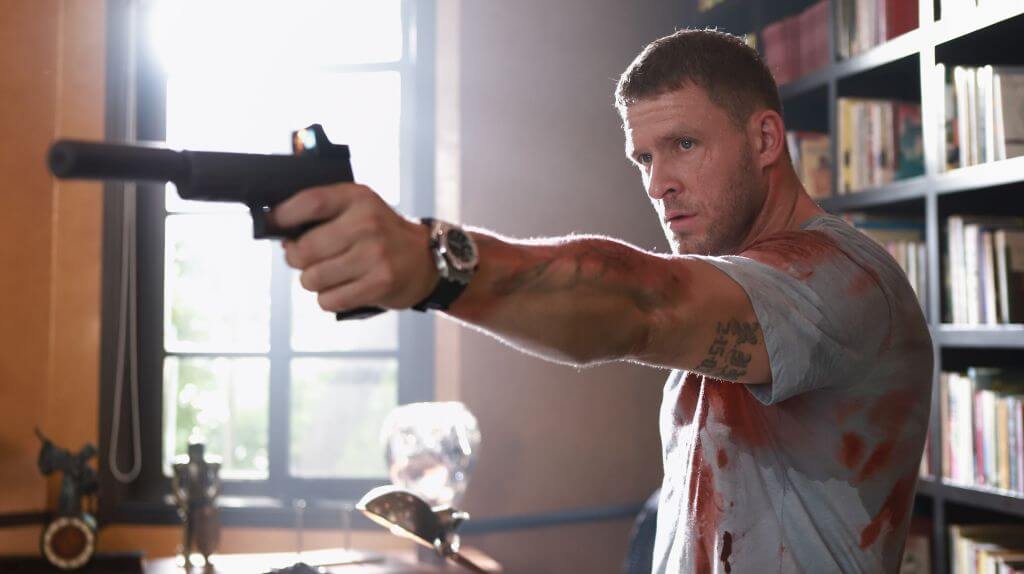
Bang action film built around a single hook: what happens when a professional killer survives death and decides, quite literally, to grow a conscience. Set in a heightened criminal underworld that feels frozen in time somewhere between 1990s direct-to-video excess and modern streaming pragmatism, the film follows William Bang, a contract assassin who survives a near-fatal hit and emerges from surgery with a transplanted heart and an unexpected moral awakening.
Jack Kesy plays Bang as a man split between instinct and impulse, projecting physical toughness while gradually leaning into deadpan disillusionment. He is convincing as a career criminal whose body remains lethal even as his motivations begin to soften, and the film wisely keeps him laconic rather than introspective.
Opposite him is Peter Weller, clearly enjoying himself as the Italian mob boss who once owned Bang’s loyalty. Weller chews the scenery with relish, leaning into menace, vanity, and dark humor, while anchoring the film’s antagonist role as a man who treats murder as routine business and views emotional deviation as betrayal. Their dynamic fuels the narrative, with Bang’s quiet defiance clashing against Weller’s theatrical cruelty.
The film is directed by Wych Kaosayananda, whose career has been defined by long gaps, troubled productions, and cult curiosity since his early Hollywood outing Ballistic: Ecks vs. Sever. After returning with One Night in Bangkok in 2020, Bang marks his first completed feature in several years, and it carries many of his familiar signatures.
Kaosayananda also serves as cinematographer, favoring saturated lighting, stylized violence, and an almost comic-book approach to tone. His storytelling skips psychological realism in favor of bold, sometimes ridiculous narrative turns, including Bang’s central scheme of faking assassinations using chicken blood and relocating “dead” targets into a hidden communal exile.
Action is where Bang finds its footing. The final stretch delivers sustained momentum, with frequent shootouts, vehicular explosions, and practical stunt work that recalls classic PM Entertainment titles. Cars flip, bodies fly, and bullet casings visibly eject from firearms, grounding the chaos in tactile detail. While some digital enhancement remains, it never overwhelms the physicality on display.
The camera stays close to the action, sometimes too close, and this becomes an issue during the film’s lone showcase fight involving Kane Kosugi. Despite solid choreography, the framing often cuts off key movements, undermining the impact of Kosugi’s athletic skill and making the sequence more frustrating than exhilarating.
Tonally, Bang thrives on excess rather than coherence. Its violence is gleefully blunt, its humor leans dark and juvenile, and its emotional logic often contradicts itself, particularly in how Bang’s increasingly selfish behavior is framed as moral growth. Yet this contradiction becomes part of the film’s strange charm, embracing genre nonsense rather than apologizing for it.
Bang will satisfy viewers who miss unapologetic, mid-budget action movies that prioritize momentum, outrageous ideas, and practical mayhem over polish or plausibility. It is not a precision-crafted thriller or a showcase for martial arts purity, but for fans of offbeat hitman stories, cult action directors, and throwback DTV energy, it delivers exactly what it promises and nothing more.