By
By 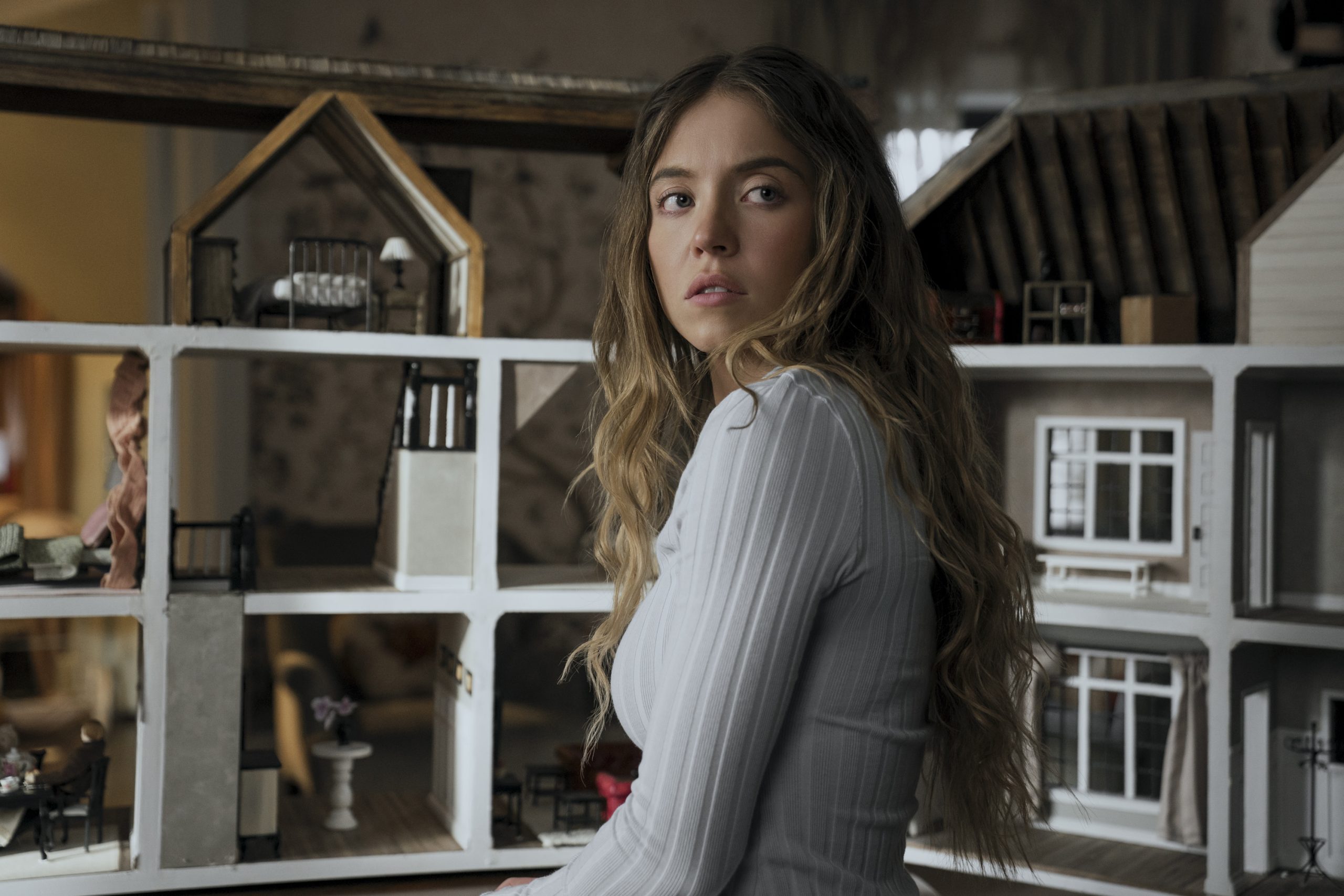
The Housemaid (2025)
Can you keep a secret?
There’s something comforting about a good airport thriller paperback. The kind with a lurid cover, a promise of secrets behind manicured hedges, and a twist every fifty pages to make sure you don’t miss your boarding call. The Housemaid started life exactly there — Freida McFadden’s wildly popular 2022 novel — the sort of book you inhale in a weekend and immediately start casting in your head. This film adaptation, directed by Paul Feig, wears that DNA proudly, even if Feig might not be the first name you’d expect attached to something this pulpy. This isn’t prestige drama pretending to be something it’s not. It’s a knowingly trashy, sexy, camp-leaning suburban thriller, a glossy throwback to the kind of nineties fun that gave us The Hand That Rocks the Cradle (1992), Single White Female (1992), and their many, many morally questionable cousins.
And honestly? That’s a compliment.
From the jump, The Housemaid delivers on its promise. It’s twisty, pulpy, and unashamed of the genre it’s playing in. This is a movie that understands the pleasure of watching beautiful people lie to each other in expensive kitchens, where smiles linger a second too long and every locked door feels like a threat. It’s ridiculous in places, sure, and its third act is outright bonkers — but it’s supposed to be. The movie knows exactly what it is, and it has a great time being it.
Welcome in — shoes off, secrets out.
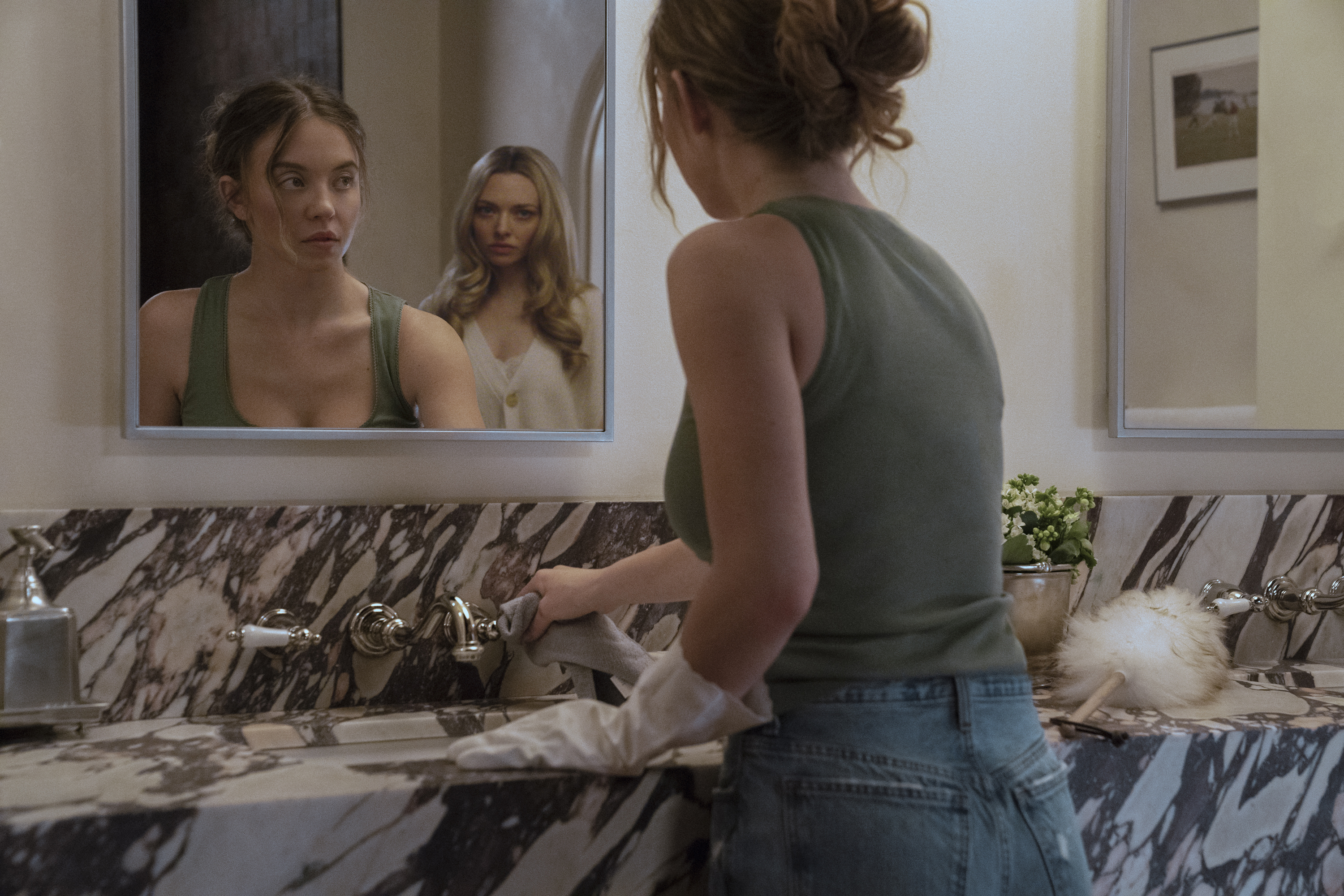
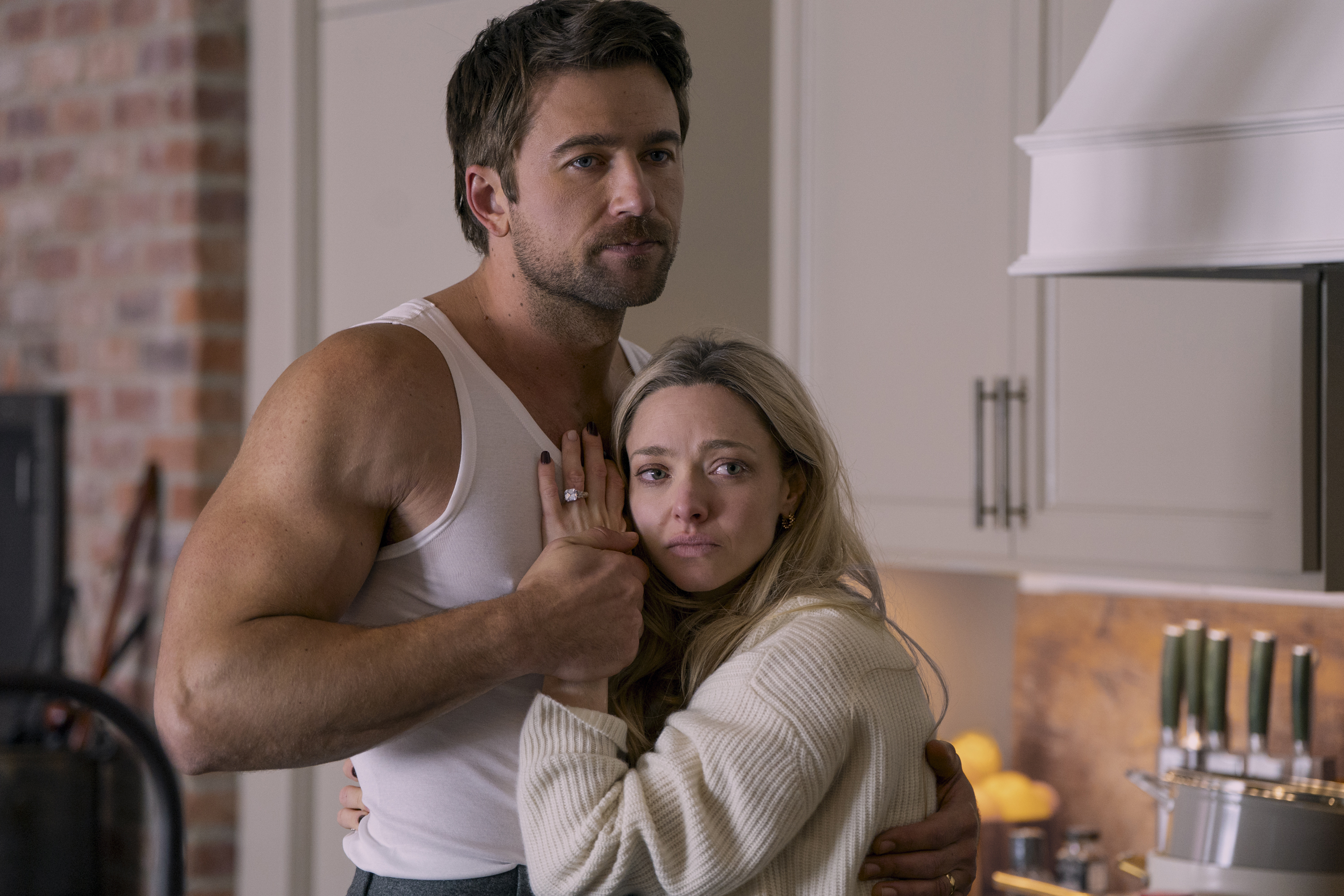
Sydney Sweeney stars as Millie, a young woman desperate for a fresh start — and carrying just enough unspoken baggage to make that desperation feel earned. She lands a live-in housekeeping job at a pristine suburban mansion on the outskirts of New York owned by the wealthy and impeccably curated Winchesters: Nina (Amanda Seyfried) and her seemingly perfect husband Andrew (Brandon Sklenar), who technically owns the house, along with their young daughter Cece (Indiana Elle). On paper, it’s a dream opportunity: a roof over her head, steady work, and a chance to quietly rebuild without too many questions being asked.
At first, things appear … fine. Maybe a little too fine. Nina is friendly to the point of discomfort, the house is spotless in that showroom way that never feels lived in, and Millie’s room — an odd, isolated attic space — is technically comfortable but undeniably strange. Their daughter is sweet but distant, another quiet presence in a house that feels more observed than lived in, as though everyone is aware of rules that Millie hasn’t quite learned yet. Still, Millie keeps her head down. She cleans. She cooks. She follows the rules. And for a brief moment, it seems like this might actually work — even as the sense that something is off begins to creep in around the edges.
Then a switch flips.
She’s living in a dollhouse. She just doesn’t know who’s playing.
Without spoiling anything, what was once polite and welcoming becomes hostile and deeply unsettling, largely driven by a chilling tonal shift in Nina’s behavior that borders on psychotic gaslighting. The job starts to feel less like employment and more like entrapment. Millie slowly realizes that in this house, appearances matter far more than truth — and that everyone is hiding something, often in plain sight.
As the story unfolds, the movie introduces a web of suspicious details that steadily tighten the noose. There’s Enzo (Michele Morrone), the mysterious groundskeeper who always seems to be watching a little too closely. There’s Nina’s controlling mother-in-law, Evelyn (Elizabeth Perkins), whose opinions extend to every corner of the house and everyone inside it. And then there’s the marriage itself — immaculate on the surface, but clearly rotting underneath. Hovering over it all is that attic room Millie stays in — soundproofed, isolated, and quietly ominous — a space that raises unsettling questions the narrative is more than happy to eventually answer.
The strength of The Housemaid lies in how confidently it leans into escalation. Adapted by Rebecca Sonnenshine, the screenplay is spicy and twisty in all the right ways, drip-feeding information while constantly shuffling the power dynamics between its characters. Just when you think you’ve got a handle on who’s pulling the strings, the rug gets yanked out from under you — sometimes subtly, sometimes with a full-force sledgehammer.
Some messes don’t come off with soap.
Director Paul Feig keeps the pace moving briskly, even when the narrative briefly pauses to fill in backstory. There are moments where information is spelled out more directly than necessary, but they rarely overstay their welcome or derail the momentum. And even when a twist or two can be anticipated, the ride remains a blast thanks to how fully committed everyone is to the material. Just as importantly, the movie has a sense of humor about itself. It understands how absurd this world can be and isn’t afraid to wink at the audience without breaking immersion. That levity does a lot of heavy lifting, balancing out the darker elements and keeping everything firmly in that campy suburban-thriller lane rather than drifting into self-serious melodrama.
Underneath the glossy surface, The Housemaid is very much about class, control, and the quiet violence of power imbalances. Millie’s vulnerability isn’t just personal — it’s systemic. She exists in a space where she’s easily replaceable, easily blamed, and constantly underestimated, and the story makes it clear how quickly desperation can be exploited by those with money, status, and influence. The further she’s pulled into the Winchester household, the more obvious it becomes that wealth doesn’t just buy comfort — it buys control.
The story also digs into the masks people wear to maintain social standing, particularly in environments obsessed with appearances. Everyone in this house is performing, carefully curating an image of perfection while burying the mess underneath. There’s a strong undercurrent about who gets believed, who gets protected, and how easily narratives can be manipulated to suit those already in positions of power. It’s not handled with a heavy hand, but it’s always there, simmering beneath the sexiness and suspense, adding a sharper edge to what could have otherwise been just a pulpy thrill ride.
From a design standpoint, The Housemaid nails the polished suburban thriller aesthetic it’s aiming for, filtered through an icy, wintry lens. Clean lines, neutral palettes, and snow-drenched exteriors give the setting a pristine, almost suffocating quality, where everything looks immaculate but feels emotionally frozen. The house itself becomes a character — beautiful, imposing, and deeply cold — a vibe reinforced by John Schwartzman’s crisp cinematography and Paige Mitchell’s set decoration, which accentuates symmetry and order before that order begins to unravel. Costume designer Renée Ehrlich Kalfus subtly contrasts Millie’s more grounded wardrobe with the Winchester family’s curated wealth, using clothing to quietly reinforce class and control. The production design overall feels slick and expensive without being flashy, and it understands how to make stillness and silence just as tense as overt confrontation.
Sydney Sweeney is always good value, and she’s great here, grounding the story emotionally. Millie could have easily slipped into a passive victim archetype, but Sweeney gives her a grounded, slightly apathetic edge that makes her situation feel believable rather than manufactured. The camera certainly knows how to shoot her — we know she has “good jeans” and we’ve all seen her sideboob more times than we can count — but Sweeney continues to prove she’s far more than a viral image. She’s compelling, reactive, and easy to root for.
Amanda Seyfried, though, steals the show. As Nina, she’s clearly having an absolute blast, playing the role with a deliciously wicked edge and bouncing effortlessly between sugary sweetness and ice-cold menace. Seyfried may be tiny and petite, but she projects a formidable presence, making Nina genuinely chilling whenever the mask slips. This is queen rich bitch energy at its finest — manipulative, calculating, and terrifyingly composed.
Brandon Sklenar is also strong as Andrew, bringing a polished, all-American charm that recalls a Chris Evans–Scott Eastwood hybrid. He’s got the Colgate smile and easy confidence, and as the story progresses, his performance becomes increasingly interesting. The more that’s revealed, the more layered he becomes, and Sklenar clearly enjoys leaning into those shifts.
Hot, yes. Helpless? Absolutely not.
The Housemaid is a great time. It’s trashy in the best way, sexy without being sleazy, and confidently camp without tipping into parody. The momentum never really lets up, pulling all its messy threads together into a payoff that’s undeniably absurd — and completely earned through sheer commitment. Even when a twist or two can be spotted on the way in, the performances — particularly from Sydney Sweeney and Amanda Seyfried — make the journey more than worthwhile. This is a slick, entertaining suburban thriller that knows exactly which house it’s in, which doors to lock, and when to throw away the key. Consider this one well kept — and absolutely worth letting in.
4 / 5 – Recommended
Reviewed by Dan Cachia (Mr. Movie)
The Housemaid is released through Studio Canal Australia