By
By 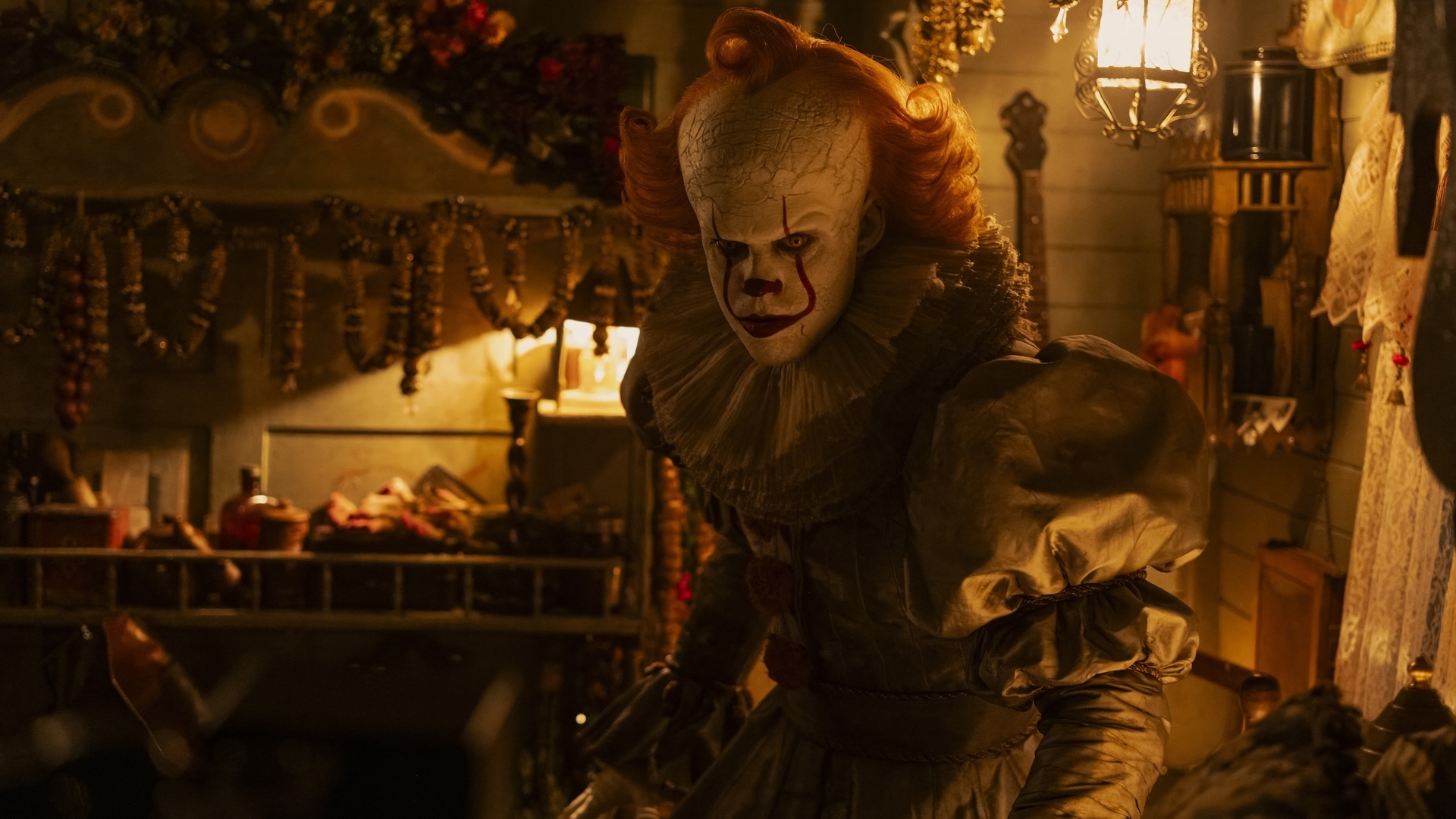
This article contains spoilers for It: Welcome to Derry season 1.
The season 1 finale of It: Welcome to Derry was heading towards a resolution of sorts over much of its runtime, at least within its 1960s setting. The good guys teamed up to put Pennywise back in his box for another 27 years, aiming to right the wrongs of the pillar-destroying military and save all the kids they could from his Pied Piper-esque Deadlights parade before guiding him into his big old nap.
Everything seemed to be unfolding with that aim in mind, until one particular moment when Marge (Matilda Lawler) ran into the blood-soaked dancing clown. Isolated from the others, Marge was vulnerable, and Pennywise was in a chatty mood, ready to deliver a twist so staggering it would reshape everything we know about the malevolent entity.
During the confrontation, Pennywise taunted Marge with knowledge she shouldn’t yet have. He addressed her as “Margaret Tozier,” a name that confused her because it wasn’t hers. He then continued, predicting her future: “First comes love, then comes marriage, then comes Richie in a baby carriage.”
Yes, Pennywise revealed that Marge is the mother of Richie Tozier, one of the Losers Club in the It films and novels, who ultimately kills It in the future. With this revelation, Pennywise established several things: It knows Marge’s future, and It also knows the sequence of her life events and how they lead to Its defeat.
While it might be more straightforward to assume that It can time-travel, that doesn’t appear to be the case here; it’s more than It doesn’t experience time the way that humans do. When Pennywise told Marge that “tomorrow, yesterday — it’s all the same for little Pennywise,” he revealed It’s non-linear perspective on time. For It, the past, present and future are all equally accessible, and It perceives its own future defeat by the Losers Club as already known and co-existing with current events.
Does It have this overview of time in the book? Mmm, yes and no. In Stephen King’s massive source tome, there’s a brief hint that It experiences time differently from humans, but King never explains this idea, let alone explores it. The creators of the show decided to pick up this suggestion and run with it, deliberately developing the creature’s non-linear time perception in that direction as a driving force for the show’s story.
Welcome to Derry is telling Pennywise’s story in reverse and is set to continue this narrative over two more seasons. As Pennywise goes back in time, he will try to kill the Losers Club’s ancestors so that they never exist, and they never kill him. He thinks he can undo his own demise by rewriting history.
This opens up the classic “Grandfather” time-travel paradox. If Pennywise had managed to actually kill Marge, he would have prevented Richie’s birth and ensured his survival. But if the Losers Club never kills It, why would It then try to kill Marge? If It succeeds, the events that motivated It to take action in the past never happen. If It fails, they do. This is precisely what makes “ancestor-killing” time-travel plots such a headache.
Of course, there are definitely ways to tackle the Grandfather Paradox in Welcome to Derry. A fixed timeline could be established where anything It does already happened, so It can’t actually prevent Its own death because any attempts to do so are already part of history. Then there’s alternate timelines or the multiverse, where killing an ancestor creates a branch universe where It lives, but the original timeline still exists where It dies. Perhaps It is so omnipresent that It can even retain knowledge of events that never come to pass, rendering the Grandfather Paradox somewhat moot.
However, if we were to consider this non-linear time-perception twist cynically, the most genuine way it makes sense is for the It franchise as a whole. If the creators of Welcome to Derry can wrap up the series with It undoing the future or creating an alternate timeline where It lives, the possibilities of expanding the story are limitless: more It movies, more It TV shows, more Pennywise, more franchise dollars.
Do fans want more, or could Welcome to Derry choose to scratch that Pennywise itch for good? Much like the dancing clown, time could be on our side either way.
The post Welcome to Derry’s Big Pennywise Twist Is an Absolute Headache appeared first on Den of Geek.