By
By 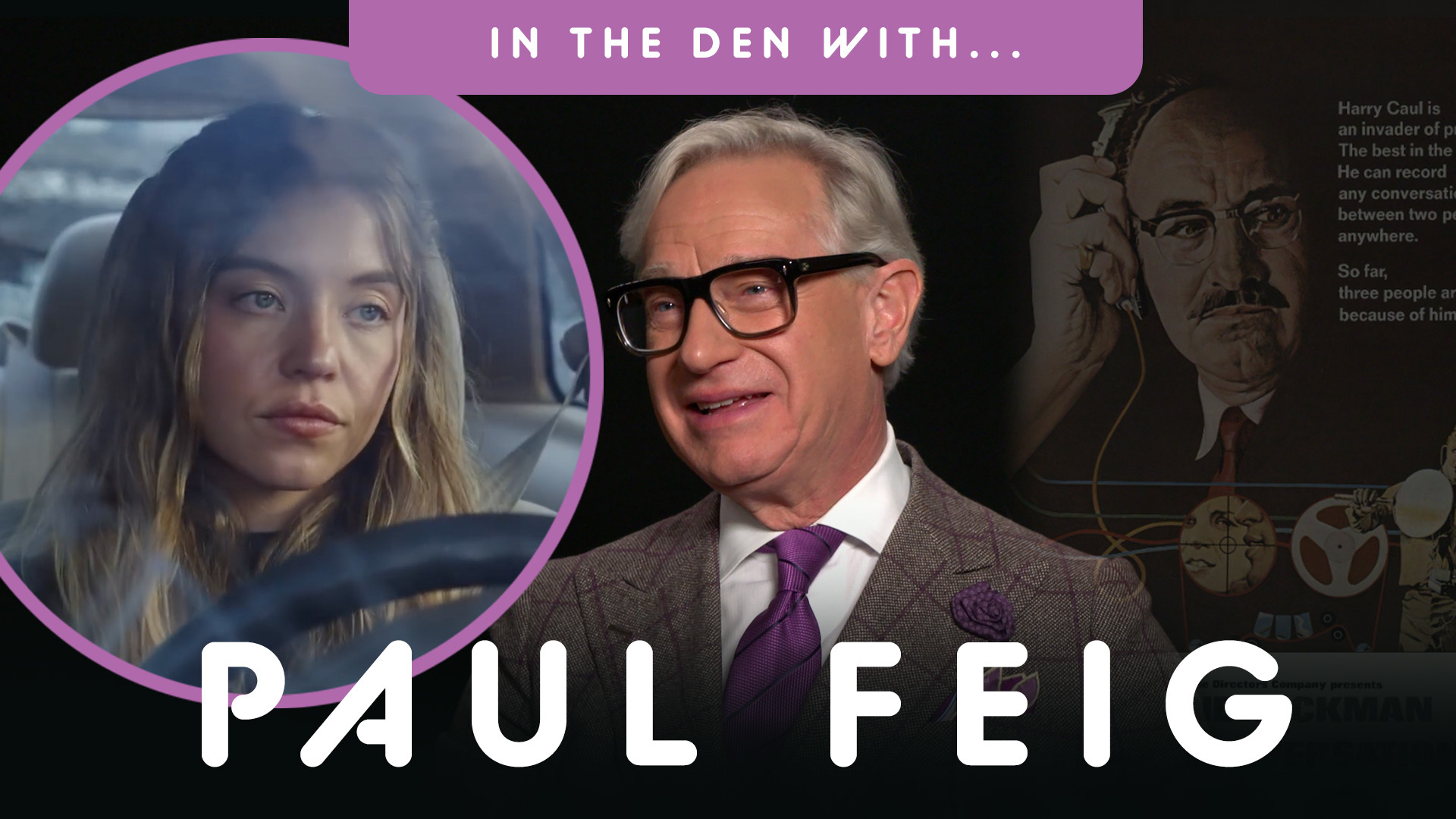
Paul Feig did not love thrillers when he was growing up. In fact, drama itself was verboten to a Detroit kid who loved comedy first and always. Considering he is now a surprise auteur of salacious suburban potboilers like A Simple Favor and this week’s The Housemaid, that might be something of a surprise. But then again, he was the guy who directed Bridesmaids, The Heat, and Spy first (the latter of which he also wrote).
But before any of that, or even Freaks and Geeks, he was a comedy nerd—and one who happened to see on a whim a revival of arguably Francis Ford Coppola’s most underrated masterpiece, The Conversation.
“I was probably 16 or 17, and I had started college a little early in Detroit,” Feig explains in our video series In the Den. “And movies in Detroit were like from another planet. You didn’t think you could get to make movies.” At the time, he was mostly enamored with broad high-concept laughers like What’s Up Doc? or anything starring the Marx Brothers. But that changed after he met Gene Hackman in a translucent raincoat.
“When I saw The Conversation, it just had an effect on me. The weird paranoia of it all, and how David Shire’s solo piano score interplayed with the lonely sadness of the Gene Hackman character, and just how unique the idea of an eavesdropper and how he’s using technology to eavesdrop and gets sucked into something he’s being set up in… it was just this thing that blew my mind.”
The eavesdropper he is referring to is a Hackman character named Harry Caul. Harry considers himself to be a surveillance expert in the Coppola movie and detests the term “bug man.” Nonetheless, Harry does earn his living by placing wiretap bugs inside phones and other ingenious locations. The way Harry sees it though, he’s not responsible for what his clients do with the conversations he records. That bit of rationalization is only possible because of how repressed Harry seems to be, a character trait that Hackman famously struggled with, although it eventually earned him rave reviews and a BAFTA nomination.
“I wasn’t that familiar with Gene Hackman when I saw it, because I hadn’t seen The French Connection or anything at that age,” Feig recalls. “I almost thought he was like a real guy. He wasn’t an actor, you know? I really was like, ‘Did they just hire a real man off the street and have him do it?’ Because it was so understated, and then I just loved the choices. Like he’s always wearing that raincoat, which shows how disconnected he is and how he needs a kind of safety net around him.”
It might seem odd to call The Conversation, a film nominated for Best Picture at the Academy Awards, underrated, but when it lost to another film Coppola directed in the same year, The Godfather, Part II, it’s had a legacy of being overshadowed since the jump. And as Feig points out, “I love that [Coppola] shot this between the two Godfathers, and I actually read he handed off a lot of the editing to Walter Murch because he was so busy putting that other one in, and it is so expertly edited that it’s crazy.”
Murch would indeed write one of the foundational books on modern film editing via In the Blink of an Eye, and in The Conversation, he creates a sense of mounting dread and disorientation as the film increasingly takes on Harry’s frazzled point-of-view as he realizes that he is himself being watched. Worse, the titular conversation he records at the beginning of the movie might incite a murder.
That sense of perception versus reality is a theme that has stayed with Feig all the way into making films like A Simple Favor and The Housemaid.
“I like people who are just trying to figure out their place in the world,” Feig explains. “With the thrillers, I’m drawn to facades and what people present versus who they are. I think right now we are in the age of the conman. All the stuff you watch on these crime documentaries, it’s all people pulling one over on someone else, and sometimes it can go to the nth degree and be terrible, but I find that fascinating. I never want to be a cynical person who never believes someone is on the level, but at the same time, you do have to dig deeper these days, especially because of social media. Everyone is trying to present this other side of themselves that may or may not be true.”
In the case of The Housemaid, we are introduced to a character named Milly (Sydney Sweeney) who out of desperation agrees to become the live-in housemaid of what appears to be an eccentric rich housewife, Nina (Amanda Seyfried), and her handsome husband Andrew (Brandon Sklenar). But as with Harry in The Conversation, there are layers to Sweeney’s Milly that lead to some sordid places in a story originally written as a bestseller by novelist Freida McFadden.
“What I loved the idea of the script and the book is getting to spend a solid hour making the audience root for everything they should not be rooting for, and then going, ‘Okay, that’s what you wanted and are happy about? Well guess what, ‘here’s the real story!’” Feig muses. ““Milly is definitely hiding who she is, and what I love about Syd’s performance is she plays it as this innocent, down on her luck girl who is just kind of stuck in this situation, and you worry about her because she seems kind of defenseless. Like there’s a scene in the restaurant… where you go, ‘This poor thing, she’s not that bright.’ But what you find out later is she has this crazy past; there’s this person inside of her that’s strong and terrifying at the same time, and I love that’s hidden inside this innocent girl outer shell.”
Casting both Sweeney and Seyfried in the central roles seemed natural to Feig. He cites Sweeney’s ending one-take scream in Immaculate as one of the best closing shots he’s seen in recent memory (a shot that Sweeney also told the director she did in only one take), while he thinks audiences are only beginning to see the breadth of Seyfried’s talent, as indicated in her Emmy-winning role in The Dropout.
“We had so much fun figuring [Nina] out,” says Feig. “Even little directions of ‘just stare really long before you give a line and just unnerve the shit out of Milly.’”
For Feig, finding the line between moments of humor and tension is the key to giving a scene texture, be it comedy or drama. Take Harrison Ford’s small but memorable part in The Conversation. In that movie, Ford was supposed to only be on the production for a single day but he brought his own wardrobe and cookies that he thought the character would bake to set, and Coppola liked the details so much he expanded the role.
“It’s fun when you watch it now with an audience to see people go, ‘Oh my God that’s Harrison Ford!’ because he’s so young but he plays such a mean guy. He’s so intense, and he keeps showing up, and the cookies thing I didn’t realize that was something of his, because those are those little touches that I love. I think movies that keep a sense of humor about themselves, even though they are really tense—that’s what Hitchcock used to do and that’s what I try to do with these thrillers I do—just have these quirky moments where you go, ‘huh?’ It weirdly makes a character more three-dimensional, and it also signals to the audience that it’s okay to have fun in this movie.”
He also might be channeling Coppola in subconscious ways. After all, The Conversation famously features Harry discovering the truth of his complicity when a normal-seeming toilet in a hotel room erupts with blood, and the unexpected sight of sudden gore is also key to The Housemaid.
“When I called everyone when we were putting this together, I said, ‘This is a Nancy Meyers movie that goes horribly wrong,’” Feig laughs. “We gotta make this house look perfect and aspirational, and then we’re just going to slowly tear it apart, and I loved introducing into this white house blood. Like by the end, there’s a lot of thick red blood, and it’s so stark against this beautiful kitchen and this beautiful hallway, and this white attic.”
At the end of the day, comedy and suspense aren’t that different to Feig, it’s all about staying true to the fundamentals.
“I always say my comedies are dramas, because I plot them out very seriously so that the character arcs and stakes are very high, and then you bring the extremeness of the characters and the situations in for the fun; and then with my thrillers/dramas, I still kind of call them comedies, because they’re just very dark and you just have to stay true to the moments that matter.”
The Housemaid brings the laughs, and the darkness, on Friday, Dec. 19.
The post The Coppola Deep Cut That Shaped Paul Feig’s New Sydney Sweeney Thriller The Housemaid appeared first on Den of Geek.