By
By 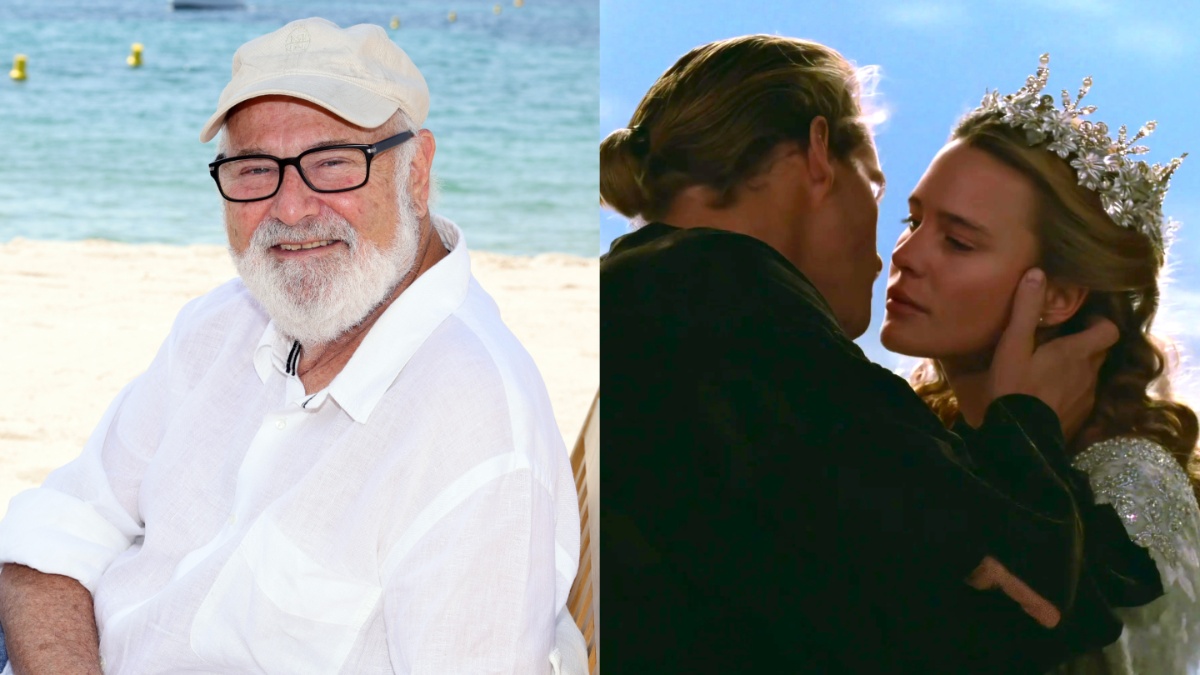
When most people think of the great directors of the ’80s and ’90s, they’ll probably list names such as David Lynch, Steven Spielberg, and Ridley Scott. These filmmakers all had distinctive styles, so much so that their work could be identified in a single frame. The same could not be said of Rob Reiner. He doesn’t fill his movies with surreal dream sequences, moments of characters looking on in awe, or even a little dry ice. And yet, Rob Reiner did what any great director should do. He made great movies. Some of the best of all time, in fact.
Reiner’s run from his directorial debut via This is Spinal Tap in 1984 through A Few Good Men in 1992 stands as one of the most impressive streaks in cinema history. Nor did his great work stop at the end of that run, as he still had The American President and Ghosts of Mississippi come out in 1995 and 1996, respectively. What made these films classics wasn’t a series of easily recognizable tics or bombastic camera work. It was just an innate understanding of how to bring a story to life, no matter what the genre may be.
Another Type of Auteur
For evidence, let’s look at the four films that concluded Reiner’s miracle run: The Princess Bride (1987), When Harry Met Sally… (1989), Misery (1990), and A Few Good Men (1992). All four live forever in cinema history, each with oft-quoted lines—”I’ll have what she’s having;” “you can’t handle the truth!”—and iconic moments, such as Wesley’s battle of wits with Vizzini or Annie hobbling Paul. Yet all four belong to wildly different genres and have starkly different tones.
How did Reiner manage to do justice to them each? By putting the story and characters first—which isn’t always considered a priority, at least not to cinephiles discussing their favorites.
Too often, discussions about great directors subscribe to the simplest version of the auteur theory, that famed approach that compares the director of a movie to the author of a book. While the specifics of the term have been debated since even before critic Andrew Sarris crystalized it Stateside in 1962, auteur theory tends to treat individualist and distinctive works as inherently good on at least some level. Thus Rob Zombie‘s The Devil’s Rejects or Tim Burton‘s Alice in Wonderland earn some sort of respect simply because they reflect the vision or demonstrable sensibility of their directors, even if the actual stories they tell are trash.
Character Over Action
Reiner always put the story first, and constructed his shots to emphasize the clarity of the character’s emotions and the plot beats unfolding. Take for example the great fight sequence between Wesley (Cary Elwes) and Inigo Montoya (Mandy Patinkin) in The Princess Bride. The scene provides all the necessary information that viewers need to understand the conflict. We know where the two combatants are in relationship to each other, where they are in the geography of the arena, and what they want from the fight: Wesley wants to get by to rescue Buttercup (Robin Wright) and Inigo wants to kill him on the orders of his boss.
Even though fight scenes have become hyper and kinetic over the past decades, this 1987 clash still thrills. Reiner takes time to show how the two fighters tease one another out, how they gain and lose advantages. He sets up each reveal that the combatants have been using their non-dominant hands so that it creates maximum effect, allowing the stakes, humor, and finally tension to build.
But best of all, Reiner uses the fight scene not just as an entertaining diversion, but as a way to build character. Of course the fight shows how both men have incredible skills. But we also learn about their fundamental decency, despite one working for a braggart who hires his services to an evil prince, and the other apparently being the Dread Pirate Roberts. They are honorable men with legitimate pathos, whose fundamental goodness is only enhanced by their skill and cunning.
In other words, Reiner shoots the sword fight in The Princess Bride not just as the requisite genre pleasure expected from a swashbuckling fairy tale, although it is very much that. He also shoots it as a character drama.
A Subtle Signature Style
That approach drove all of Reiner’s best movies. A Few Good Men had thundering Aaron Sorkin-penned speeches and high-stakes legal maneuvering acted out by movie stars like Tom Cruise and Jack Nicholson, but it gave space for Lt. Kaffee to doubt himself, for Ross to wear the weight of the conflict. Misery is one of the bleakest Stephen King adaptations to hit the screen, but it never lets Annie Wilkes just be a crazy person. Instead it finds moments of humanity in her. When Harry Met Sally… takes its time to allow the title characters, played by Billy Crystal and Meg Ryan, to be fully formed people, not just soon-to-be lovers on a direct course to an inevitable coupling.
To successfully pull off these feats, Reiner often had to get out of the way, so to speak, and let the story unfold. Flashy camera work would have distracted from the sparkling dialogue he got from writers such as Sorkin and Nora Ephron, and it would have diminished the themes that William Goldman and King established in their original works. The movies are better for Reiner’s restraint and prioritization of tone and character.
Sadly, such restraint means that Reiner rarely got the praise he deserved, even in his prime. It often felt more like an interesting bit of trivia than a recognition of greatness when cinephiles pointed out that the guy who made Misery also made The Princess Bride, When Harry Met Sally…, and A Few Good Men. All back to back.
But anyone who brought such enduring classics to the screen deserves praise, even if no one style or image defines his work. The word “auteur” doesn’t capture what he did so well, but “magic” just might.
The post Rob Reiner: One of the Great Directors Who Defied the Myth of Auteurs appeared first on Den of Geek.