By
By 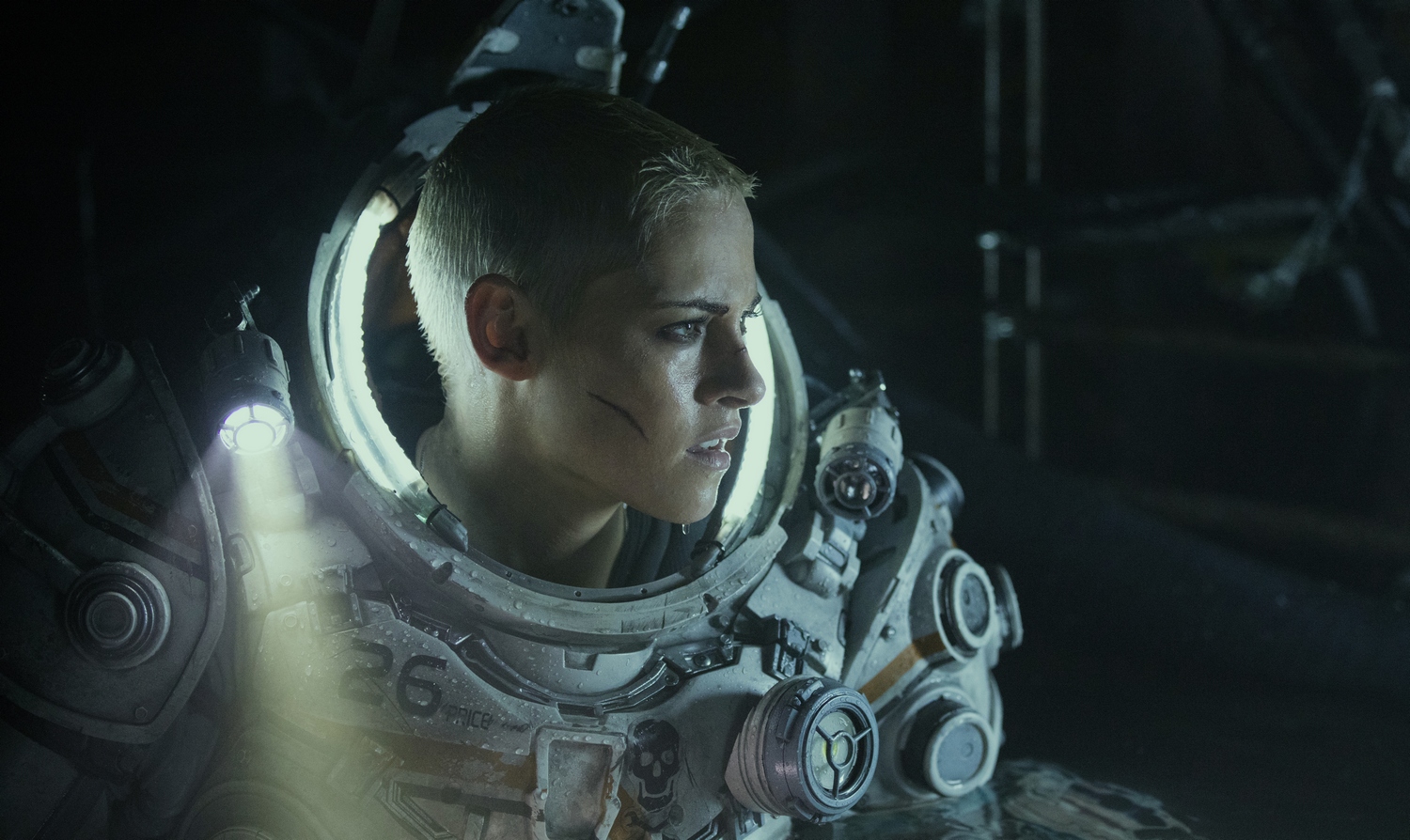
You probably know Kristen Stewart as the star of such Hollywood films as Underwater, Panic Room, and, of course, the Twilight franchise. But did you also know that Kristen Stewart starred in a pair of movies for French auteur Olivier Assayas, Clouds of Sils Maria and Personal Shopper? Did you catch her committed role in director Rose Glass’ deliriously beautiful Love Lies Bleeding? Have you seen her directoral debut from this year, The Chronology of Water?
Probably not, and for Stewart, that’s not just a problem unique to her. “We’re at a pivotal nexus because I think we’re ready for a full system break,” Stewart told the New York Times, “and I mean that across the board, and also specific to the world I live in, which is very exclusively the entertainment industry.” In response to the domination of blockbuster tentpoles and safe franchises, Stewart proposes a unique fix: “I think we need to, sort of, start stealing our movies.”
Few people are better qualified than Stewart to speak on the state of the industry. Although only 35 years old, Stewart has been working in Hollywood for nearly three decades, first appearing on screen in an uncredited role in the 1999 Disney Channel movie The Thirteenth Year. In the years since, she has starred in one of the most successful franchises of the 2000s and also one of the most forgettable with 2012’s Snow White and the Huntsman. And if she needs to reach out beyond her own experience, Stewart can consult her father-in-law Nicholas Meyer, the guy who revitalized Star Trek by directing Wrath of Khan.
That perspective allows Stewart to see changes in the movie industry. And she doesn’t like what she sees. Even despite the good work done by unions (“trust me, we would not survive without them,” she emphasizes), it has become “so impossible for people to tell stories,” Stewart contends. She describes the current state of the industry as a “capitalist hell, and it hates women, and it hates marginalized voices, and it’s racist, and I think that we need to figure out a way to make it easier to speak to each other in cinematic terms.”
Although she notes that some filmmakers are in the “exclusive and rarified, novel position” to tell interesting stories, they are almost all male, such as her Crimes of the Future director David Cronenberg and Spencer director Pablo Larraín.
It’s hard to disagree with Stewart’s observations. In the United States, the highest-grossing films are all tired franchise entries, such as Lilo & Stitch, The Minecraft Movie, Zootopia 2, and Jurassic World: Rebirth. Although Ryan Coogler got a rare hit from a non-white filmmaker in Sinners, all of the other filmmakers getting their movies in theaters are men: Paul Thomas Anderson with One Battle After Another, Zach Cregger with Weapons, and Josh Safdie with Marty Supreme. The few exceptions this year, such as Chloé Zhao’s Hamnet, only prove the rule. And the recent purchase of Warner Brothers by Netflix only further consolidates the industry, making change harder.
And so Stewart wants to look out for herself. “The next movie I wanna make: I want to do it for nothing, I want to make not a dollar, I want it to be a smash hit, do you know what I mean?” she revealed. “I’m just trying to think of some weird Marxist, communist-like situation, that other people can definitely think, ‘Oh, of course, this psycho is saying that,’ but I think it’s possible.” For the future of cinema’s sake, we hope she’s right.
The Chronology of Water is now in limited release in some cities.
The post Kristen Stewart Says Directors Need to Steal Their Movies, and She’s Right appeared first on Den of Geek.