By
By 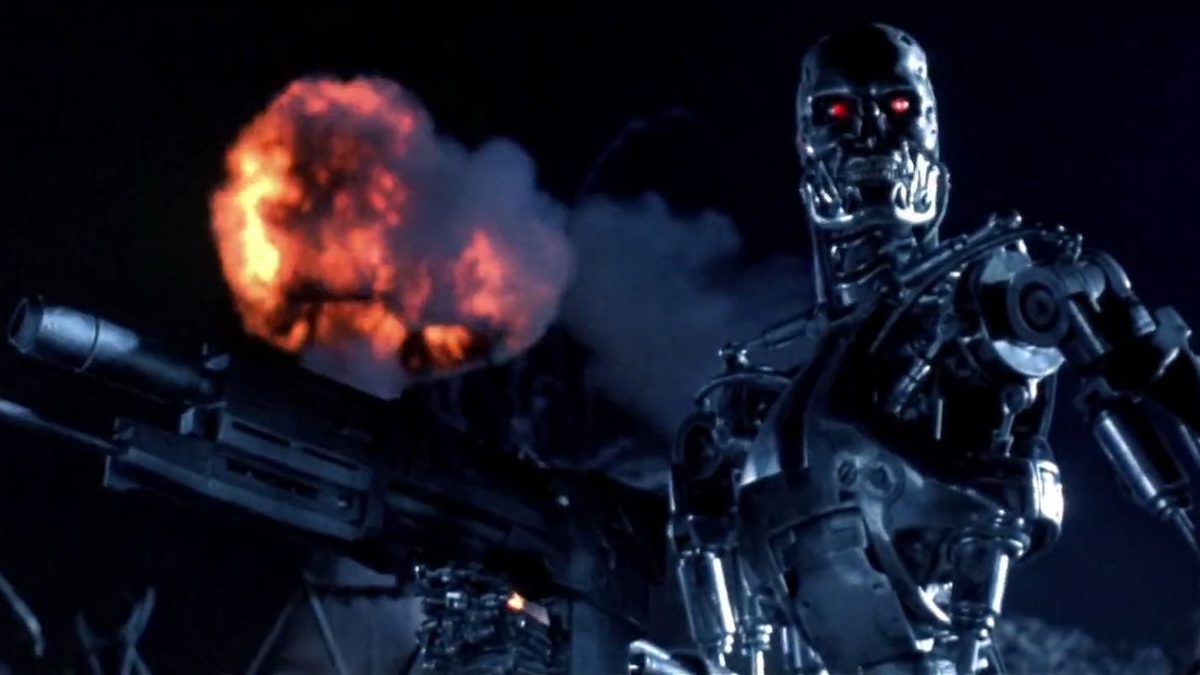
In the historical text known as Terminator 2: Judgment Day, it takes a T-800, a breakout, and an assault on the home of Miles Dyson to keep the AI Skynet from coming self-aware. For James Cameron, the man who wrote and directed T2, all it really takes is a little bit of self-control.
“I think there’s a great deal of caution around generative AI. I think we as an industry need to be self-policing on this,” Cameron argued on Matthew Belloni podcast The Town. “I don’t see government regulation as an answer. That’s a blunt instrument. They’re going to mess it up.”
“I think the guilds should play a big role. I think the directors guild and the actors guild should play a big role in this just as they did,” he continued, pointing to the recent actors strikes that “definitely drove a flag in the ground” on the subject. Apropos of his insistence that the Avatar performances carry on the work and personality of the original actor, Cameron examines AI from a humanistic perspective.
“It’s not a question of what we can legally do, or even ethically what we should do. It’s a question of what we morally should do, how we should embrace and celebrate ourselves as artists, and how we should set a set of artistic standards that celebrate human purpose. Because the overall risk of AI in general… is that we lose purpose as people.”
Such nuanced takes are rare in the AI conversation, but Cameron has always understood the tension between humanism and technological advancement. He may make giant blockbusters with high-cost special effects, and he may tell stories about cutting-edge technology—whether it be the T-800 or the Titanic—but Cameron always puts humanity first. His movies are about the mother and child bond formed between Ripley and Newt, the romance between Jack and Rose, or the found families in the Avatar franchise. Cameron may be interested in the next invention or device, but only to the degree that it aids humanity.
That level of nuance allows Cameron to make important distinctions when discussing AI. “Everybody sort of conflates AI, especially people that don’t work in it, don’t really know it, but there’s really two massively different flavors of AI,” he points out. “There is artificial super intelligence—which we don’t quite have yet, but people see pathways to it and they’re going full tilt boogie toward it.” Cameron insists that he doesn’t support artificial super intelligence “without guardrails” because “it will be Skynet.”
Shocking as it is to hear the man who created Skynet talk about real-world Skynet, that point about guardrails cannot be ignored. Ultimately, Cameron believes that it’s up to us, the people whose lives are affected by AI and other tools to figure out what we want from it.
Because, as Sarah Connor said at the end of T2, “The future is not set. There is no fate but what we make for ourselves.”
The post James Cameron: Only Self-Policing Will Prevent AI From Becoming Skynet appeared first on Den of Geek.