By
By 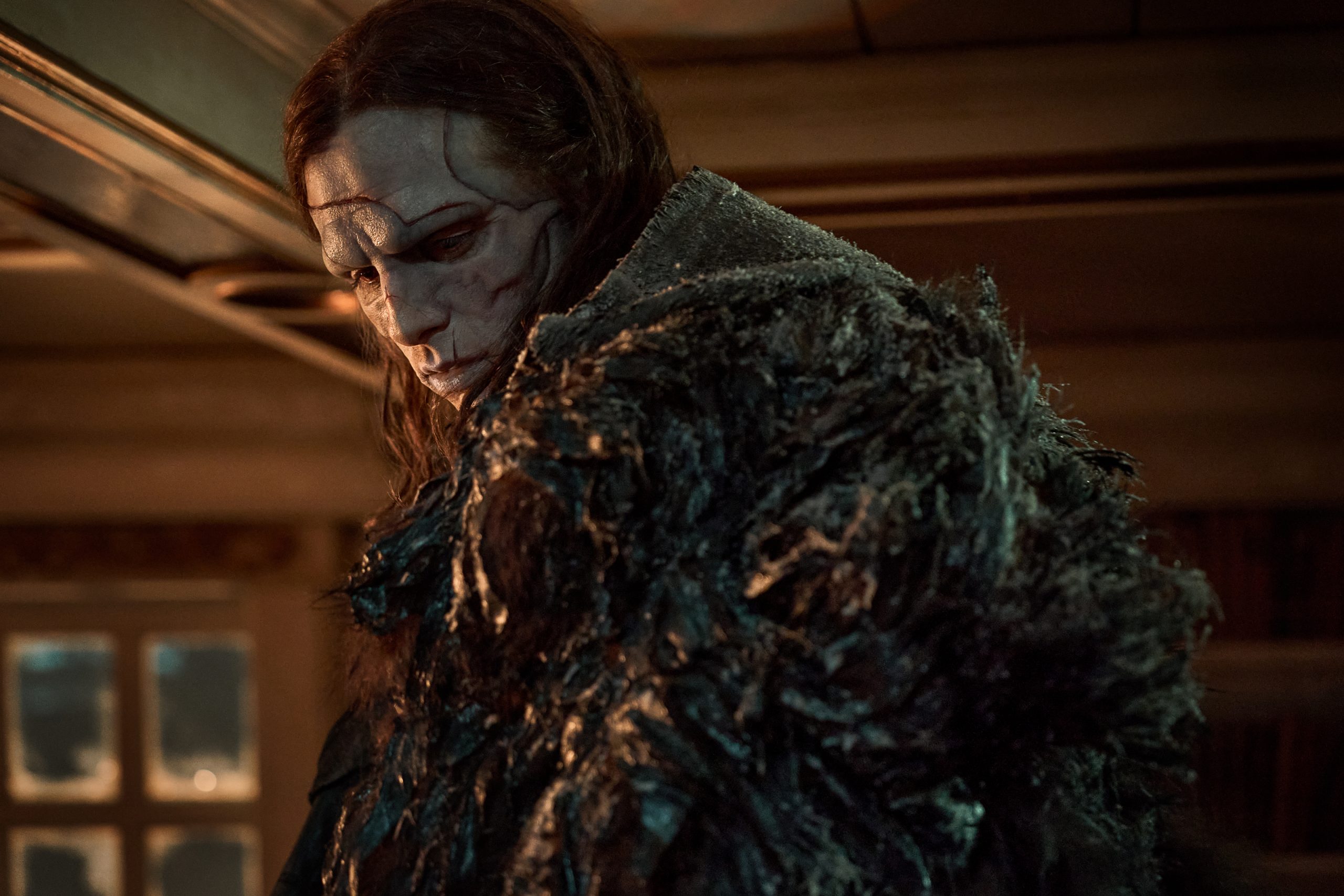
Frankenstein (2025)
Only monsters play God.
After years of delays and false starts, Guillermo del Toro’s long-awaited passion project has finally come to life. Frankenstein, arriving on Netflix, adapts Mary Shelley’s 1818 novel Frankenstein; or, The Modern Prometheus through the director’s unmistakable gothic sensibility. The result is a dark, ornate meditation on creation, monstrosity, and the crushing weight of ambition — a story del Toro has been waiting decades to tell.
In 1857, the Royal Danish Navy vessel Horisont becomes trapped in Arctic ice. Its crew brings aboard a gravely injured Victor Frankenstein (Oscar Isaac), who insists he is being hunted by the being he brought into the world. As he heals, he begins recounting how his life’s grand experiment descended into ruin.
Raised under the stern expectations of his aristocratic father (Charles Dance) and haunted by his mother’s death, a young Victor immerses himself in the study of life and death. His brilliance — and arrogance — lead to expulsion from the Royal College of Surgeons after a grisly reanimation attempt. Later, a mysterious arms merchant, Henrich Harlander (Christoph Waltz), funds Victor’s secluded laboratory, enabling him to continue his forbidden research in isolation. There, he assembles a towering figure from the remnants of the dead and, in a lightning-charged ritual, succeeds in giving it life. The newborn Creature (Jacob Elordi), confused and mistreated, soon escapes into the wilderness. What follows is a rising tide of violence, guilt, and pursuit that drives Victor across continents — bringing him back to the frozen desolation where the film opens.
Just a little light body work.
Del Toro’s Frankenstein is steeped in the themes that have defined his career: the outsider yearning for humanity, the wounds of the father-creator relationship, and the unsettling recognition of our own monstrous reflections. The Creature is no mere antagonist — it is rendered as a being of innocence, sorrow, articulate fury, and profound loneliness. Del Toro places its perspective closer to the center than many past adaptations, giving full weight to the centuries-old question: what does it mean to be human?
The film also sharply examines the perils of unchecked ambition. Victor Frankenstein emerges as a brilliant yet deeply egotistical figure whose attempt to conquer death becomes his tragic downfall. Del Toro underscores not just the audacity of creation, but the suffering that follows when a mortal assumes the role of god. Mythic and religious undercurrents flow throughout — the Catholic-Latin sensibility of guilt, rebirth, and doomed yearning lingers at the edges of every major choice.
Yet, for all its thematic richness, the film occasionally reveals the strain of its own vast ambitions. Del Toro reaches for emotional intimacy, gothic spectacle, and philosophical depth all at once, and at times the narrative struggles to contain everything it wants to express.
Visually, however, Frankenstein is ravishing. Cinematography by Dan Laustsen — a long-time del Toro collaborator — conjures gothic palaces, icy wastelands, storm-lit towers, and candle-soaked interiors with painterly beauty. The art direction pulls from classic Hammer horror, early Universal monster cinema, and del Toro’s own stylized world — think Crimson Peak (2015) or The Shape of Water (2017). The Creature’s design draws heavily from Bernie Wrightson’s iconic illustrations and del Toro’s decades of sketchbook studies. Alexandre Desplat’s score complements the imagery with sweeping, emotionally driven compositions rather than cheap shocks. Despite this technical brilliance, the film’s generous 150-minute runtime allows certain subplots to wander, occasionally diluting the emotional through-line beneath the grand spectacle.
Oscar Isaac delivers a charismatic yet tormented performance as Victor Frankenstein, infusing the role with a potent mix of arrogance, intelligence, and spiraling self-loathing. Jacob Elordi is excellent as the Creature — he shifts fluidly between brute physical power, wounded vulnerability, and moments of soul-deep eloquence, forming the emotional core of the film. Among the supporting cast, Mia Goth delivers a quietly affecting presence in dual roles — as Elizabeth Harlander, the gentle fiancée of Victor’s younger brother William, and as Baroness Claire Frankenstein, the boys’ late mother whose death casts the first shadow over Victor’s life. Christoph Waltz is slick and unnerving as Henrich Harlander, the arms merchant whose charm masks a predatory opportunism. Charles Dance adds formidable gravitas as Leopold Frankenstein, his icy authority illuminating the pressures that shape Victor’s obsessions. Even David Bradley, in a small but pivotal role as a blind hermit, provides one of the film’s gentlest, most moving sequences.
“Feeling a little patchy today.”
Frankenstein is a compelling and beautifully crafted adaptation of Shelley’s novel, shaped with the unmistakable vision of Guillermo del Toro. It presents monster-myth in grand, operatic fashion, enriched by thematic depth, strong performances, lavish design, and an earnest exploration of creation and responsibility. Yet despite its many strengths, it never quite reaches the transcendent emotional clarity of del Toro’s finest achievements. At times, its sheer scale softens its intimacy, and a handful of pacing choices loosen its momentum. As a work of gothic cinema, it is richly atmospheric and artistically bold; as an entry in del Toro’s filmography, it lands just shy of the singular heights of Pan’s Labyrinth (2006) or even 2008’s Hellboy II: The Golden Army.
Nonetheless, Frankenstein remains a resonant, visually sumptuous, and often moving odyssey — a grand meditation on humanity’s darkest impulses and deepest desires.
4 / 5 – Recommended
Reviewed by Dan Cachia (Mr. Movie)
Frankenstein is currently streaming on Netflix