By
By 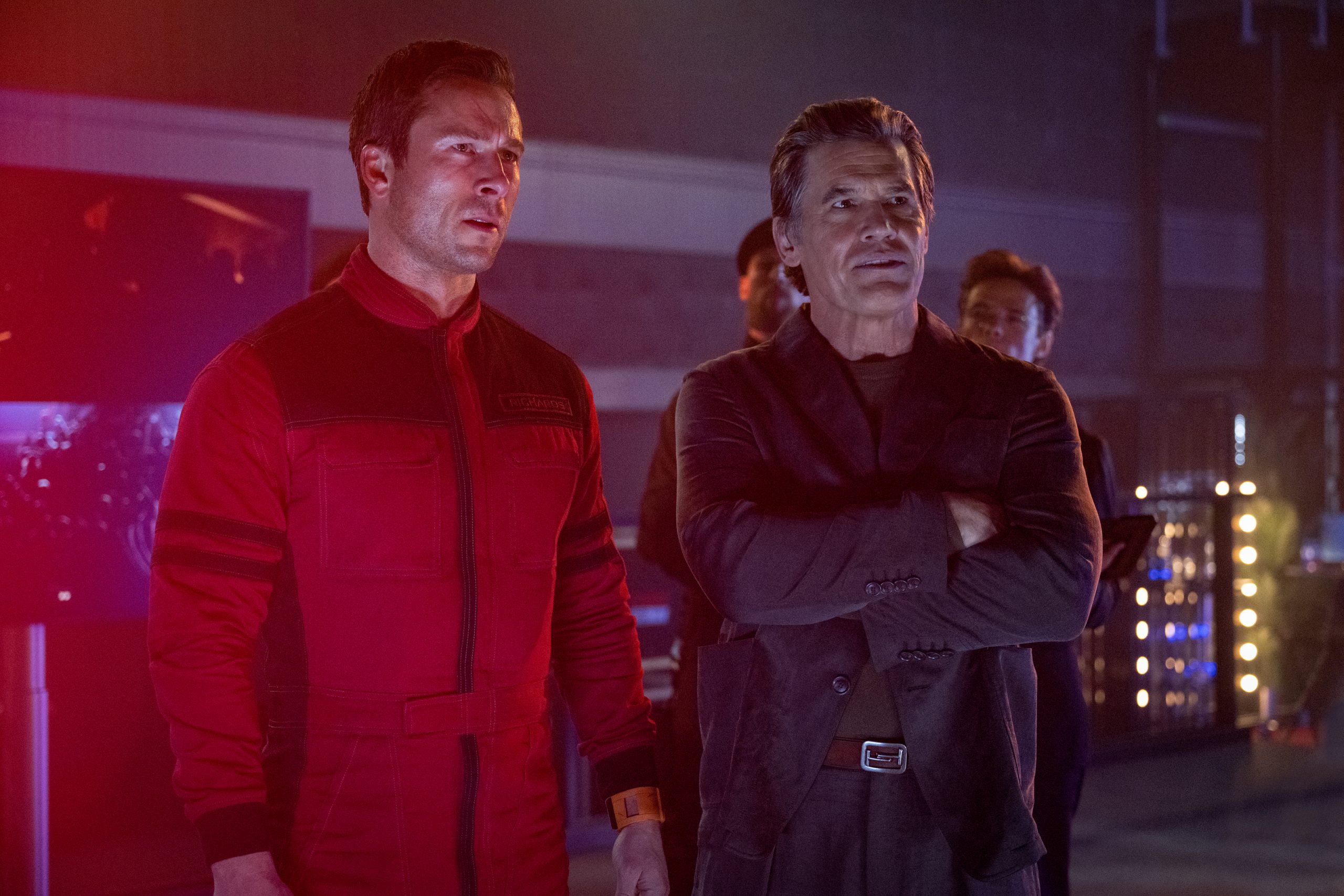
The Running Man (2025)
Hunt him down.
Stephen King’s 1982 novel The Running Man (written under his Richard Bachman pseudonym) is back on screen again, this time via Edgar Wright, who’s promised a version closer to the book than the 1987 Arnold Schwarzenegger vehicle. That earlier film remains a neon-sprayed cult item; Wright’s take keeps the dystopian game-show hook but reframes it as a road-movie-meets-media-machine chase, with Glen Powell as the luckless “runner” Ben Richards.
Set in a near-future where ratings rule and poverty keeps most people on their knees, The Running Man follows Ben Richards (Glen Powell), an out-of-work construction worker who volunteers for a lethal TV game show: survive 30 days while being hunted by state-sanctioned killers and win a life-changing prize. He doesn’t join on a whim — his wife Sheila (Jayme Lawson) and their sick daughter are trapped in the underclass, and the show offers the only way out: a staggering payout and a slim chance to lift his family from ruin. As the chase unfolds, Richards becomes an unwilling symbol of resistance, turning the network’s own machinery against itself while fighting to stay alive and save those he loves.
Bloodsport, brought to you by upper management.
Unlike the arena-bound ’87 film, this version expands the hunt across sprawling cities and desolate badlands, weaving in a resistance network, corrupt executives, and a public addicted to blood-sport. Wright and co-writer Michael Bacall frame The Running Man as a relentless, cross-country chase built from escalating set pieces rather than a single confined arena. Each new environment — from dense apartment blocks to a trap-rigged rural house and stretches of abandoned roads — brings a fresh kind of pursuit and its own deadly game. The broad strokes stay faithful to King’s contest-as-class-war premise while updating the show’s mechanics — and its rewards — for our algorithmic age. The structure feels episodic but purposeful, mirroring the 30-day countdown that keeps tightening around Richards. It’s punchy and propulsive, and when it clicks, you can feel the show’s machinery grinding him down while newsfeeds, live streams, and viral clips keep the public hooked on every drop of blood.
Wright’s hallmark snap — precise cutting, musical rhythm, and visual wit — surfaces in flashes. Paul Machliss’ editing lands several delicious match cuts, and Steven Price’s score throttles between synth chug and orchestral alarm. You still get those “aha” transitions Wright fans live for. But the overall shape is looser, scrappier, and frankly scattered. The film introduces a platoon of side players — William H. Macy as a weary fixer who knows how the system really works; Michael Cera as a nervy rebel contact; Daniel Ezra as a figure in the underground; and Emilia Jones as a civilian who crosses Richards’ path at precisely the wrong moment — only to jettison many of them minutes later. Entire subthreads — from resistance fighters to the show’s behind-the-scenes media manipulation — flare and fade. The film strains to be King-faithful, gamer-kinetic, and mass-audience rousing all at once — and sometimes the gears grind.
The deadliest dress code on television.
Visually, Chung-hoon Chung’s photography trades the candy-bar glow of Wright’s Baby Driver (2017) for a harsher, industrial palette washed in metallic greys, deep blacks, and streaks of searing red — the show’s signature color bleeding through every frame. Neon signage, LED billboards, and rain-slick asphalt give the world a bruised, dystopian sheen, while the lighting often drenches scenes in crimson to echo both the show’s branding and its violence. The production design by Marcus Rowland builds modular TV-set environments that blur reality and spectacle, and the blend of practical stunt work with CG augmentation gives the action a sturdy, bruising tactility. It’s violent and often properly gory — headshots, sprays of blood, bodies set ablaze — but Wright keeps the tone just on the right side of pulp: you wince, then smirk at the audacity.
Powell is excellent: less invincible superhero, more battered everyman — a tone that suits this iteration perfectly. He wears fear, exhaustion, and that stubborn run-again grit with conviction, and he’s agile in Wright’s quick rhythm changes. Colman Domingo is the other MVP: as velvet-voiced host Bobby Thompson, he silkily embodies the show’s moral rot — the smile that sells a lynching — and he’s magnetic every time the camera hands him the mic. Around them, Lee Pace is all elegant menace as Evan McCone, the masked lead hunter whose cold precision and theatrical flourish make him a threat. Josh Brolin’s Dan Killian, the show’s calculating producer, convinces even when his arc feels trimmed; his ruthless pragmatism grounds the spectacle’s chaos. Michael Cera is having a blast as Elton Parrakis, a nervy underground contact whose jittery energy and anti-show cynicism lend the film flashes of irony and levity. Daniel Ezra’s Bradley Throckmorton, part of the resistance movement aiding Richards, and Katy O’Brian’s Laughlin, one of the fellow contestants trapped in the system, both punch above their minutes, injecting grit and humanity into the margins.
Hood up. Guard up. World against him.
Wright’s The Running Man is a high-octane, blood-spattered remix that cuts closer to King’s bitter heart than the ’87 cult classic, even as it stumbles over its own moving parts. The cast — led by a dynamo Glen Powell and a magnetic Colman Domingo — delivers across the board; the look is raw and alive, and the satire still bites whenever the film stops juggling and simply runs. Yet it often feels like it’s constantly rebooting itself: characters arrive with fanfare and disappear with a shrug, the resistance thread drifts in and out of focus, and the final stretch, while thematically tidy, lands structurally uneven. The movie is always in motion — playing with tones, subplots, and a deep bench of half-used players — but when it locks in, it’s exhilarating. As a Friday-night hit of slick dystopian mayhem, it absolutely works. As a cohesive whole, it stumbles.
3.5 / 5 – Great
Reviewed by Dan Cachia (Mr. Movie)
The Running Man is released through Paramount Pictures Australia
![The Last Letter From Your Lover [2021] ★★](https://recognizecity.com/wp-content/uploads/2021/07/The-last-letter-from-your-lover-netflix-scaled-1-e1626786231353-300x177.webp)