By
By 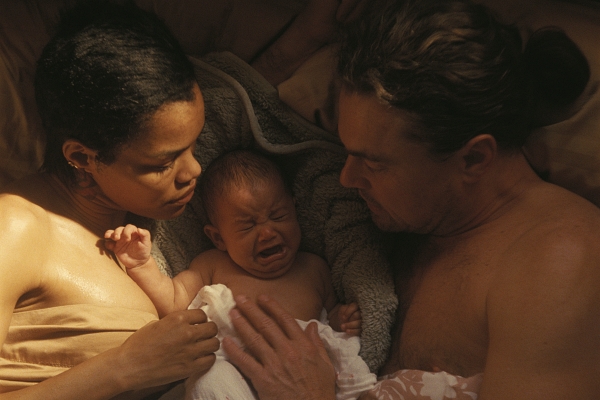
Possessed with a revolutionary spirit, One Battle After Another is both Paul Thomas Anderson’s funniest film and one of his most urgent. The director’s tenth feature, starring Leonardo DiCaprio and Sean Penn in a two-hander with deadly consequences, marks his first return to a fully contemporary setting since his early career. Gone is the gauzy haze and nostalgia of period pieces; here, he plants his flag in a rawer, more immediate America. One riddled with problems. Anderson wraps the plot around our current sociopolitical anxieties, marrying a blisteringly sharp vision of unchecked government agencies playing Cowboys and Indians with real-world immigrant struggles. But at its core, One Battle After Another is a story about a father trying to protect his daughter, the kind of premise that in lesser hands would be played straight as genre: a simple man-on-a-mission revenge story. What could have been a standard Taken-esque snatch-and-grab thriller takes on towering dimension in PTA’s visionary hands. He uses the political backdrop not just for setting, but as a launchpad for a statement about America that is incisive, inflammatory, and deeply satirical. Gut-bustlingly so on many occasions, including a scene where white supremacists invoke the term “semen demon” with terrifying sincerity. The absurdity doesn’t undercut the message; it sharpens it.
The film begins with revolution. Perfidia Beverly Hills (Teyana Taylor) leads the French 75, a militant collective openly waging war on the U.S. government — specifically, its detention and dehumanization of undocumented immigrants. Among her crew is Bob, a.k.a. Rocket Man (Leonardo DiCaprio), a skilled yet aimless incendiary who drifts into Perfidia’s orbit. The two fall into a chaotic romance, fueled by post-bombing coitus. Their anti-establishment operations grow increasingly complicated with the arrival of a child. Further muddying the waters is Colonel Steven J. Lockjaw (Sean Penn), a highly decorated, I.C.E.-esque commander whose obsession with Perfidia slips quickly from professional to personal. They hook up. The resulting love triangle sets off a chain of consequences that ripple forward for years.
Sixteen years later, Bob is a drug- and alcohol-addled bumpkin, wasting away on a couch and reliving his revolutionary glory days by streaming movies like The Battle of Algiers. His teenage daughter, Willa (Chase Infiniti), sees him as little more than a washed-up paranoiac – a nobody who forces her to memorize secret codes, avoid smartphones, and rely on low-tech tracking devices, all in case “the past comes knocking.” And she’s not wrong. He reeks of last night’s bender and secondhand vape. Their family has clearly undergone some kind of quiet, prolonged upheaval; a jolt from revolutionary to just, well, revolting. But when that past finally does come knocking, Bob and Willa are forced into the center of a conflict with all the weight of biblical retribution.
At first, their exploits all feels weirdly consequence-free. The French 75 seem to operate in a vacuum where danger is stylized and romantic, like youth itself. There are no sirens, no cops, no helicopters overhead. Just Bob and Perfidia, fucking on the fender of the getaway car as explosions ripple through the background; the stick-man and his revolutionary girl, energized by the thrill. But once baby Willa arrives, the illusion collapses. Suddenly, everything is consequence. Trouble begins to circle, and one battle after another no longer sounds like a mission statement. It sounds like a curse. The attacker becomes the attacked. The players are forced onto defense.
Only an auteur like Paul Thomas Anderson could conceive and execute a film like One Battle After Another at this level. It is so tightly wound, so fine-tuned, every scene humming with energy. And at nearly three hours long, the thing never once drags. There are no superhero landings, no orgiastic shootouts, just a constant, low-boiling tension that feels entirely earned, complemented by Jonny Greenwood’s ticky, anxious score. The world PTA creates is a kind of heightened reality that still feels unmistakably like our own. And within it, the characters’ tics and idiosyncrasies are sketched with such specificity that the whole thing feels lived-in and complete from the very first frame. Every moment is locked in place, like a Rube Goldberg machine powered by paranoia and ruinous longing.
The world-building is especially sharp. You have secret societies, fringe militias, and absurd layers of underground bureaucracy. Among them is the Christmas Adventurers, a cult of white supremacists hiding deep within the layers of their mom’s literal basements while quietly pulling the levers of power. They are terrifying but also pathetic, a bunch of men in matching Patagonia vests running the world on a steady diet of murder, xenophobia, and (probably) Mountain Dew. They are Colonel Lockjaw’s dream employer because of course they are. The script, cowritten by previous collaborator (Inherent Vice) Thomas Pynchon, makes them funny without softening their danger. Their idiocy is part of the threat.
Alternatively, the French 75 live in a similarly absurd world of cringe-worthy rules and coded behavior. They require their own secret passcodes and procedural nonsense, like a bunch of overgrown kids LARPing the revolution. A sense of arrested development roams free on both sides. The scary part is that one of these sides has actual government funding; the state handing out murder toys to unhinged men and labeling it domestic enforcement policy.
The performances across the board are fantastic, starting with DiCaprio, who spends much of the film staggering around in a plaid bathrobe and oversized sunglasses, sweating out a decade of bad choices. His aura is frantic, freaked, and frazzled, but there is something deeply human under the mess. He leans into the character’s inept mania without losing sight of Bob’s love for his daughter, which grounds the film emotionally. This is not Taken. Bob is no ex-spy with a special set of skills. He is a washed-up revolutionary who can barely function, but he will still throw himself into the fire for his kid. Opposite him, Sean Penn plays it tight and volatile. Strait-laced, musclebound, and seething, he is a military man with a god complex, obsessed with control, and convinced that domination equals affection. It is one of Penn’s best performances in years.
Around them, the supporting cast shines. Benicio Del Toro floats in as a world-weary, effortlessly chill sensei running his own Mexican Underground Railroad Chase Infiniti, playing Willa, is a revelation. Though in her twenties, she fully sells the teenage angst and quiet resilience. Her arc, growing into her mother’s revolutionary spirit, gives the film its spine and she handles it with a kind of adaptability that makes her transformation feel both inevitable and earned. And then there is Teyana Taylor, who erupts on screen every time she appears. Charismatic, sharp, and impossible to look away from, she delivers the kind of breakout performance that makes you wonder why you’ve never seen her onscreen before and wonder what you’ll see her in next.
Performances like these work so well because they are embedded in a film that is just as daring in its construction. The structure is wild. The pre-title sequence alone could have been an entire movie, or at least the first half of one. But PTA’s script barrels through a mountain of plot right out of the gate, then hits the brakes and lets everything breathe once the real story begins. He shoots it all with masterful control. The film is pure chaos on the surface, but Anderson shapes it with a precision that feels surgical.
Nowhere is that more evident than in one of the most original car chases in recent memory. A rollicking rollercoaster of dizzying landscapes through an almost alien landscape, this scene is kaleidoscopic, electrifying, and impossible to look away from. Or in a rooftop escape sequence, painted in surreal sunset tones, like a dream unraveling in real time. But beyond the formal brilliance, the film has a beating heart. It feels essential. Urgent. By centering the story on immigration, it gains a pulse that syncs with the moment we are living through. In these MAGA-soaked, fascist-curious times, the film does not ask the audience to pick a side between the French 75 and the Christmas Adventurers. It simply insists that both exist. And that, to borrow a phrase, the time for turning your head and pretending not to see has long passed.
CONCLUSION: ‘One Battle After Another’ is another masterwork from American auteur Paul Thomas Anderson, who turns his incisive storytelling toward contemporary America and uses it as a battle-bound backdrop for a story about fighting for what matters. Every single thing works.
A
For other reviews, interviews, and featured articles, be sure to:
Follow Silver Screen Riot on Letterboxd
Follow Silver Screen Riot on Facebook
Follow Silver Screen Riot on Twitter
Follow Silver Screen Riot on BlueSky
Follow Silver Screen Riot on Substack
The post ‘ONE BATTLE AFTER ANOTHER’ Vives la Révolution In PTA Style appeared first on Silver Screen Riot.