By
By 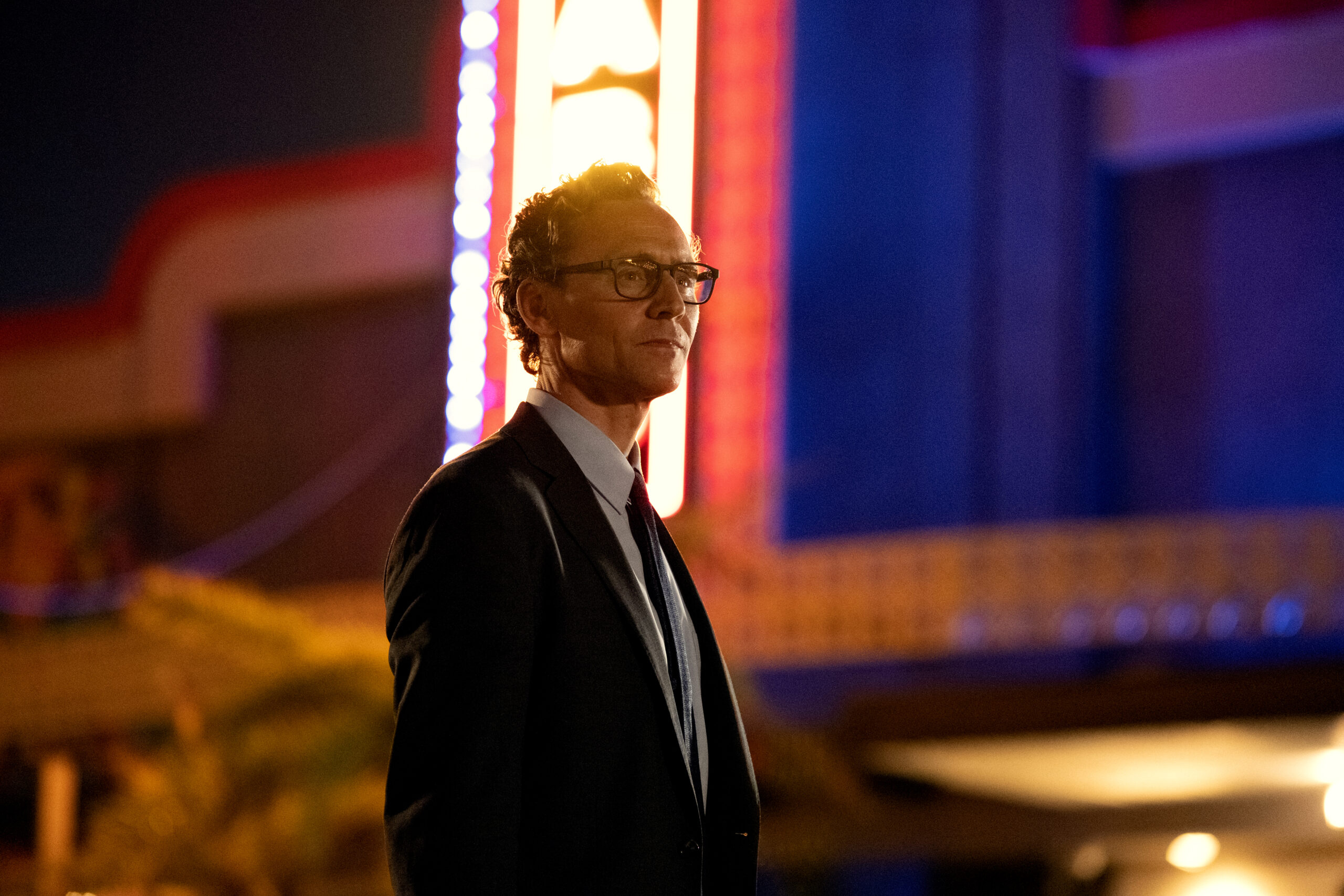
The Life of Chuck (2025)
Every life is a universe all its own.
Mike Flanagan has built his reputation on horror as emotional therapy, from Doctor Sleep (2019) to The Haunting of Hill House (2018). With The Life of Chuck, he sidesteps haunted corridors for something more delicate: a triptych about mortality, memory, and the ripple effects of a single life. Adapted from Stephen King’s novella, it’s one of his most ambitious works — a film that dares to be loose, uneven, and deeply human, often moving and sometimes transcendent.
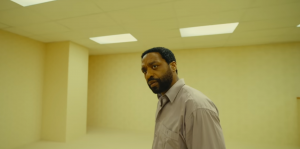
Told in reverse, the story opens at the end of everything. The world is shutting down — power grids flicker, the internet dies, reality itself begins to collapse. Across this backdrop, a billboard appears: “39 Great Years! Thanks, Chuck!” Who is Chuck Krantz, and why does his farewell feel so personal? Chiwetel Ejiofor plays Marty, a middle-school literature teacher, and Karen Gillan portrays Felicia, Marty’s ex-wife and a hospital nurse. Together, they anchor the opening passages with quiet empathy and humanity. Given the end-of-days backdrop, Flanagan resists grandiosity, framing the apocalypse not as spectacle but as a slow fade-out, eerily familiar in its ordinariness.
Not yet the end … not quite the beginning.
From there, the film pivots into Chuck’s middle years, where he’s embodied with surprising freedom by Tom Hiddleston. At a banking conference, he’s overtaken by a street drummer (Taylor Gordon, The Pocket Queen), and in a moment of abandon drops his briefcase and dances. What follows is a five-minute sequence choreographed by Emmy-winner Mandy Moore, where Hiddleston and Annalise Basso (as Janice, a young woman fresh from heartbreak) spin through jazz, swing, cha-cha, and samba. It’s unpolished and raw, but electrifying — the soul of the movie, joy erupting unbidden and fleeting but unforgettable. Hiddleston’s physicality and vulnerability here are refreshing — a man in a gray suit, sweating through the Alabama asphalt, shoes worn through from exertion, yet lighter than air in spirit.
The final act returns to Chuck’s childhood, played at different ages by Benjamin Pajak and Jacob Tremblay. It’s here the film lands some of its most poignant beats, including the middle-school Fall Fling where sixth-grade Chuck (Pajak) nervously takes Cat McCoy (Trinity Jo-Li Bliss) onto the dance floor to “Gimme Some Lovin’” by The Spencer Davis Group. Flanagan stages it as something small but incandescent — awkward steps, smiles, and the bravery of choosing joy. Mark Hamill is quietly affecting as Chuck’s grandfather Albie, a man of regrets whose talk of mathematics as poetry plants seeds of wonder in the boy. In a graceful supporting turn, Mia Sara appears as Chuck’s grandmother Sarah, who becomes a bright, musical presence in his life, even teaching him to dance in a moment that ripples forward through the story.
Use the Force … of mathematics.
Flanagan’s direction is the binding force. His empathy is unmistakable, but here it’s paired with tonal risks — moments of looseness, bursts of spontaneity, a reverse chronology that forces the viewer to reckon with endings before beginnings. This choice can feel awkward, but it enriches the story, suggesting that meaning often comes only in hindsight. Mortality is not treated as horror but as context, the frame that sharpens every fleeting joy. By moving backward through Chuck’s life, Flanagan mirrors the way memory works: we discover meaning retrospectively, piecing together significance from the past. What might seem ordinary in the moment — a street performance, a math lesson, a kitchen dance — becomes luminous in retrospect, echoing across decades. The film embraces the idea that we contain multitudes: complex, layered beings whose stories cannot be reduced to a single arc. By presenting Chuck’s life in fragments, Flanagan captures the complexity and quiet beauty that make the ordinary extraordinary.
Long-time collaborator Michael Fimognari’s cinematography helps bind these chapters together, from the eerie, fading landscapes of the opening act to the fluid, flowing camera of the middle years and the gentle glow of childhood. The visual language is understated but effective, providing cohesion to the film’s shifts in time and tone.
There are flaws. Nick Offerman’s narration, while gentle and reflective, sometimes overexplains and blunts the power of Flanagan’s visual storytelling. The middle section’s pacing sags at points, and may test patience as it hovers between poignant and indulgent. And while the film argues that the seemingly trivial can ripple outward with meaning, not every viewer will feel that leap.
Yet what lingers is in its feeling. The Life of Chuck is a film about endings that insists on celebrating beginnings. It’s about fleeting connections, everyday moments that gain meaning in retrospect, and gestures so small they might otherwise be overlooked. Not horror in the conventional sense, but unsettling in its own way — because it asks us to face our own finite span with honesty, and perhaps gratitude. Flanagan has made one of his most vulnerable works: a haunting, hopeful reminder that even the most ordinary life can echo on a cosmic scale.
4 / 5 – Recommended
Reviewed by Dan Cachia (Mr. Movie)
The Life of Chuck is released through Studio Canal Australia