By
By 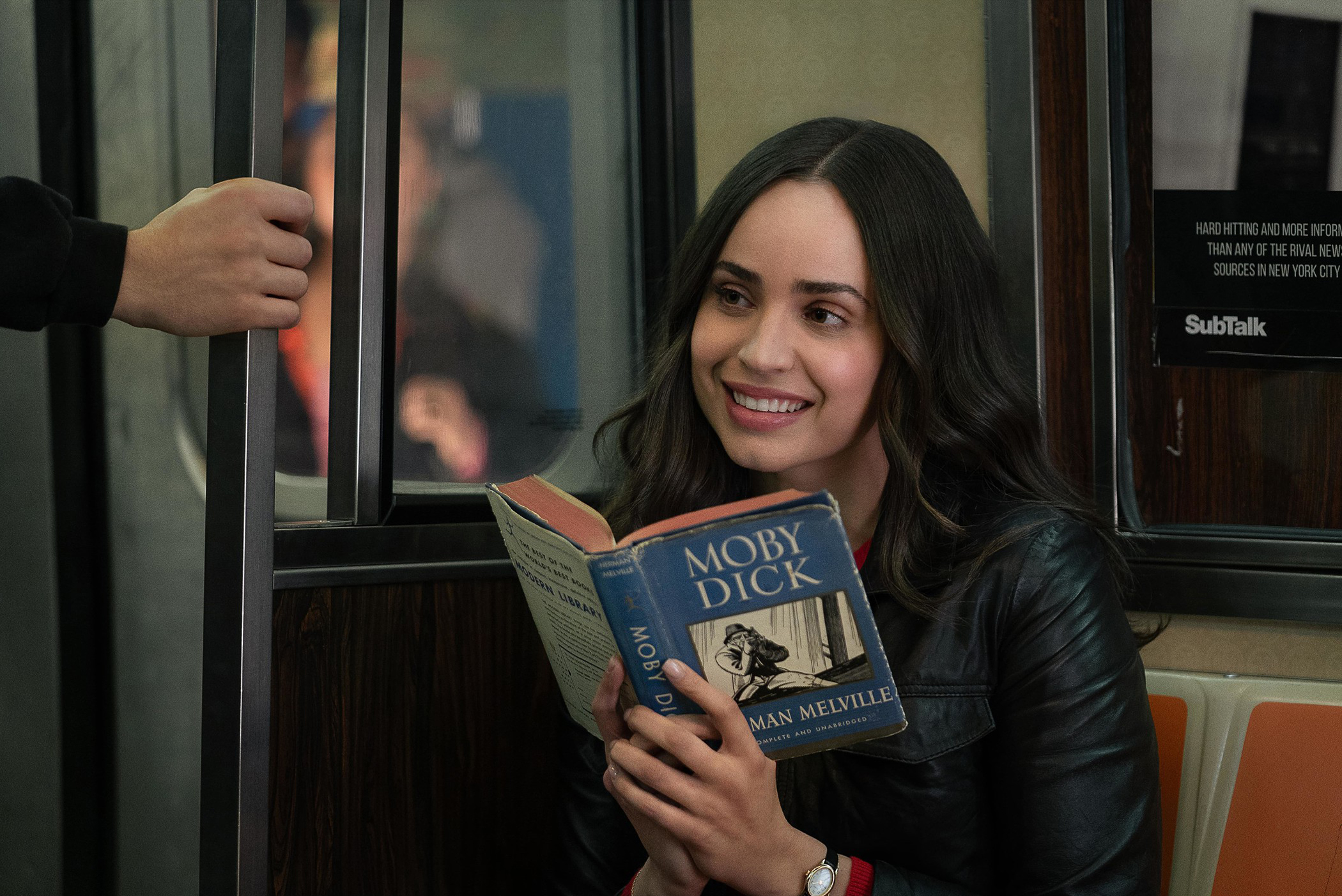
The Life List (2025)
For everyone who’s still figuring it out.
It’s always nice when a film you expect to coast by with clichés actually has more heart, humor and sincerity than you bargained for — and The Life List is exactly that.
Netflix’s The Life List could so easily have been another forgettable romantic drama. The trailer promised glossy comfort viewing, the kind you half-watch while scrolling, and yet Adam Brooks’ film ends up being more thoughtful and heartfelt than expected. Based on Lori Nelson Spielman’s 2013 novel, it blends familiar genre beats with enough sincerity and charm to stand apart. It’s not perfect, but it’s certainly better than it has any right to be, and has more to say than its premise might suggest.
Whale, hello there … Alex is deep in the classics.
The story begins with Alex Rose, played with warmth and vulnerability by Sofia Carson, whose world is upended after the death of her mother Elizabeth, brought to life by Connie Britton in a role that manages to feel commanding and tender even from beyond the grave. Instead of the inheritance and her expected leadership role at Rose Cosmetics, the family beauty empire, Alex is blindsided when the company board removes her, and her mother’s will stipulates something far stranger. Elizabeth leaves her daughter a challenge: complete the “life list” she wrote at thirteen. The items range from the whimsical to the daunting — get a tattoo, perform at an open-mic night, reconnect with her estranged father, fall in love — all the dreams of a teenager who hadn’t yet learned to compromise. On paper, it’s a gimmicky hook, but the film doesn’t treat it that way. Each task becomes a turning point, forcing Alex to confront the cautious, measured life she has built for herself and to rediscover the spark she has long buried.
Carson’s performance is the beating heart of the film. She plays Alex as awkward, funny, and relatable without slipping into caricature. She shines in comedic beats — like the stand‑up open‑mic where she even handles a heckler — yet it’s in the quieter, more introspective moments where she truly impresses. Watching her react to her mother’s recorded words, or struggle to admit her own unhappiness, gives the film its strongest emotional weight. There’s a sincerity here that stops the film from collapsing into cliché.
From bucket lists to lesson plans.
Much of the story’s appeal lies in the romance, and the film wisely gives Alex two very different paths. Kyle Allen’s Brad, the estate lawyer overseeing her mother’s will, is the true love of the film. He’s kind, ambitious, and patient — guiding Alex with encouragement rather than judgment. Allen plays him with warmth and easy charm, and his chemistry with Carson builds gradually until it feels both inevitable and earned. Their relationship may begin from circumstance, but it blossoms into something deeper: a love grounded in mutual respect, emotional openness, and shared values — qualities that ultimately fulfill her mother’s four-point “true love test.”
By contrast, Sebastian de Souza’s Garrett, whom Alex meets through her volunteer work at a shelter school, offers a tempting but fleeting detour. He’s rougher around the edges, spontaneous, and attentive in a way that momentarily fills her need for connection. Their chemistry sparks in a few unguarded moments, but it never quite settles into something lasting. The film resists reducing this dynamic to a cliché love triangle; instead, it uses both relationships to show how Alex learns to tell the difference between a love that distracts and one that anchors her.
Connie Britton, though appearing mostly through video recordings, gives the film its spine. She’s loving, wise, and a little sly, delivering her messages with warmth but also the firm insistence of a mother determined to push her daughter forward. Her presence lingers long after her character’s death, shaping Alex’s journey in ways that feel authentic. There’s also a welcome bit of humour early on from Alex’s boyfriend at the start, Finn (Michael Rowland), whose gamer-bro banter and misplaced priorities give the film some levity before the heavier story beats take over. The family dynamic is rounded out by Alex’s two fathers: Samuel (José Zúñiga), the man who raised her, whose rough, strained relationship with Alex bristles with years of distance and unspoken hurt, and Johnny (Jordi Mollà), her biological father, a musician whose reappearance forces Alex to confront abandonment and forgiveness. Together they provide some of the film’s rawest, most honest emotional beats.
Writer-director Adam Brooks brings a steady, unfussy hand to the material. Best known for writing Definitely, Maybe (2008), he applies a similar sensibility here, keeping the tone light without sacrificing the emotional weight at the story’s core. At just over two hours, the film runs long for a Netflix rom-com, and there are moments where a tighter edit would have sharpened the pacing. Yet for the most part it holds, unspooling as a gentle stroll rather than a sprint. The cinematography by Florian Ballhaus, The One and Only Ivan (2020), leans into warm interiors and glowing city streets, polished but never too slick, creating an inviting visual style that complements the film’s message. There’s a softness to the lighting that gives it the sheen of a studio romance, but moments of intimacy — particularly when the camera lingers on Carson’s expressions — make it feel closer to indie drama than glossy fluff.
Dinner for six, with extra drama on the side.
Thematically, the film works because it doesn’t shy away from its heavier ideas. It’s about grief, yes, but also about the burden of expectations and the compromises adults make when they drift too far from their younger selves. The conceit of a teenager’s dream list shaping an adult’s future is absurd in practice, but as a metaphor it resonates. Each item Alex completes isn’t just about ticking a box, it’s about facing the gap between the life she imagined and the life she has settled into. The film argues, gently but firmly, that those gaps matter, and that rediscovering joy and spontaneity is worth the risk.
Several scenes linger with surprising authenticity: Alex’s stand-up routine at the open mic isn’t a tear-jerking triumph, but a comedic stumble — she’s heckled, awkward, and far from polished, yet her persistence registers as a quietly courageous moment. She also takes a teaching job at a high school within a youth shelter — a position that lets her rediscover her passion and relevance. There’s an impromptu family “sleepout” under the full moon with her brothers Julian (Federico Rodriguez) and Lucas (Dario Ladani Sanchez), where teasing gives way to honest admissions of grief and regret. It may look simple, but the tenderness and tension in that moment bring real texture. Combined with her tempered romantic choice, these moments make the film feel less like a rom-com checklist and more like a lived experience — small, imperfect steps that count for something real.
Counting stars, or just avoiding adulthood?
The Life List doesn’t reinvent the genre, but it doesn’t need to. It’s a film that understands the pleasures of its trappings — the comfort of romance, the catharsis of family drama — and delivers them with sincerity. Sofia Carson gives one of her best performances to date, Connie Britton is magnetic in every scene she inhabits, and the supporting cast provides heart and humor. The runtime is a little indulgent, the beats are familiar, and the film sometimes plays it safe, but it’s also warm, thoughtful, and unexpectedly resonant. For a film that could have coasted on formula, it does more, and that’s worth recommending.
3.5 / 5 – Great
Reviewed by Dan Cachia (Mr. Movie)
The Life List is currently streaming on Netflix